



If you’re reading this on the day its published, I’m somewhere near a beach without my laptop. Trying my hardest to not think about diarrhea lettuce or the farm bill. So there’s no new essay today. Instead, I’ve compliled five greatest hits from this year. We’ve had a lot of new subscribers recently who may have missed these the first time around, and since the themes are evergreen, the insights still hold even as the precipitating events have passed.
These are not only some of the most read posts from 2026, but they all fit together nicely into one big coherent argument. Our food has been getting worse by design, the system that makes it operates on inputs we’d rather not think about–oil and human beings–and the path forward to a better system will be won both in your kitchen, in the fields and oceans, and in the boardroom.
I’ve writen some short commentary on each essay, with some notable quotes that I still wholeheartedly stand behind. New stuff resumes next week. Hope you’re haivng a great summer.
-Mike
THE ENSHITTIFICATION OF BIG FOOD
April 2026
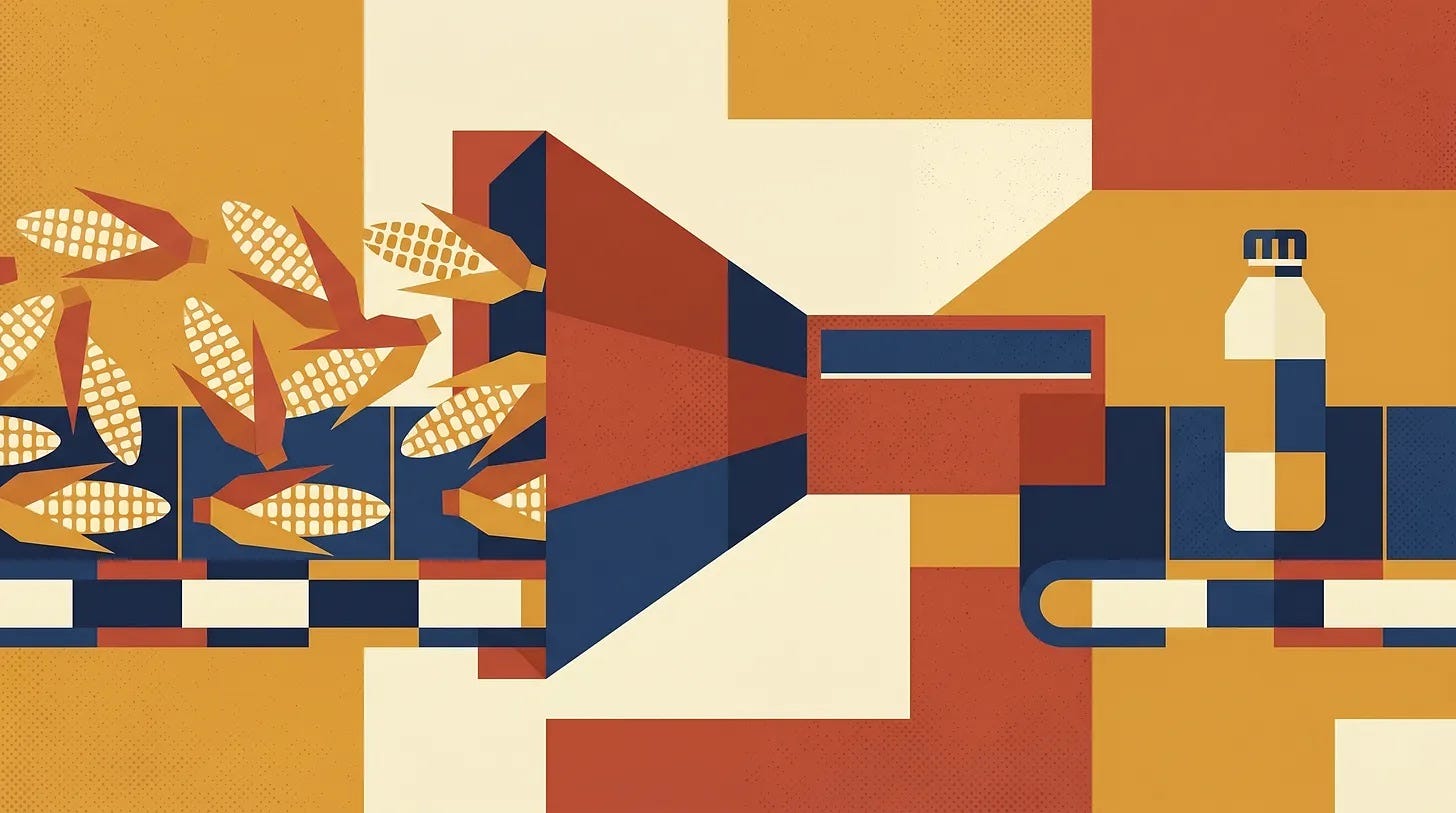
This is the most popular piece of my entire Substack. It’s the one I would send someone if they wanted a single post to understand where my head is at about our food system. The journalist Cory Doctorow famously coined the word “enshittification” a few years ago to describe how tech platforms evolve from startup to conglomorate. These platforms treat their users well in the beginning, but as they grow, they start squeezing you once you’re hooked.
CPG and fast food have been doing the same thing for nearly a century, just slower and mostly out of the limelight. Beef tallow switches to vegetable oil. Real cheese suddenly becomes “cheese product.” Cane sugar becomes high fructose corn syrup. And so on. But most people don’t really notice because food scientists are pretty talented and can typically make these swaps without turning heads. Their margins expand and consumers don’t have to change a thing in their eating and shopping habits. And that’s how Big Food keeps its shareholders happy.
Notable Quotes
“The brand built loyalty on a promise. Once the loyalty was reliable, the promise got cheaper to keep.”
“There are no villains here, at least not in the form we’d like. Every substitution made sense to the person who approved it.”
“The system, not the operators, is the story.”
“What survives is the silhouette of food and the marketing language of food, with most of the actual food removed.”
If you only have time to read one thing from this list and you haven’t already, this is the one to read.
WHAT MADURO’S CAPTURE HAS TO DO WITH YOUR GROCERIES
January 2026
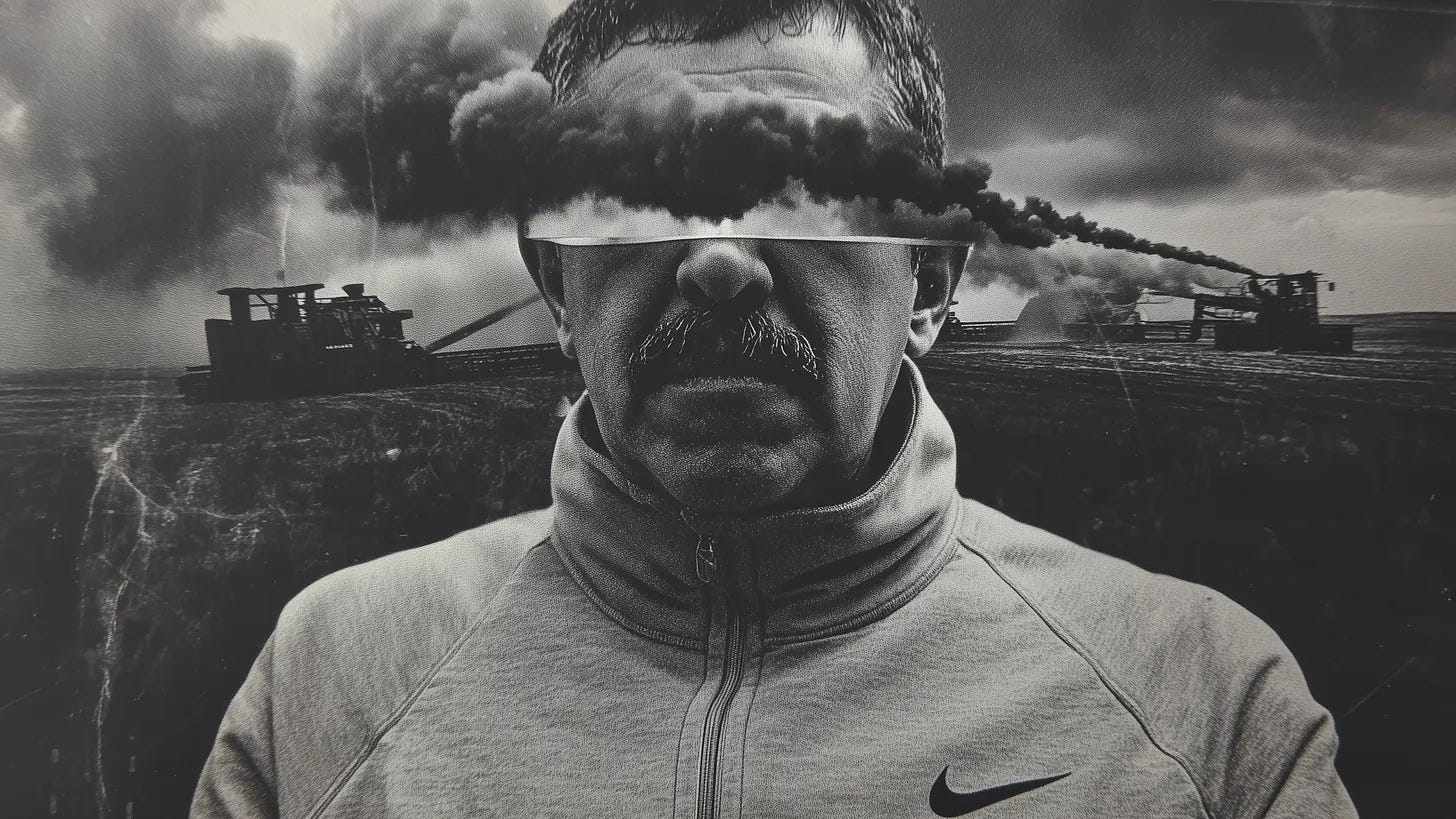
This was the first post of the year, right after the United States captured Veneuzuela’s president Nicolas Maduro. Most headlines treated it as a story about oil and regime change, which it was. But it’s also a story about how our dinner gets on the table. Whether we like it or not, the American food system is an oil system wearing an apron. Diesel fuels the tractors and trucks that harvest our food. Natural gas turns into fertilizer. And cheap calories require cheap energy at every link of the supply chain before food lands on your dinner table. No matter which party holds the White House, keeping the oil flowing is their prime directive.
It’s easy to blame corporate greed as the main drivers of our insatiable thirst for oil. What’s harder is to hold up the mirror to ourselves and realize that every single part of our food system runs on oil right now–from the ultra processed snacks at a bodega to the organic heirloom tomato at the farmers market that arrived there on a farmer’s gas powered truck.
Did the average eater pick this food system? Not really. Should we fight like hell for cleaner energy sources being the norm? Absolutely. But in the meantime, the black-hole-like gravity of our petroleum based food system makes quitting it really really hard. So we keep drilling and we keep invading.
Notable Quotes
“Food never exists in a vacuum. Neither does the force used to secure it.”
“You can’t opt out of the infrastructure you were born into. You can only try to change it while still using it.”
Whatever you think about this current adminstration, our food system’s dependence on oil predates almost every living politician by at least a full generation. I’m a part of it too, literally writing these words to you while on a plane, flying home from a food conference about sustainability. The irony is not lost on me. None of us pass a purity test on this issue. But maybe the first step toward real change is to stop being surprised when our food policy shows up on some foreign leader’s doorstep in body armor, holding an AR-15.
THE FOOD SYSTEM UNDER SIEGE
January 2026
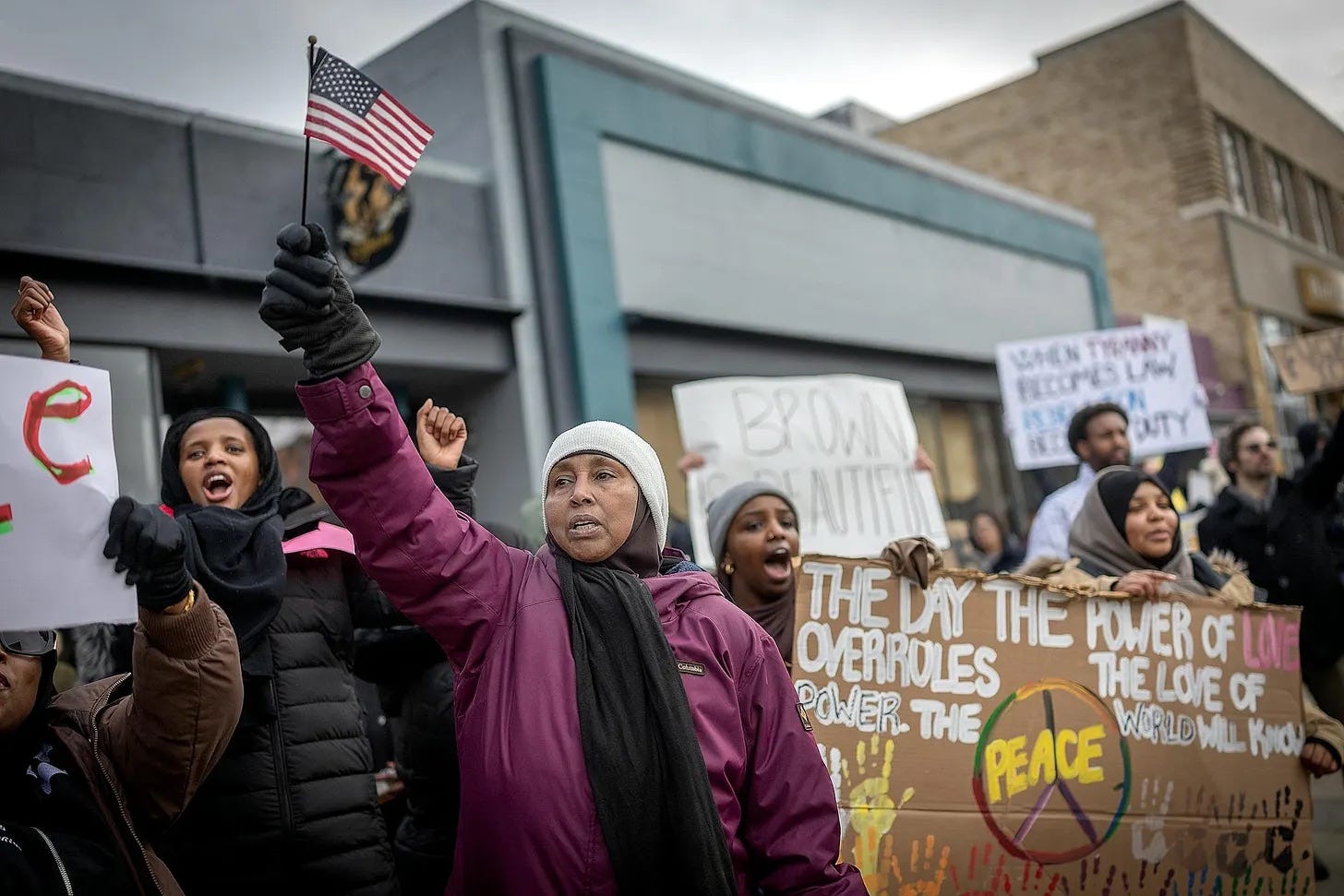
This essay is the cousin of the Maduro piece. Oil is one big input we don’t like to think about when it comes to food. And human labor is the other. I wrote this immediately after ICE murdered innocent civilians in Minnesota and conducted “dine and detail” sweeps across area reastaurants. And the food industry stayed virtually silent.
My most pointed words were aimed at those food corporations. The same corporations who deploy armies of lobbyists to influence some arcane labelling rule or a new sugar tariff, yet had little more than some carefully worded press releases for the victims of draconian and violent ICE activity. Are food and ag companies not aware of how much immigrant labor powers their operations?
Notable Quotes
“The federal government is waging war on the people who feed this country.”
“Every meal in America passes through immigrant hands—the fields, the slaughterhouses, the processing plants, the restaurant kitchens, the delivery trucks.”
“This is the corporate equivalent of ‘thoughts and prayers.’”
Six months later, with ICE seemingly strong as ever today, I wouldn’t pull back on anything that I said in January. If the Enshittification essay is about what the system does to our food, this essay is about what it does to human beings.
Also, don’t miss out on its companion essay, “The Human Cost of What You Eat” from March, about how seldom we look at the hands that our food passes through, even when no one is raiding the kitchen.

HOW TO EAT REAL FOOD
February 2026
Here is where the argument turns to what we do about all of this. “Eat real food” might be the most common refrains in American wellness culture. From Michael Pollan’s “Eat food, not too much, mostly plants” to “don’t eat it if your grandmother wouldn’t recognize it,” we’ve come up with hundreds of ways to tell people to eat real food, yet have done far less to empower people to actually follow the advice.
Telling someone to just eat real food without helping them do so is like telling an alcoholic to just stop drinking. It’s woefully incomplete advice because it glosses over how hard the road is to get there. The people working two jobs to make ends meet, coming home exhausted and reaching for fast food or the DoorDash button. Advice that ignores this reality isn’t really advice.
Notable Quotes
“Cooking is the closest thing to self-defense in a food system that benefits from you being passive.”
“The single most important thing you can do is not learn to cook well. It’s to start cooking at all.”
“One small act of maintenance can shift the entire environment.”
Simple chicken, rice and broccoli on a weeknight beats trying to cosplay Thomas Keller every time. And competence in the home kitchen has a compounding effect, where small wins one day can snowball into bigger ones later, as improvisation and food intelligence displaces the need to follow a rote recipe.
I grew up in a restaurant family and cooked semi-professionally for 11 years, so cooking costs me far less mental overhead than it costs most people. And that’s why this essay does away with the idea of holding onto perfection and just asks people to take baby steps in the kitchen. If the first three essays on this list are about the big food system machine we are a part of, this essay is about how we can all shape systems change from the comfort of our own homes.

A NEW BLUEPRINT FOR BIG FOOD
May 2026
This is the most recent essay on this list and it starts to move toward a grand solution. Cooking for yourself and your loved ones is self-defense, but self-defense alone won’t transform the food system. The fix has to rewire the way profit is realized. I don’t know how to get rid of the profit motive, and maybe we shouldn’t or maybe it’s impossible. Humans are hard wired to procure resources for our own survival, and profit has become a proxy for those resources.
But there’s levels to this and it’s one thing to be profitable enough to live without fear of want. But it’s another to hoard the profit and chase it just because you want more. This essay’s radical proposition is to not fight the profit motive, but to lean hard into it and consider how it might be rewired so that profit, human wellness, and planetary health are not mutually exclusive. Can we design a new kind of business where human and planetary wellbeing are necessary conditions to earn profit?
Notable Quotes
“The food system we have today is what happens when that engine is pointed at calorie maximization, shelf stability, and quarterly earnings.”
“Make profit run through soil health, worker welfare, and nutrient density, and those things become things companies will fight to protect.”
Skeptics will say I’m naive, but I don’t care. Pricing things like soil health and nutrient density are hard problems. But what’s the alternative? How much longer can we expect food companies to grow 3-4% every single year before there’s no more healthy soil or crude oil to exploit in the name of profit?
One Argument
These five essays make the case for how our food got worse because the incentive systems that envelop us reward worse. None of these essays point a finger at individuals being evil on purpose. They argue that its the system that’s aimed in the wrong direction, and that aim is a choice we continuously reinforce, often without knowing it. In other words, “don’t hate the player, hate the game.”
That’s the story I keep telling.
I’ll be back next week with something new.
—
Mike Lee is a food futurist and innovation strategist, author of Mise: On the Future of Food, host of The Tomorrow Today Show podcast, creator of Mise Futures, and is on Instagram at The Book of Mise.
—
Mise 2: The Restaurant Issue is now open for pre-orders! Ships 8/11/26. Over 200 pages of future scenarios exploring the future of restaurants.