


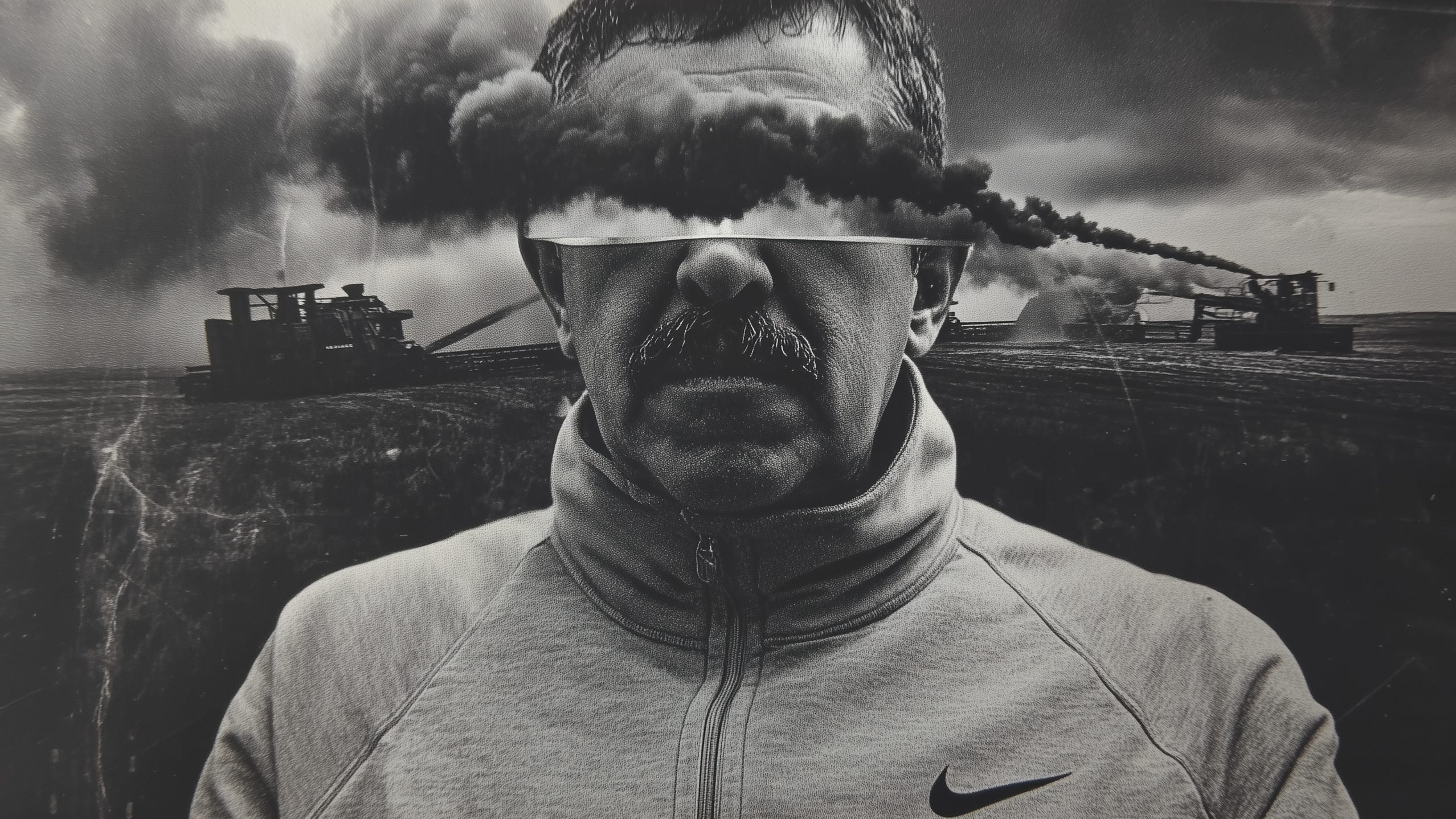
When U.S. forces captured Nicolás Maduro in Caracas on Saturday, the reactions were predictable. One side cheered the removal of a tyrant, the other condemned imperial aggression. Trump posted a photo of Maduro blindfolded aboard the USS Iwo Jima. By Sunday, the Venezuelan president was in New York, headed for arraignment on narco-terrorism charges, where he pleaded not guilty.
The official story centers on drugs and national security—but the drug angle doesn’t hold up. Venezuela is a minor player in cocaine trafficking compared to Colombia and Mexico, and virtually no fentanyl entering the U.S. traces back to Caracas. The narco-terrorism charges are a legal pretext, not a serious explanation. What Trump actually said was more revealing: the United States will “run” Venezuela for now, seize its oil reserves, and recruit American companies to overhaul the industry. He said the quiet part out loud: we want the oil.
To be clear: Maduro was a tyrant. His removal has triggered spontaneous celebrations across the diaspora and in Caracas for a reason. He presided over an economic collapse that drove nearly 8 million Venezuelans to flee the country. His security forces were implicated by the UN in thousands of extrajudicial killings and the systematic torture of political opponents. Acknowledging that the U.S. has ulterior motives doesn’t require pretending Maduro was a victim. He wasn’t. But recognizing his crimes shouldn’t blind us to the machinery that replaced him.
I spend my days thinking about food systems, and viewed through that lens, the events in Caracas hit closer to home than you might think, impacting something far more mundane: your groceries.
I am politically liberal. I find Trump despicable. And this operation is almost certainly illegal—Congress didn’t authorize it, key senators weren’t briefed, and posting a photo of a blindfolded head of state like a trophy violates norms that exist for good reasons. But this isn’t just a Trump story. It’s an American superpower story. The same structural pressures would have produced something similar—maybe slower, maybe more diplomatic—under a different administration.
The Trap We Built
Here’s the elephant in the room: the way American life is set up today, hunting for oil isn’t optional. It’s required.
Consider your morning coffee. The beans arrived on ships burning tanker fuel. They were roasted in facilities powered by natural gas, trucked to your store by diesel. Your toast came from wheat grown with synthetic fertilizer made from natural gas, harvested by diesel combine, packaged in petroleum-derived plastic. Before you finished breakfast, you participated in a supply chain that burned fossil fuels at every step.
Now multiply that by 330 million Americans. Add in offices, hospitals, schools, shops, restaurants, stadiums, theaters, factories, the military, the data centers keeping the internet alive. The entire fresh aisle at the grocery store—every bag of salad, every plastic cup of yogurt—is a battery of fossil fuels humming around the clock. In fact, between farming, processing, trucking, packaging, and household refrigeration, the American food system is traditionally cited as accounting for roughly 19% of the nation’s total fossil fuel consumption.
Venezuela produces exactly the kind of heavy crude that diesel comes from. Not all oil is equal—different deposits yield different fuels. Gasoline powers the commute; diesel powers the supply chain. The tractors, the freight trains, the cargo ships—these run on diesel. You can’t just switch—diesel engines produce the raw pulling power needed to haul 20 tons of organic potatoes to Whole Foods. The fleet already exists: millions of machines engineered around diesel. Replacing them would take decades.
American oil wells mostly produce lighter crude, better for the gasoline that goes in you car. But along the Gulf Coast, refineries were built decades ago specifically to process Venezuelan heavy crude into diesel. They can’t easily switch; the chemistry doesn’t work.
This creates a political reality that transcends party. Any president who allows energy disruptions to spike grocery bills and gas prices faces electoral consequences. The incentive structure doesn’t care about ideology.
I’m not excusing what happened in Caracas. The operation was wrong—legally, ethically, in its contempt for democratic process. But the pressure to do something like it exists regardless of who sits in the Oval Office. The machine demands fuel. Understanding that pressure isn’t the same as endorsing how this administration responded to it.

Why Now, and Why This Keeps Happening
One factor explains the timing: the dollar’s grip on global oil trade is loosening.
For fifty years, oil has been priced and sold almost exclusively in U.S. dollars—an arrangement struck in the 1970s after the OPEC oil embargo nearly broke the American economy. The Saudis would price all oil in dollars and park their profits in American bonds; the U.S. would guarantee Saudi security. Other oil-producing nations followed. Overnight, every country that wanted to buy oil had to hold dollars first. At first this sounds like a wonky technical nuance, but is actually one of the fundamental factors for why America has been the world’s sole superpower.
Imagine you’re the most powerful casino in Vegas, and you’ve convinced every other casino on the strip to only accept your chips. Every game, every table, every transaction runs through your chips. And if someone pisses you off, you ban them from buying your chips—suddenly they can’t play anywhere. That’s roughly what it means to have global oil denominated in dollars. It lets the U.S. run deficits that would sink other economies, borrow at lower interest rates, and wield sanctions like a weapon. Iran, Russia, North Korea, Cuba, Venezuela—all have learned what it means to be shut out.
That arrangement is now fraying. Saudi Arabia has signaled openness to trading in other currencies and officially joined Project mBridge, a central bank platform designed to settle trade without dollars. China is building alternative payment systems. When you can no longer control oil through finance, you need to control it directly.
Venezuela sits on the largest proven oil reserves on Earth—303 billion barrels, more than Saudi Arabia. Under Maduro, production had collapsed. He’d aligned with China and Russia while letting infrastructure rot. The U.S. wagered that with Russia bogged down in Ukraine and China unwilling to escalate, Caracas was free for the taking.
What happened this weekend fits a pattern spanning my entire adult life. Carter declared the U.S. would use military force to protect Persian Gulf oil. Reagan backed Iraq to keep Iranian crude off the market. Bush launched the Gulf War. Clinton maintained sanctions. Bush invaded Iraq—remember “no blood for oil”? Obama intervened in Libya. Biden kept troops in Syria, guarding oil fields. Democrat, Republican, Democrat, Republican—the justifications shift, the targets rotate, but the throughline is always oil.
The difference this time is how it was done. Previous administrations built coalitions, secured congressional authorization, maintained legal pretexts. Trump abandoned those pretexts. The lawlessness matters—it sets precedents that will be hard to walk back. But the underlying pattern is bipartisan. The manner changed; the objective didn’t.
The Irony of Clean Food
I need to say something to the people who, like me, work in the “good food” space—the regenerative agriculture advocates, the clean-label brand builders, the sustainability consultants. We spend our days trying to fix a broken food system. We believe in what we’re doing. And we are just as dependent on oil as the most industrial, most extractive players in the business.
This isn’t an attack. It’s a confession. I burn jet fuel to fly to conferences to talk about sustainability. I use a laptop and phone that couldn’t exist without oil. The regenerative farms I champion run diesel tractors. The organic produce I celebrate travels in refrigerated trucks burning fossil fuel every mile.
That clean-label, regenerative, certified-B-Corp brand? Their products are packaged in petroleum-derived plastic. Their ingredients travel by diesel truck or cargo ship. The founders flew their whole team to Natural Products Expo West—or one of dozens of trade shows like it—where tens of thousands of cargo crates get shipped across the world so brands can set up a 10x10 foot booth and hand out samples, all to sell more snacks wrapped in plastic and delivered by diesel. The retailer stocking their products keeps refrigerators running around the clock.
I’m not trying to tear anyone down—I’m in this too. The distinctions matter—regenerative versus extractive, transparent versus opaque, nourishing versus harmful. But when it comes to fossil fuel dependency, the gap between the “good guys” and the “bad guys” is narrower than any of us like to admit.
This isn’t hypocrisy, exactly. It’s the trap. You can’t opt out of the infrastructure you were born into. You can only try to change it while still using it.
But here’s what I keep coming back to after this weekend: if we want to live in a world where America doesn’t periodically capture the Maduros of the world to secure oil, we have to be honest about why the pressure exists. It’s not just corporations. It’s not just politicians. It’s the sum total of how 330 million Americans live—how we eat, how we move, how we heat our homes, how we expect strawberries in January and next-day shipping on everything.
You can’t solve a problem you won’t name. The problem isn’t just “big oil” or “the military-industrial complex.” The problem is that our entire way of life generates constant, enormous demand for oil—and that demand creates pressure that every president, regardless of party, eventually has to respond to. Try going a full day without touching anything that needs oil to produce or operate. It’s virtually impossible.
No one’s individual actions caused what happened in Venezuela. Your flight to a conference didn’t. My consulting trip didn’t. Each choice is tiny, defensible, unremarkable.
But here’s the paradox: no one is to blame, and yet all of us are to blame. Hundreds of millions of people making billions of tiny, blameless choices every day adds up to an enormous, constant demand for oil—and that collective demand creates pressure someone in power is eventually forced to respond to. When responsibility is diffused across everyone, it feels like it belongs to no one. So we keep making the tiny choices, the pressure keeps building, and then we’re shocked when we see a blindfolded head of state on the deck of a warship.
The question is whether any of us are willing to live differently enough, at scale, for long enough, to reduce the pressure that makes these interventions feel inevitable to whoever holds power. And not just you and me—everyone. Your neighbors. Your parents. The people who voted differently than you. All of us, changing how we live, not for a week or a year, but permanently. That’s the ask. I don’t know if it’s possible.
Would Clean Energy Change Anything?
Yes. And also: it’s complicated.
The energy transition would do wonders for climate change. We should pursue it aggressively. A world powered by solar, wind, and batteries would be genuinely better for the planet. But it would just shift which resources superpowers compete for—not eliminate the competition.
Imagine it’s 2050. The U.S. has electrified most of its vehicle fleet. Solar and wind provide the bulk of electricity. The air is cleaner. Carbon emissions have dropped dramatically. This is genuinely good.
Now imagine the news: U.S. forces have seized control of a cobalt mining region in the Democratic Republic of Congo after the government there began exclusive negotiations with China. Or special operations in Bolivia to secure lithium deposits.
The materials that make clean energy possible—lithium, cobalt, nickel, rare earth elements—are concentrated in a handful of countries. The Lithium Triangle of South America holds over half of known lithium reserves. The DRC produces 70 percent of the world’s cobalt. China dominates rare earth processing. A clean energy economy doesn’t eliminate resource competition; it redraws the map of where that competition happens.
If the 'Maduro trap' is about oil, this story from my book Mise: On the Future of Food asks what that trap looks like when it's built on renewables. It depicts a future where a new superpower achieves total energy dominance—not through democracy, but through a ruthless efficiency that makes the old oil wars look tame. Read the story here.
And even if we solved the energy problem tomorrow, we’d still face the deeper issue: American lifestyles consume enormous quantities of stuff. Stuff requires materials. Materials come from somewhere. Clean energy is a genuine win for the climate. But it doesn’t solve the consumption problem.
Pot Committed
There’s a poker term for this: pot committed. You’ve put so much into the pot that folding no longer makes sense, even if your hand isn’t great. The rational move is to keep betting.
American infrastructure is pot committed to oil. The highways, the suburbs, the entire geography of how we live and work and eat was designed around cheap fuel. Unwinding that would take generations and trillions of dollars. No politician wins elections by promising that transition honestly.
So we keep betting. We keep securing supply. We keep doing whatever it takes to feed the machine, because the alternative—watching grocery prices spike, watching the economy stall—is politically unsurvivable.
Are there ways to reduce the pressure? Yes. Regenerative agriculture can cut synthetic fertilizer requirements. Regional food networks can shorten supply chains. Diversified farming systems are less vulnerable to input shocks. But these are harm reduction strategies, not solutions that eliminate our addiction to oil. They buy time. They don’t radically change the game.
Real change would require questioning whether the American way of life, as currently configured, is compatible with a world where we don’t periodically secure resources by force. That’s a conversation most people don’t want to have. It implies sacrifice. It suggests that cheap abundance comes with costs we’ve been externalizing onto other nations for decades.
What Trump did was illegal, reckless, and a violation of everything America claims to stand for. But it didn’t come from nowhere.
Food never exists in a vacuum. Neither does the force used to secure it.
—
My Consultancy - Mise Futures
My Book - Mise: On the Future of Food
My Podcast - The Tomorrow Today Show
My Instagram - The Book of Mise
Great reminder that eating and farming to reduce the food systems dependence on oil is a powerful act to reduce broader dependence on oil. Another example of how regenerative ag can reduce vulnerability and make the food chain more resilient.
A rare moment of collective accountability in a conversation that usually stops at good vs. bad. Thanks, Mike!