


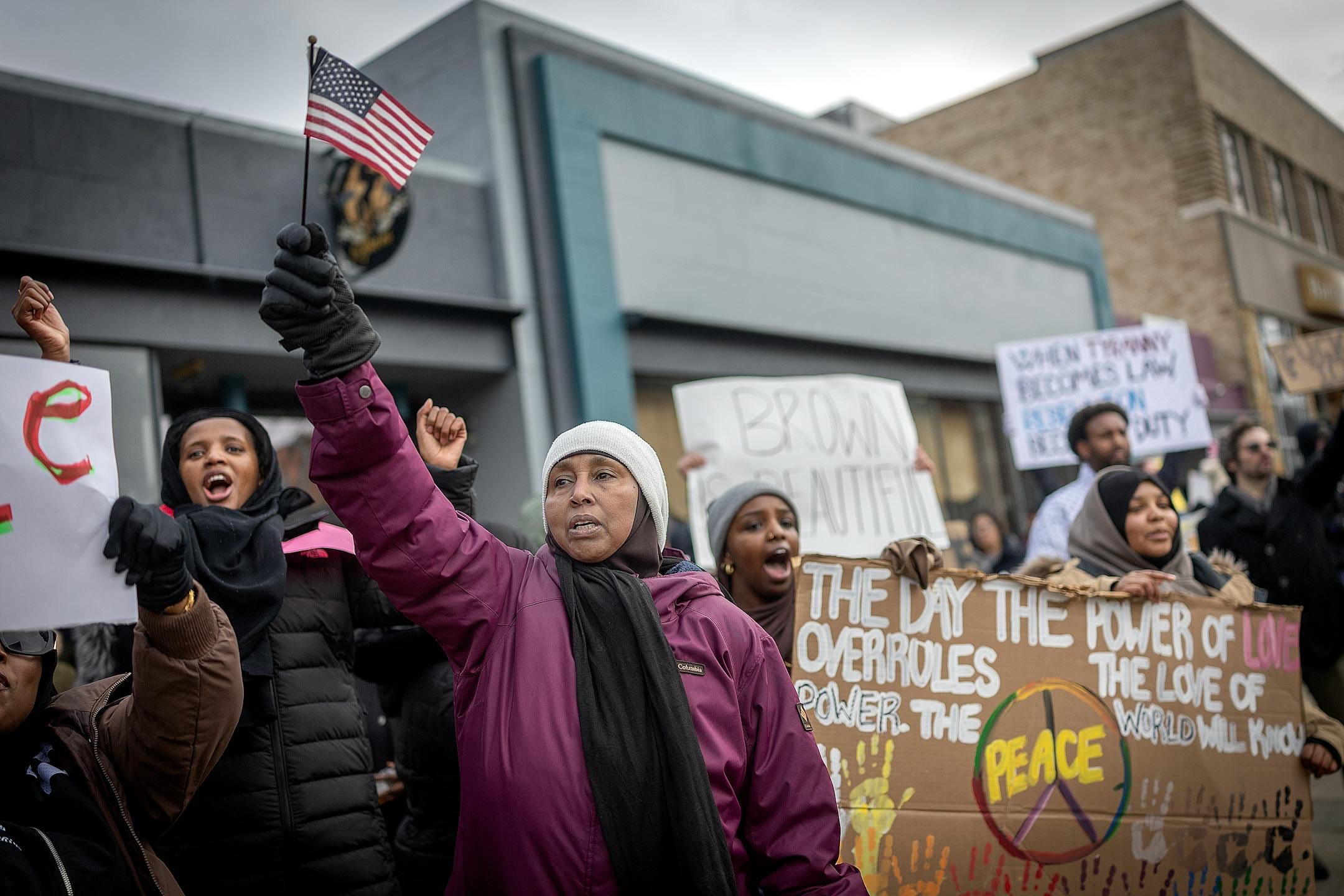
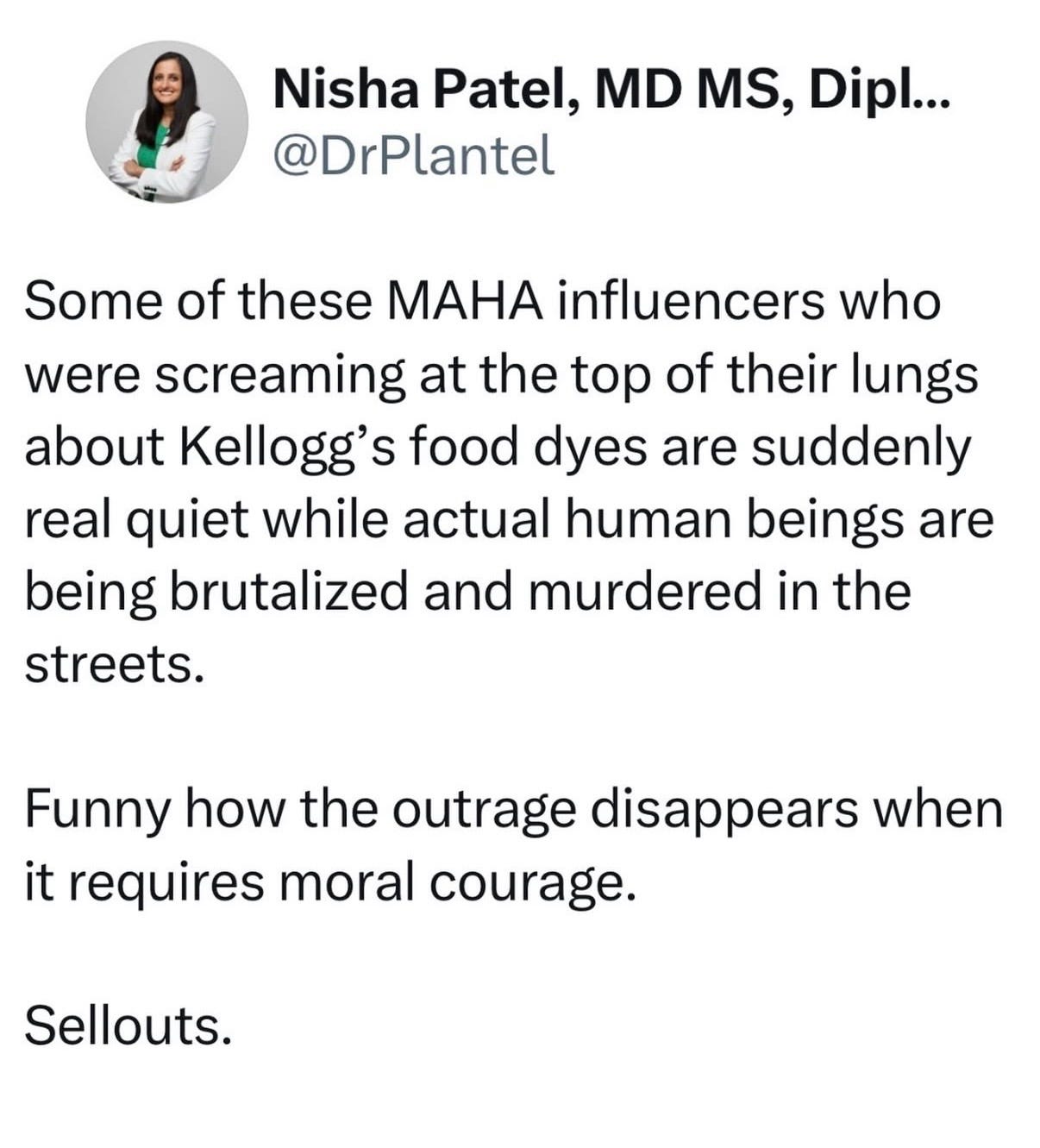
General Mills is headquartered in Minneapolis. So is Cargill, the largest privately held company in America. Hormel is in Austin, Minnesota. Land O’Lakes in Arden Hills. The state that produces more turkeys than anywhere else in the country, that processes billions of pounds of meat annually, that feeds America—watched federal agents shoot people in its streets for three weeks before these companies said a word.
Meanwhile, the food world continues its regularly scheduled programming. What’s the next big flavor trend? Is the tinned fish moment over? Which city has the most exciting restaurant scene? I have spent my career in this industry, and I no longer have patience for any of it. Not while ICE agents are eating lunch at family restaurants and then arresting the workers who served them. Not while American citizens are being shot dead for the crime of witnessing an arrest. Not while children are too afraid to go to school because their parents might be detained on the drive.
The federal government is waging war on the people who feed this country. And almost everyone in the food industry—the companies, the associations, the media, the influencers—is pretending not to notice.
The Shootings
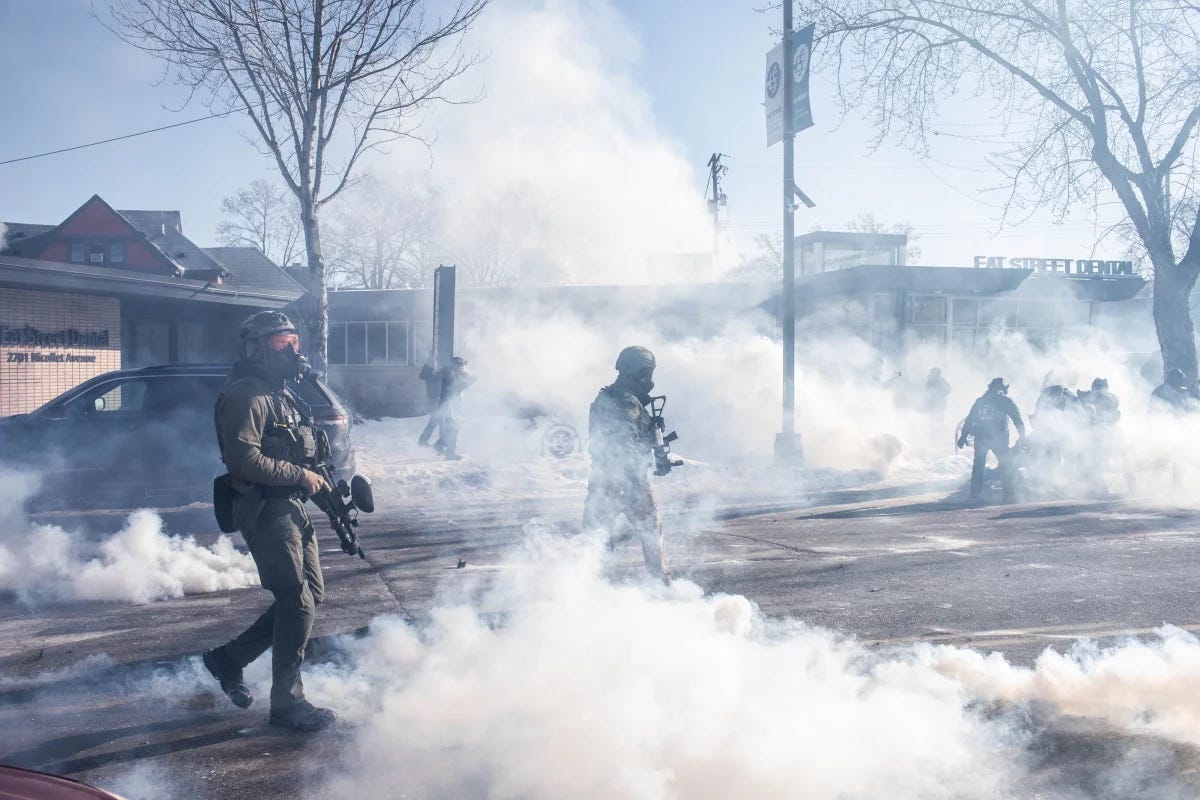
On January 7, 2026, Renee Good was shot and killed by ICE agent Jonathan Ross in Minneapolis. She was 37, an artist, with no criminal record. An independent autopsy found three gunshot wounds, including one to the head. The Department of Homeland Security claims she tried to run over agents with her car. Video analysis by multiple news outlets raises serious questions about that account.
On January 14, a Venezuelan man was shot and injured by federal agents in North Minneapolis. He survived.
On January 24, Alex Pretti—a 37-year-old ICU nurse at a Veterans Administration hospital—was killed by Border Patrol agents. Analysis found that several agents wrestled him onto the sidewalk, one struck him with an object, and then ten shots were fired within five seconds. He had no criminal record. He was an American citizen. His crime was witnessing federal agents attempting to enter a restaurant.
Three shootings in seventeen days. Two American citizens dead. This is not enforcement. This is occupation.
Dine and Detain
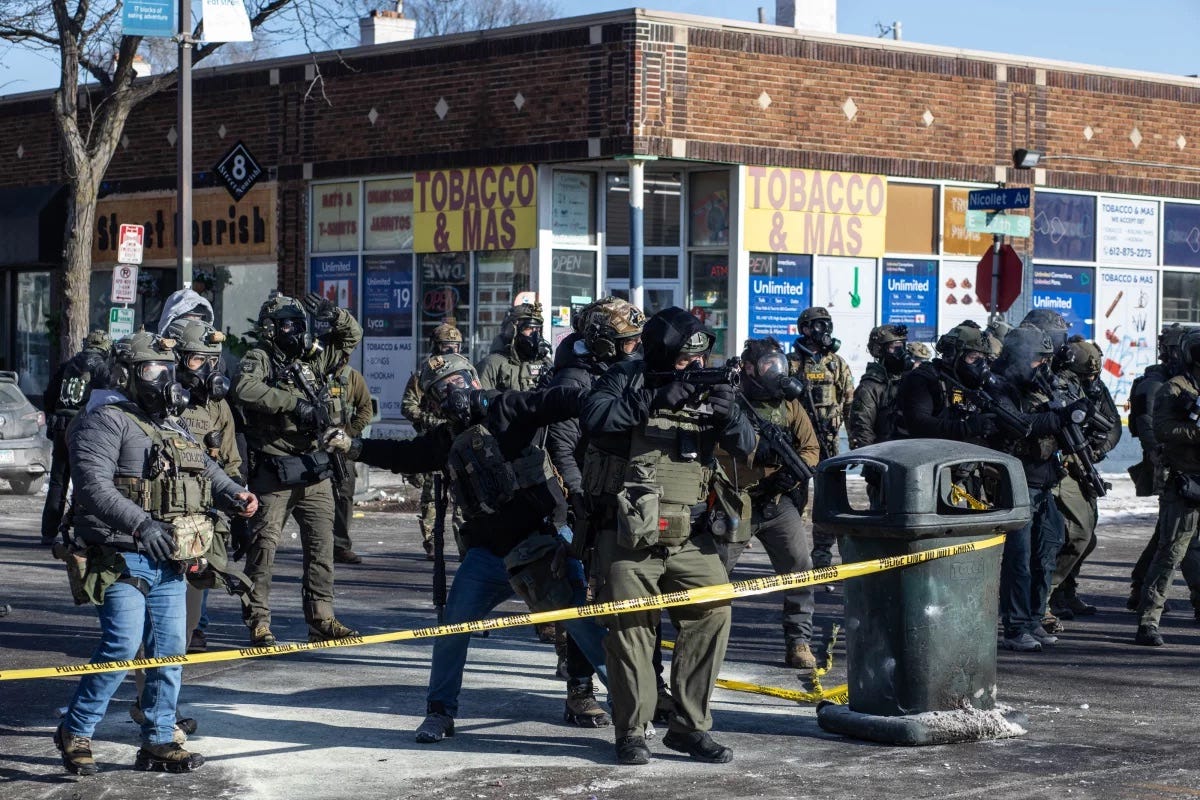
On January 14, four ICE agents sat down for lunch at El Tapatio, a family-owned Mexican restaurant in Willmar, Minnesota. Staff served them while frightened. After the restaurant closed at 8:30 p.m., agents followed the departing workers and detained three of them—including the owners—near a Lutheran church and middle school. The phrase that emerged to describe this tactic was “dine and detain.”
Think about what that means. Federal agents using restaurants as surveillance points. Eating meals prepared by workers they plan to arrest. Waiting for them to finish their shifts before taking them away. The owners’ 20-year-old son announced he would try to reopen the restaurant himself.

This is not an isolated incident. In December, agents posed as customers at a Brooklyn Park coffee shop for an hour before luring a cook outside with a fake story about hitting his car in the parking lot. He was handcuffed and taken away. In St. Paul, the owner of El Burrito Mercado—a 47-year-old Mexican market that’s been called a local institution—told CNN that masked officers were “swirling around the block waiting for people.” She called her own business “a hunting ground.”
And then there’s Kristi Noem, the Secretary of Homeland Security overseeing all of this, who celebrated her birthday at a Mexican restaurant wearing a pink sombrero while staff sang “Feliz Cumpleaños.” She posted the video herself. The culture is delightful. The enchiladas are worth celebrating. The people who make them are targets for arrest and deportation. This is the moral bankruptcy at the heart of American food culture: we want the labor, we want the cuisine, we want the restaurants—we just don’t want the human beings.

The Terror Is Working
Asian Duck Cafe in Minneapolis now keeps its doors locked during business hours. Customers call ahead to be let in. El Rodeo in Maple Grove closed entirely—workers were too afraid to show up. A liquor store worker in Willmar told CBS News his employer lost 75% of its business since Operation Metro Surge began.
On January 23, more than 700 businesses across Minnesota closed for a general strike. Restaurants, coffee shops, grocery stores, yoga studios—dark for a day. The Restaurant Opportunities Center of Minnesota started offering know-your-rights training for food service workers.
And then there are the children. In North St. Paul-Maplewood-Oakdale, Latino student attendance dropped 51% during the first week of intensified enforcement. A fourth-grade teacher in Minneapolis told HuffPost nearly half her class was missing. Parents are keeping kids home not because of threats to the schools but because they can’t risk being caught on the drive. These children have parents. Those parents work in food processing plants, restaurant kitchens, dairy farms, cleaning services, delivery routes. When families stop leaving their homes, the supply chain that feeds America begins to seize.
The Food and Agriculture Industry’s Complicity
My grandparents immigrated to the United States from Hong Kong. So did my parents. They ran Chinese American restaurants. I was born here, but under this administration’s logic, my family would be targets.
The day after Alex Pretti was killed, more than 60 CEOs signed an open letter through the Minnesota Chamber of Commerce. Read it carefully. The letter does not mention ICE. It does not mention Border Patrol. It does not mention the Department of Homeland Security. It does not name Renee Good. It does not name Alex Pretti. It does not acknowledge that federal agents shot and killed two American citizens. It does not demand that those agents leave. It calls for “deescalation of tensions”—as if tension were the problem, not the bullets. It calls for “real solutions” without naming a single one. It speaks of “tragic loss of life” in the passive voice, as if people died of natural causes rather than being gunned down by government employees.
Among the food and agrilculture related signatories: Cargill. General Mills. Land O’Lakes. Hormel. CHS. CJ Schwan’s. Ecolab. The Toro Company. Target.
Some make the food. Others supply the equipment, the sanitation systems, the distribution networks, the retail shelves. All of them depend on the same labor force—their supply chains, processing plants, distribution centers, and retail floors staffed by the very people now being hunted. These are companies with government affairs offices and lobbyists and the phone numbers of senators. And this is what they produced: a letter that could have been drafted by an attorney—carefully constructed to express concern while committing to nothing.

This is the corporate equivalent of “thoughts and prayers.” It is carefully engineered to say nothing while appearing to say something. These executives tell us they’ve been working “behind the scenes”—communicating with the Governor, the White House, the Vice President. And what did all that access produce? No demands. No accountability. No names. Just a call for “peace” addressed to no one in particular, as if a nurse and a poet were casualties of weather.
On January 16, Reuters contacted Target, General Mills, Hormel, Land O’Lakes, Cargill, and 3M. None would speak on the record about what guidance they’ve given employees. Their websites said nothing about federal agents occupying their state. This was, according to Bill George—a former Minneapolis executive and Harvard Business School fellow—a mistake. “A lot of them are very silent,” he told Reuters, “and I think it’s not a good time to be silent.”
The contrast with 2020 is instructive. After the police killing of George Floyd, companies like UnitedHealth and General Mills issued public statements. They spoke his name. This time, federal agents killed two American citizens in Minneapolis—and the same corporations refused to say a word until they could sign a collective letter that mentioned neither the killers nor the killed.
Meanwhile, a video circulated showing ICE agents arresting a contractor in the parking lot of General Mills’ Chanhassen manufacturing facility. The company’s response? “Our team requested ICE agent identification, followed all our safety protocols and partnered with local law enforcement.” That’s it. Federal agents are grabbing workers outside your building and your public statement is that you checked their badges.
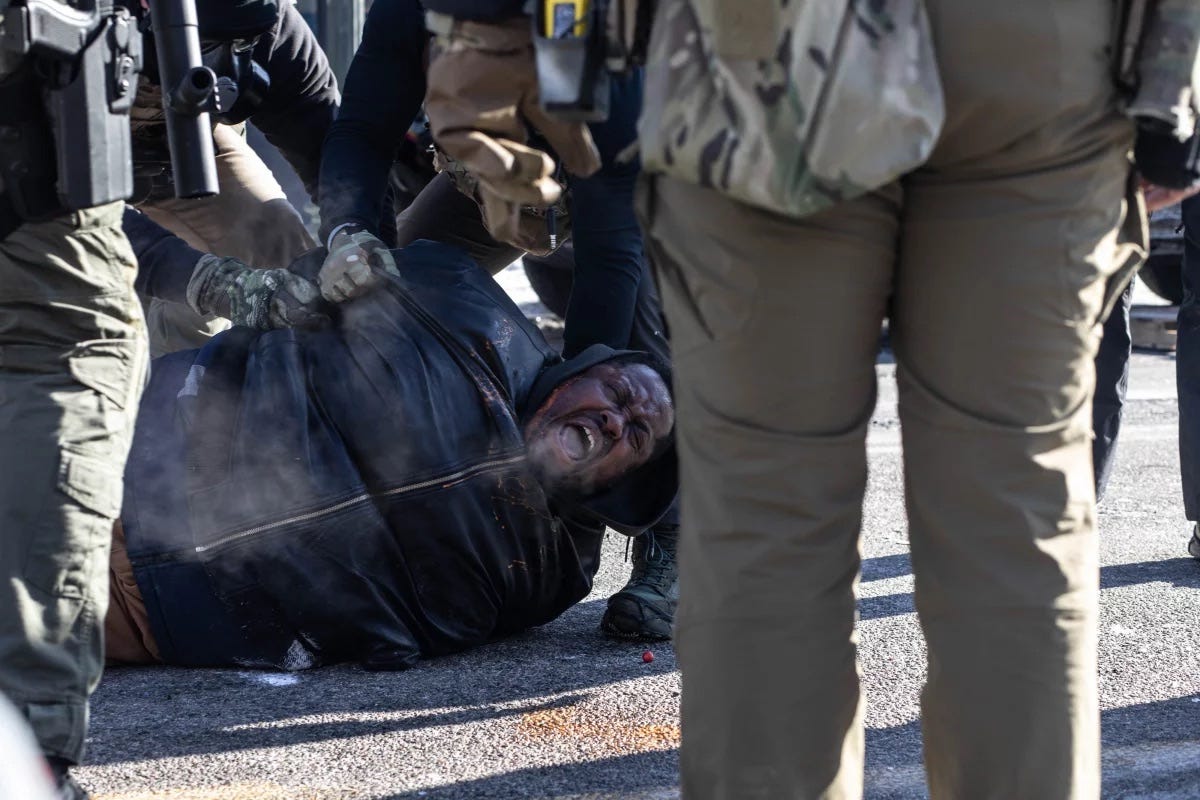
Minneapolis City Council Member Aurin Chowdhury responded to the CEO letter: “If they wanted this to end they could leverage their capital to do so.” She’s right. These companies have the ability to make federal contracts contingent on policy changes. They could threaten relocation. They could fund opposition candidates. They could make the political cost of this operation unbearable. Instead they wrote a letter that refuses to name the killers or the killed.
So I take the silence of this industry personally. The National Restaurant Association has 500,000 members and spent $17.5 million on lobbying in 2024. The restaurant industry employs roughly 1.5 million undocumented workers—everyone knows this, even if no one says it. The dairy farms of Wisconsin and Minnesota depend on more immigrant labor. The meat processing plants, including Jennie-O in Willmar, have always depended on immigrant labor. Cargill operates some of the largest beef and poultry processing facilities in the country. Land O’Lakes and CHS are farmer-owned cooperatives whose members cannot get their crops harvested without immigrant workers. This is not a secret. It is the foundation of how America eats.
A vague call for “deescalation” is not opposition. It is reputation management. It is a press release designed to provide cover without consequence. The food media moves on to the next trend piece. The professional class of food people—the consultants, the analysts, the conference speakers—continues as if the occupation of Minnesota is not their concern.
It is your concern. If you work in food, it is your concern. If you eat food, it is your concern. Every meal in America passes through immigrant hands—the fields, the slaughterhouses, the processing plants, the restaurant kitchens, the delivery trucks. The system was built on this labor, deliberately, because it was cheap and because the people doing it had no power to demand better. The industry looked the other way for decades. Now that workforce is under violent assault, and the industry is still looking away.
Minneapolis is Ground Zero
Consider who ICE has actually targeted in Minnesota. A 56-year-old Hmong American grandfather—a U.S. citizen named ChongLy Thao—dragged from his home in freezing weather wearing only underwear and Crocs. A Somali-American woman, also a citizen, detained for two days while agents made racist remarks. A refugee with a valid work permit, arrested at the hotel where federal agents were staying. A five-year-old boy used as bait to lure his relatives outside. A two-year-old detained with her father despite an active asylum case. Off-duty police officers stopped and questioned. A Latino citizen whose car was rammed by agents before they demanded his papers. In the first nine months of this administration, over 75,000 people arrested by ICE had no criminal record whatsoever—more than a third of all arrests.
These are not violent criminals. These are not even undocumented immigrants, in many cases. These are citizens, legal residents, refugees, and asylum seekers. People detained because they had the wrong accent, the wrong skin color, or happened to be in the wrong place when agents decided to make an example.
And then there are Renee Good and Alex Pretti. Both white. Both American citizens. Good was a poet from Colorado who had just dropped her six-year-old at school. Pretti was an ICU nurse who spent his career caring for veterans, giving final salutes to the service members who died under his watch. Neither had a criminal record. Neither was an immigrant. They were killed for the crime of being present—Good for stopping to support her neighbors during an arrest, Pretti for stepping between agents and a woman they had pushed to the ground.
Their deaths reveal what this has always been about. It was never just immigration enforcement. Latino and Black communities have faced harassment from federal agents for decades, long before ICE even existed. What’s happening in Minneapolis is an escalation—from targeted enforcement to mass intimidation, from deporting undocumented immigrants to terrorizing anyone who looks like they might be, and now to killing anyone who objects. The Asian community could be next. Restaurants like my family owned. The Hmong grocers in St. Paul. The Vietnamese pho shops, the Korean BBQ joints, the Chinese takeout places that have fed working-class America for generations.

This is how it works. First they come for the people without papers. Then for the people with papers but the wrong accent. Then for the citizens with the wrong ancestry. Then for anyone who stands in solidarity. The administration has already labeled peaceful protesters “rioters” and “domestic terrorists.” It has already shot two white Americans dead for the crime of being present. The line is not holding. It is not even a line anymore.
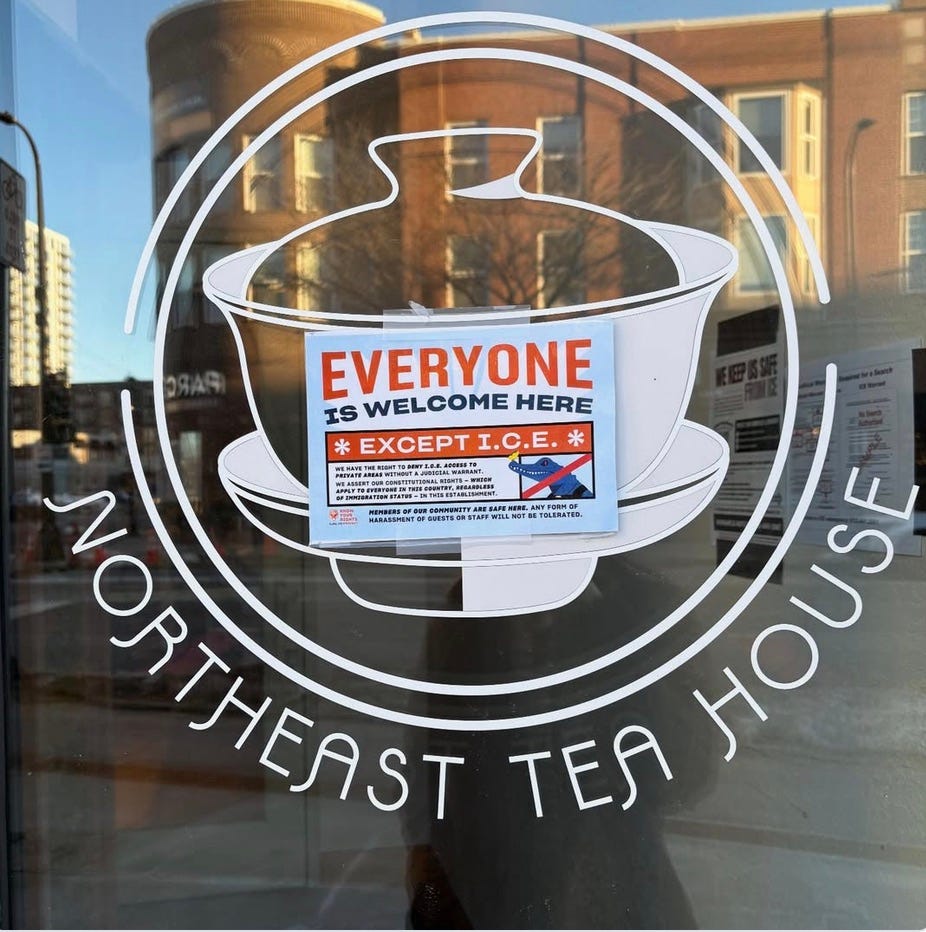
The administration has made Minnesota “ground zero” for its enforcement surge, using the state to demonstrate a new model of aggressive federal intervention. This blueprint is already moving elsewhere; while the Twin Cities remain under siege, the Department of Homeland Security recently launched a similar campaign in Maine. With twelve thousand new agents and “dine and detain” tactics becoming standard practice, restaurants are being turned into hunting grounds from coast to coast.
The federal government is testing how much violence the American public will tolerate against the people who grow, process, cook, and serve its food. While the American Right remains steadfast in its support, most Americans now oppose ICE and its tactics. For the administration’s base, it seems that no amount of violence is too much.
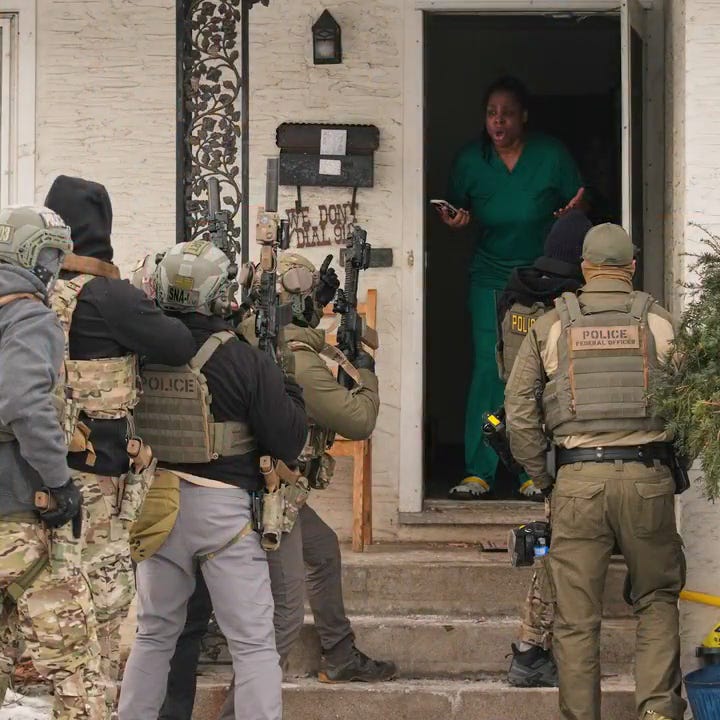
To the food industry: how dare you rely on immigrants to build your businesses but don’t step up to defend them when they’re being attacked by our own government. Without them your companies would not exist in their current form.
Every day the food industry stays silent, the line moves. Every day without pushback, the next step becomes possible. Armed agents in every restaurant kitchen. Checkpoints at processing plants. Papers demanded at farm gates. Workers too terrified to harvest crops rotting in the fields. This is not paranoia. This is the trajectory. This is what happens when an industry builds its entire labor model on a workforce it refuses to defend.
The people who feed America are being hunted. The people who profit from that labor are saying nothing. And if you think this stops with immigrants, you have not been paying attention. They have already killed the poet. They have already killed the nurse. They will not stop until someone stops them.
Wake up.
—
Best commentary on ICE's impact on food chains yet. An imperative call to action. I'll be contacting the companies that signed onto that Chamber of Commerce milquetoast letter. Let's Shut Down on Friday, Jan. 30th!
Great article. Those of us watching from outside the US wonder what we can do. The US is stark commentary on how relatively powerless people are in a democracy to affect the leadership until the next election.