


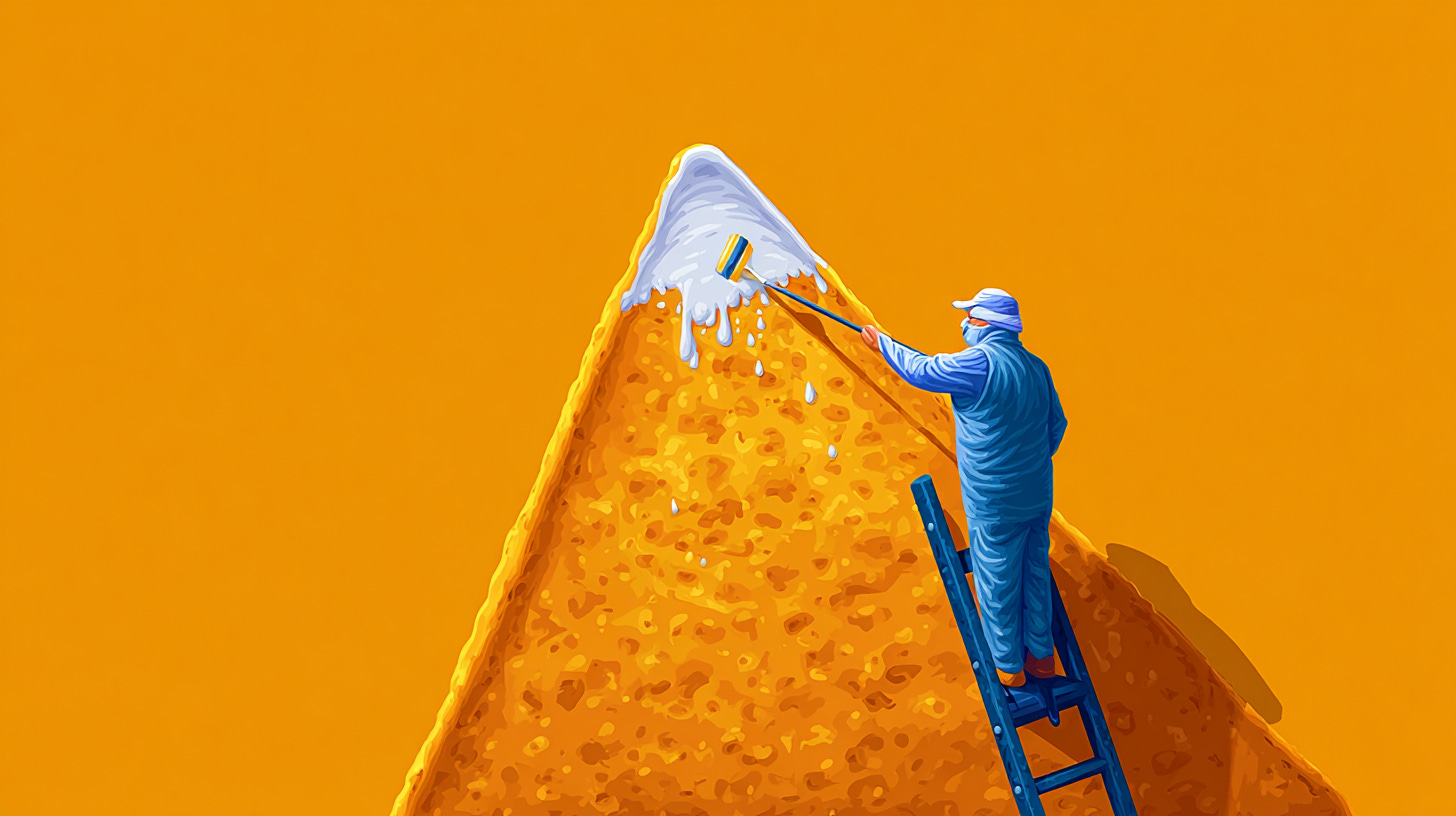
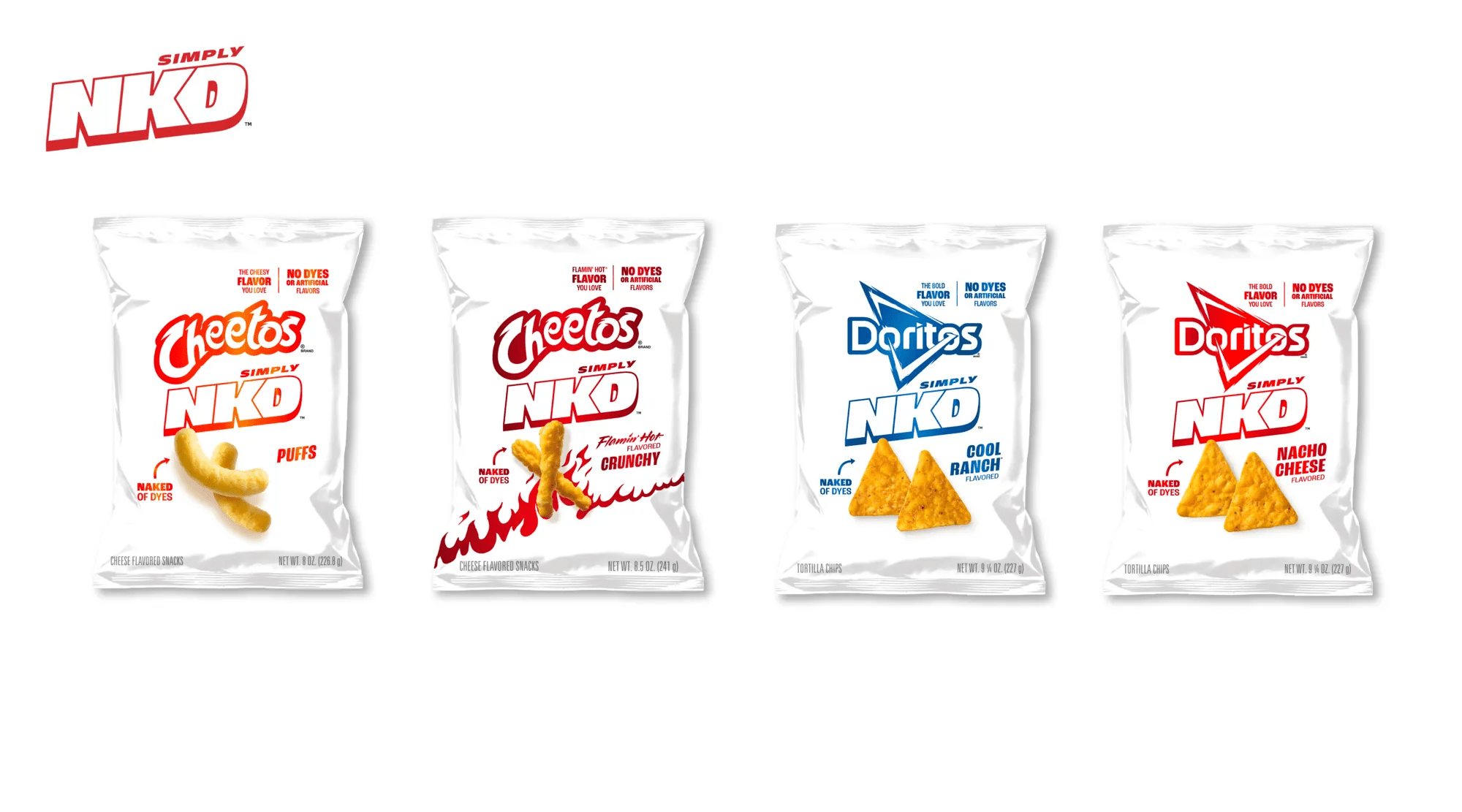
PepsiCo wants you to know that Cheetos and Doritos are getting naked—er, I mean “NKD.”
The company just announced “Simply NKD,” a new line that strips artificial dyes and flavors from two of America’s most iconic snacks, leaving the seasoning powder colorless. According to PepsiCo Foods U.S. CEO Rachel Ferdinando, this move demonstrates the company’s “commitment to flavor leadership” and proves “our taste remains strong even without visual cues.” It’s being framed as innovation, as consumer choice, as progress.
If PepsiCo wants to remove Red 40 and Yellow 6 from Cheetos, that’s a good thing. There’s legitimate concern about these ingredients and European countries have been phasing them out for years. Removing them isn’t wrong and we should get them out of our food supply.
But should we applaud? Is this what counts as meaningful progress toward a healthier food system in 2025? Faded Doritos that otherwise remain nutritionally unchanged? Are we supposed to celebrate this as PepsiCo “expanding choices” and meeting “consumer demand” when what it really represents is the absolute bare minimum effort required to capture market share from parents who’ve been spooked by headlines about artificial dyes?
The dyes are not the most nutritionally suspect part of Doritos and Cheetos. Removing them is like putting a filter on a cigarette and calling it healthier.
What Actually Changed
A single one-ounce serving contains 150 calories, 7 grams of fat, and 150mg of sodium—about 10% of your daily fat and 6% of your daily sodium. The nutritional profile is identical to the original, non-NKD version.
What’s gone: The artificial colors, the MSG, and artificial flavors.
What remains: Two dozen ingredients including corn, vegetable oils, maltodextrin, multiple cheese products, and “natural flavors”—likely concentrated cheese compounds and savory isolates functionally identical to what they replaced, just sourced differently.
The product pretty much remains what it always was: ultra-processed, nutritionally void, optimized for maximum craveabilty and snackability across all dayparts. They just removed the most visually synthetic ingredients and made the bag white, as if to suggest some newfound virginal quality.
And who exactly are Simply NKD Doritos for? Are hardcore loyalists going to switch to this version? Or was there really a big cohort of consumers saying, “I’d love to eat more Doritos, but the artificial colors are the dealbreaker”? I’m not sure anyone was avoiding them solely because of dyes. And the health-conscious consumer scrutinizing ingredients isn’t suddenly embracing Doritos because Yellow 6 is gone because they can still read the rest of the nutrition label.
You almost have to respect a regular bag of Flamin’ Hot Cheetos. It never pretends to be health food. It knows exactly what it is. And that’s good, because it makes them easy to avoid if you’re watching your diet. And it doesn’t try to fool you into thinking you’re doing something healthy for yourself when you eat them.
But Simply NKD wants it both ways—the same irresistible ultra processed snack while giving you permission to feel better about eating it. The dopamine hit without the guilt.
I’m not here to moralize about individual consumption. I’m not immune to their appeal—Doritos are delicious. I eat maybe two or three single-serving bags worth per year, if that, usually at a Super Bowl party or a barbecue where they’re just sitting there. I don’t seek them out. They’re never in my house. They’re an occasional treat, not a pillar of my diet.
My issue isn’t with Doritos in and of themselves. It’s with deluding ourselves that removing artificial dyes suddenly makes them much more permissible to eat.
The Trap PepsiCo Can’t Escape
Now, to PepsiCo’s credit, they’ve been making other moves. They’ve got the Simply line of chips, SunChips made with whole grains, Bare Snacks, and acquisitions like Siete Foods. That’s fine and good.
But here’s the thing: Doritos did $3.9 billion in sales in 2024. Just Doritos. Frito-Lay generates over $24 billion annually and commands a huge share of the U.S. salty snack market. These aren’t legacy brands limping along—these are the profit engines. These are what shareholders expect to see growing quarter after quarter.
PepsiCo is structurally locked in. You can’t gamble with $3.9 billion in annual revenue to fundamentally remake Doritos—and that’s what making it genuinely healthier would require. The current formula is why it sells $3.9 billion a year. People aren’t spending that money for a healthy snack. They’re buying Doritos exactly as they are now, and a complete reformulation threatens the entire revenue stream. Any CEO who proposed this would be fired by the board before the reformulation even started. Investors need returns, not health outcomes.
So instead, PepsiCo makes incremental changes that look like progress without threatening the business. Removing artificial dyes becomes “one of our boldest steps yet”—when if they were actually bold, they would’ve done this years ago before MAHA made dyes a trending topic. The core product stays exactly as profitable and unhealthy as it’s always been. That’s not strategy. That’s structural constraint.
That framing insults the intelligence of American consumers. We can read ingredient labels. We understand that “no artificial colors or flavors” is not the same thing as “nutritious.”
What Doesn’t Change
The problem runs deeper than the ingredient deck. It’s baked into the entire business model of Big Food—the agricultural subsidies that make commodity crops absurdly cheap, the food science that turns them into a thousand different products, the distribution networks that make Cheetos available everywhere while fresh produce remains prohibitively expensive in food deserts. Many parts of the food system contribute to the Dorito’s existence. Taking out Yellow 5 doesn’t alter any of that.
This matters because 67% of the calories consumed by American kids and teens aged 2-19 now come from ultra processed foods. Not 67% of their snacks—67% of all their calories. We got here through decades of optimization, and Simply NKD accepts the entire system as a given while making the most superficial possible modification—one that consumers can literally see—to create the appearance of progress.
So yes, by all means, take out the Red 40. Give concerned parents one less thing to worry about. I’m genuinely in favor of removing artificial dyes from our food supply.
But we should not fool ourselves into thinking this represents meaningful transformation. We definitely shouldn’t let PepsiCo frame this as bold innovation when it’s the bare minimum (Simply NKD was made in “just eight weeks”) dressed up in marketing language.
The press release announcing Simply NKD ends with this line: “If we can reinvent Doritos and Cheetos, imagine what’s next.”
I can imagine it pretty clearly, actually. What’s next is more of the same—slightly reformulated versions of the same ultra-processed products, each one stripped of whichever ingredient happens to be trending on social media that quarter, each one marketed as revolutionary while changing nothing about the fundamental business model that made these products problematic in the first place.
What’s next is a food system that mistakes the removal of one synthetic ingredient for transformation, that calls tinkering with a recipe “reinvention,” that confuses the appearance of progress with actual change.
If naked Doritos represent the pinnacle of what “making America healthy again” means, then we’re not actually interested in making America healthy. We’re interested in making ourselves feel slightly less guilty about staying exactly where we are.
—
My Book - Mise: On the Future of Food
My Podcast - The Tomorrow Today Show
My Instagram - The Book of Mise
My Other Instagram - Mike Lee
My Consultancy - Mise Futures
This stuff is always about the bonus cycle. Look, we got a sales bump in our long term slide. From launch you have less than 3 years to find your next role, then you're all good. Next person deals with the mess and then takes out the maltodextrin, rinse, repeat until its a shell of itself and you call in the consultants.
Great summary.