


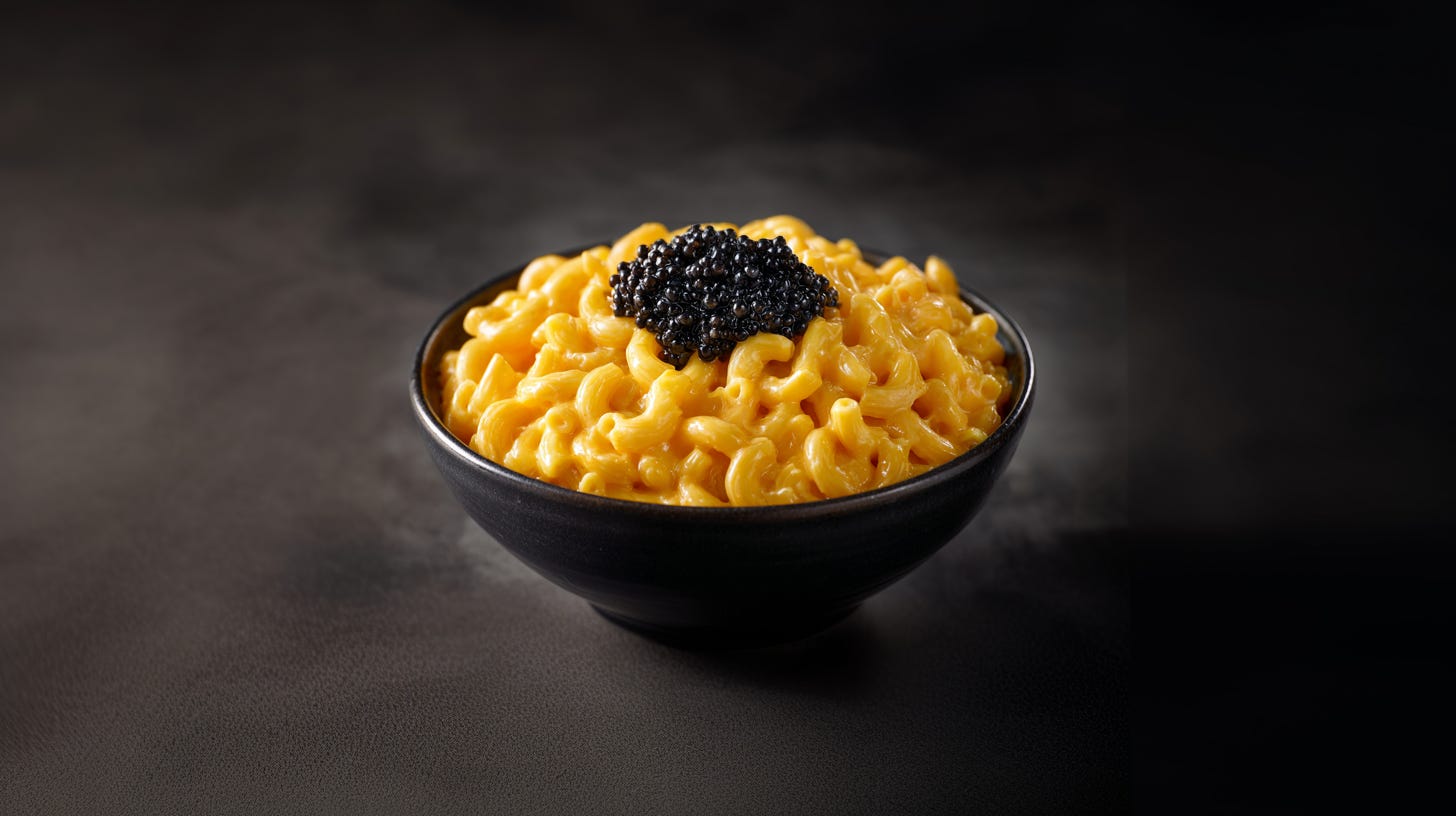
My family is completely fixated on food. My parents owned a restaurant, my grandparents owned restaurants, my aunts and uncles owned restaurants. Food wasn't just our business—it was our language, our obsession, our way of understanding the world. They taught me that good food could cost $200 or $2, and they were almost always right.
I genuinely love the artistry of restaurants like Alinea—those theatrical meals where every course tells a story. I love places like Blue Hill or Chez Panisse, where local ingredients are thoughtfully prepared to highlight their natural beauty. But I also genuinely love Kraft Mac 'n Cheese and instant ramen in all their ultra-processed, artificial glory because for better or worse, they were staples for me growing up.
This omnivorous approach taught me something crucial: flavor knows no price. A perfect $5 taco from a street cart can deliver more transcendent pleasure than a foie gras dish from the $390 tasting menu at Per Se. As legendary chef Ferran Adrià captured it: "It's always advisable to use a very good sardine instead of a not that good lobster.”
This idea that flavor knows no monetary boundaries has permeated the zeitgeist over the last decade, yet we still have this fictional stigma that healthy, sustainable food is inherently elite—a luxury reserved for those who can afford to care. I've watched this false divide calcify into something more dangerous: a caste system where mission-driven food becomes a status symbol rather than a solution.
The Problem With Foodie Elitism
Walk into Erewhon, the infamously precious California grocery store, and you'll find products plastered with a slew of sustainability claims like a NASCAR car covered in sponsor logos. But $20 celebrity-branded smoothies and $12.50 kale chips? We've created a system where caring about your health and the planet's health requires a hedge fund salary.
This is both backwards and self-defeating. There simply aren't enough Erewhon shoppers to transform our food system through precious purchases alone. By coding sustainable food as elite, we're ensuring its failure as a movement. The companies I work with understand this paradox: sustainability consistently ranks below taste, price, health, and convenience in consumer decisions—even among people who consider themselves environmentally conscious.

Junk food's colonization of cheaper price tiers isn't inevitable—it's a design flaw we've accepted as natural law. Industrial agriculture's subsidies create a system where Doritos cost less than vegetables, where convenience trumps nutrition not by consumer choice but by systemic design. We've somehow convinced ourselves that eating responsibly requires shopping at Whole Foods, when humble, widely accessible staples like rice and beans are often more sustainable than the twee CPG brands that fill those aisles. The truth is, nutritious, sustainable food needs to be accessible and desired by all if we want to address the climate and health challenges we face.
Universal Needs, Tribal Signals
The Black Rifle Coffee drinker and the Blue Bottle devotee probably voted for different presidents and straight up don’t like each other, but they're seeking identical things: energy, ritual, identity, community, joy. One wraps their coffee in military imagery and conservative values, the other in sustainability and progressive aesthetics. The human needs remain constant—only the cultural signals differ.
This pattern reveals why our approach to food change fails so spectacularly. We judge rather than understand. Telling people to eat less meat for environmental reasons rarely works because it doesn't address why they eat meat—tradition, pleasure, identity, convenience. The McDonald's customer wants to feed their family well just like the farmers market shopper. They simply navigate different contexts with different resources.
Consider how plant-based burgers finally broke through after languishing for decades in the vegan aisle: not by lecturing about environmental impact, but by understanding that meat-eaters want the sizzle, the char, the grilling ritual. Success came from meeting people where they are, not where environmental purists wished they'd be.
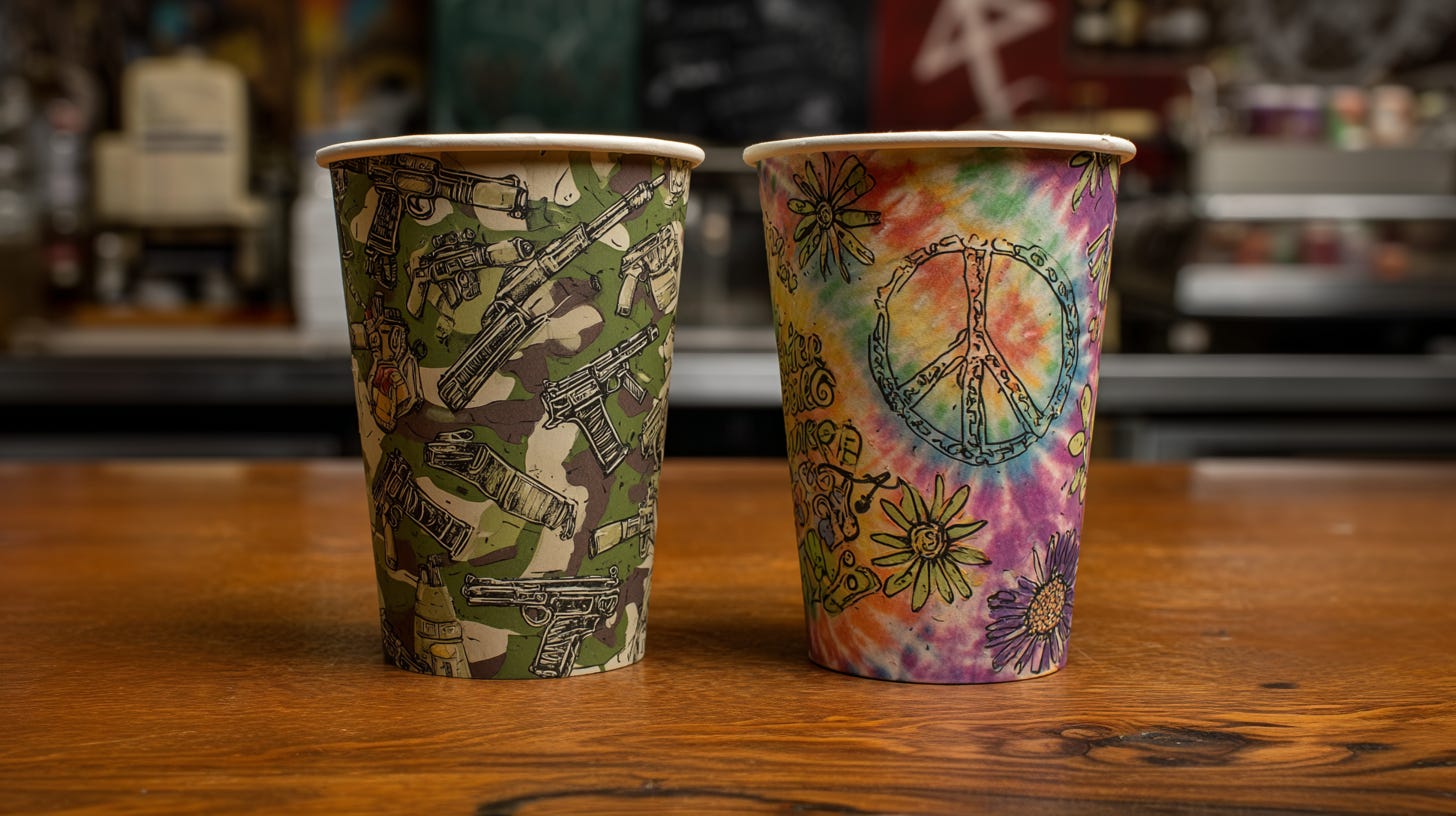
Even when we agree on the destination—nutritious food that nourishes both people and planet—we wage tribal wars over the path. Organic advocates and conventional farmers both want to feed people safely. They have radically different beliefs about pesticides, but their end goals align. When we recognize this shared purpose, we create space for solutions neither side imagined: integrated pest management, precision agriculture, technologies that transcend old debates.
This insight extends beyond food. When we acknowledge that beneath our consumer choices and political tribes we share the same human needs, we build bridges instead of walls. That recognition offers a blueprint for finding common ground on every issue dividing us. If we can unite around something as personal and polarizing as what we eat, perhaps we've found the emotional intelligence to solve our other seemingly intractable divides.
Good Food At Every Price
My family taught me that good food comes at every price point. Now I understand that sustainable, nutritious food must too. Not because it's morally right—though it is—but because it's the only way to actually transform a system that feeds billions.
We need regenerative agriculture baked into mainstream products. Plant-based options that actually satisfy. Supply chains that treat workers fairly without pricing out working families. The same food science genius that made Doritos irresistible can make sustainable food just as convenient and craveable. And most importantly, we need to realign the cultural conversation so healthy, sustainable foods are objects of irresistible desire, not symbols of atonement for past sins.

We need to recognize that mission-driven food can't remain a luxury good if we actually want to save anything. We also need to understand that the person drinking Black Rifle Coffee and the one sipping Blue Bottle don’t have to be enemies. They're both just trying to feel alive in the morning, seeking the same joy, comfort, and connection through their ritual.
Once we truly see that—once we build on what unites us rather than what divides us—everything can shift. We stop performing our values through our grocery receipts and start solving real problems. We create food systems that work for everyone, not just people who have the time and money to shop at farmers markets. And maybe, just maybe, we discover that the bridge between Kraft Mac & Cheese and caviar isn't just about food. It's about recognizing our shared humanity clearly enough to tackle every other impossible divide.
Because if we can find common ground in something as personal and tribal as what we eat, we've already won a big part of the battle for a future of food that serves our planet and everyone living there.
—
But Wait, There’s More!
My Book - Mise: On the Future of Food
My Podcast - The Tomorrow Today Show
My Instagram - The Book of Mise
My Consultancy - Mise Futures
This post was excellent. 👏🏻👏🏻👏🏻
“…once we build on what unites us rather than what divides us—everything can shift. We stop performing our values through our grocery receipts and start solving real problems.” LOVE this! Thank you for sharing!