


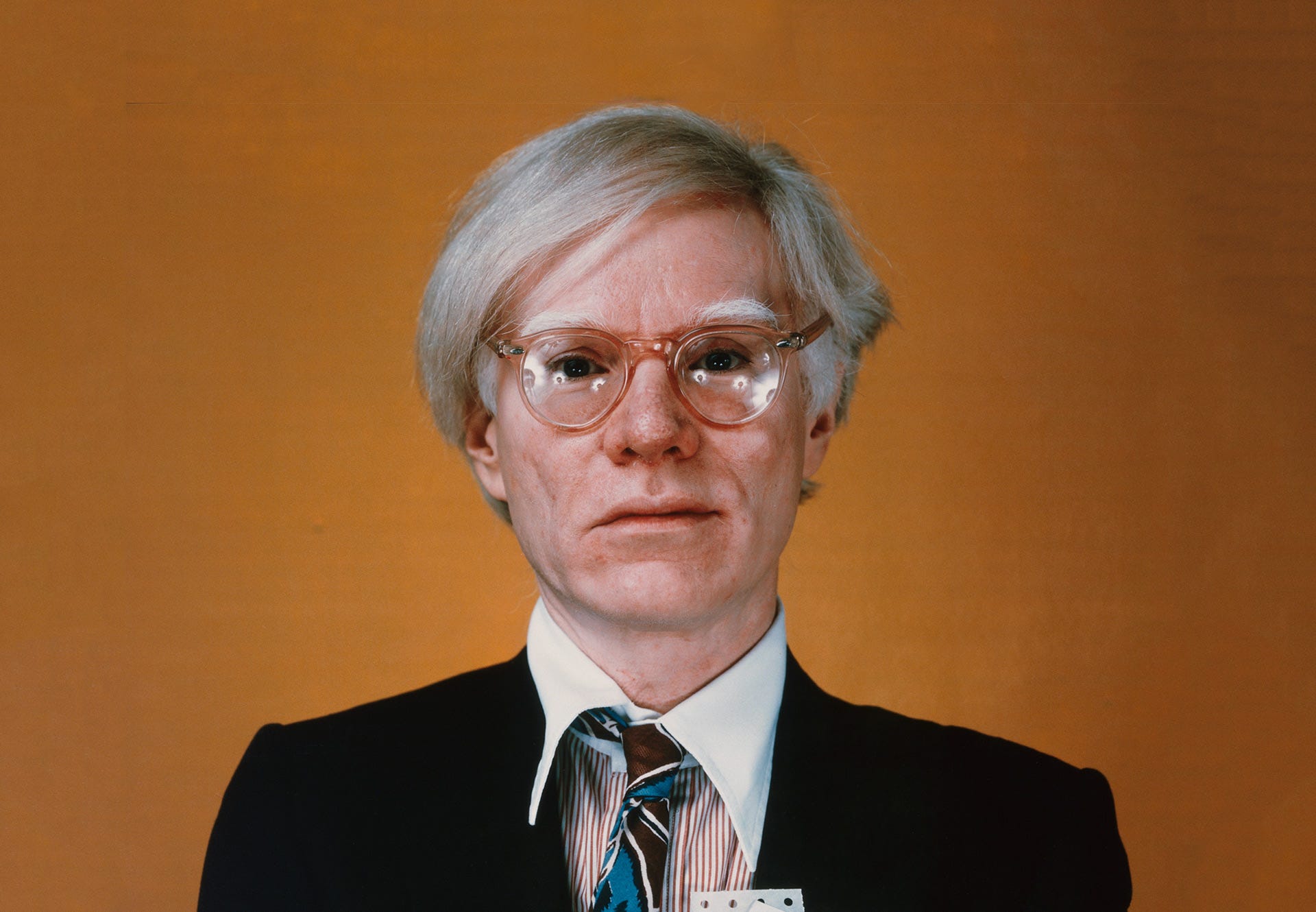
Before the soup cans, Andy Warhol drew shoes for money, and few did it better. Through the 1950s he was one of the best-paid commercial illustrators in New York, the sole artist on the I. Miller account. Women’s Wear Daily called him the Leonardo of the shoe trade. A decade making products look desirable left him most of the way to painting a can of soup.
That income bought him room to experiment. In 1962 he lined up thirty-two Campbell’s Soup Cans at a Los Angeles gallery, and the Marilyns and Elvises followed. The same year, 200 One Dollar Bills was his first silkscreen, the currency drawn by hand rather than transferred from a photograph, divisive and nearly worthless on debut, the sort of bet only a man with money already coming in could make. It sat unexhibited for twenty-three years before surfacing at Sotheby’s in November 2009, in the wreckage of the financial crisis, and blew past its $12 million estimate to sell for $43.8 million.
The pop work made him the most famous artist in America and soon the most expensive living one. That fame was the asset he would spend for the rest of his life. He put it toward a side business the art world found a little embarrassing. Through the 1970s and 1980s he painted hundreds of commissioned society portraits, around $25,000 a canvas and $40,000 a pair, roughly $150,000 and $240,000 today. Critics called it flattery for hire. Warhol called it business art, and there was a real idea in it.
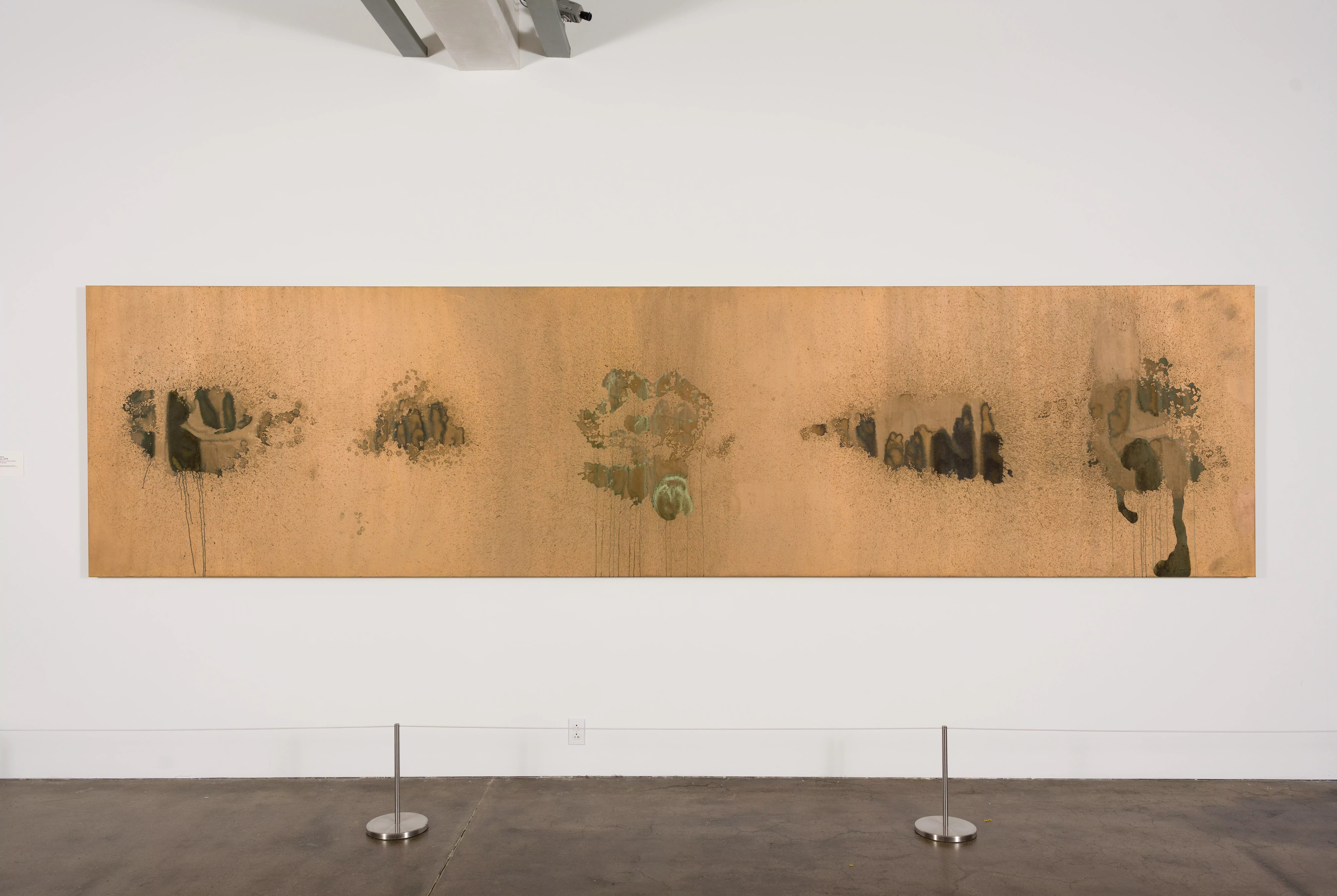
The money made him independent. Nobody could tell him what to make next. The clearest case is his Oxidation Paintings: he primed the canvases in copper paint, then he and his friends urinated on them, and the acid corroded the metal into streaks of green and gold. No portrait client would have commissioned that, and only a sliver of the avant-garde would have bought it, even though years later they would fetch millions at auction. The portraits had already bought him the freedom to make what he wanted.
Parallel Thinking sits at the root of everything I do in food. I studied business, then went to art school, and I’ve spent the years since running both halves of my head at once, the half that wants an idea to be beautiful arguing with the half that wants it to pay for itself. So when I look at Warhol’s business art, I see the engine that made everything else possible. I once ran a small version of it myself, and it changed the course of my career and the shape of my life. It turns up everywhere, most plainly in an industry that refined it into a science: tech.
No Room for Strikeouts
No one in Silicon Valley set out to copy Andy Warhol. Tech arrived at the same trick on its own, and it works there better than anywhere else for one reason: margins. Sell software and the cost of serving the next customer is almost nothing, so each dollar comes back many times over, funding the next round of research and the round after that.
In one quarter of 2025 Apple booked around $95 billion in revenue and turned roughly $24 billion of it into operating cash. It plows the surplus into research and keeps refining a $3,500 face computer almost no one asked for. Amazon runs the same loop through AWS, which clears more than $11 billion a quarter and bankrolls long shots like the Zoox robotaxi. The deeper the pockets, the more swings you get, and the grand slams pay for the strikeouts.
I am not holding tech up as the model food should copy. People have bolted a move-fast-and-break-things mindset onto food before and mostly broke things that didn’t need breaking. My point is narrower. Shareholders don’t reward a food company for cleaner water or healthier eaters unless those things also turn a profit, so the only companies that can push toward better outcomes for people and the planet are the ones with enough surplus cash to fund what won’t pay back for years. Tech is just where that flywheel runs hottest. Food can’t spin it the same way. The reason is structural.
Food runs on margins that would horrify a software executive, often a few cents on the dollar, and it’s brutally capital intensive: nothing reaches a shelf without factories, trucks, and slotting fees negotiated over decades. The whole apparatus rewards predictability, not surprise. The grocery buyer wants the cereal exactly as it was last quarter, and the shopper, unlike the gadget owner expecting a better phone every fall, mostly wants it to taste the way it did when she was ten
Clayton Christensen named the trap in The Innovator’s Dilemma: the better a company is run for the business it already has, the harder it gets to justify the bet that loses money now and pays off later. A system built to run smoothly is a poor place to gamble. And yet food is exactly where the boldest bets ought to be made, even though a publicly held company, judged by the market every quarter, is the worst placed to make them.
I’m not as interested in the moonshots that leave farming behind, like lab-grown meat or indoor farming. I mean something a food company should, in theory, be able to do: move a real share of its supply chain to regenerative agriculture and build a new product line on top of it. To pull that off, a company that got rich for decades on extractive farming and junk food would have to stand up in front of its shareholders. It would tell them it now wants to rebuild its sourcing around soil health and sell people something better.
To that room, the proposal lands the way urine on canvas once did in the art world. It looks radical, the kind of idea a sensible executive is not supposed to say out loud. No patron would have funded Warhol’s version, and no shareholder base will give a food company permission for this one. Warhol had already bought his way out of needing permission. Most food companies never have, so they almost never make the bet that could remake a category.
I won’t relitigate the Danone story; you’ve heard me tell it. Emmanuel Faber tried to run a version of this play, and his own board pushed him out for it. Picture Faber with a cash cow in one hand and his programs for biodiversity, clean water, and regenerative sourcing in the other, funded and shielded from the people who wanted him gone. Might he have kept his job, and might those programs have bent the food system toward something better at real scale? We don’t get to know, because he never had the cover a cash cow buys.
So the industry does the sensible thing and buys its breakthroughs instead of building them. General Mills bought Epic Provisions, the grass-fed brand built on regenerative ranching; Hormel, the maker of Spam, paid around $775 million for Applegate and its organic, antibiotic-free meat. It’s hard to fault, and it isn’t the same as building something brave from the inside.
A Factory of My Own
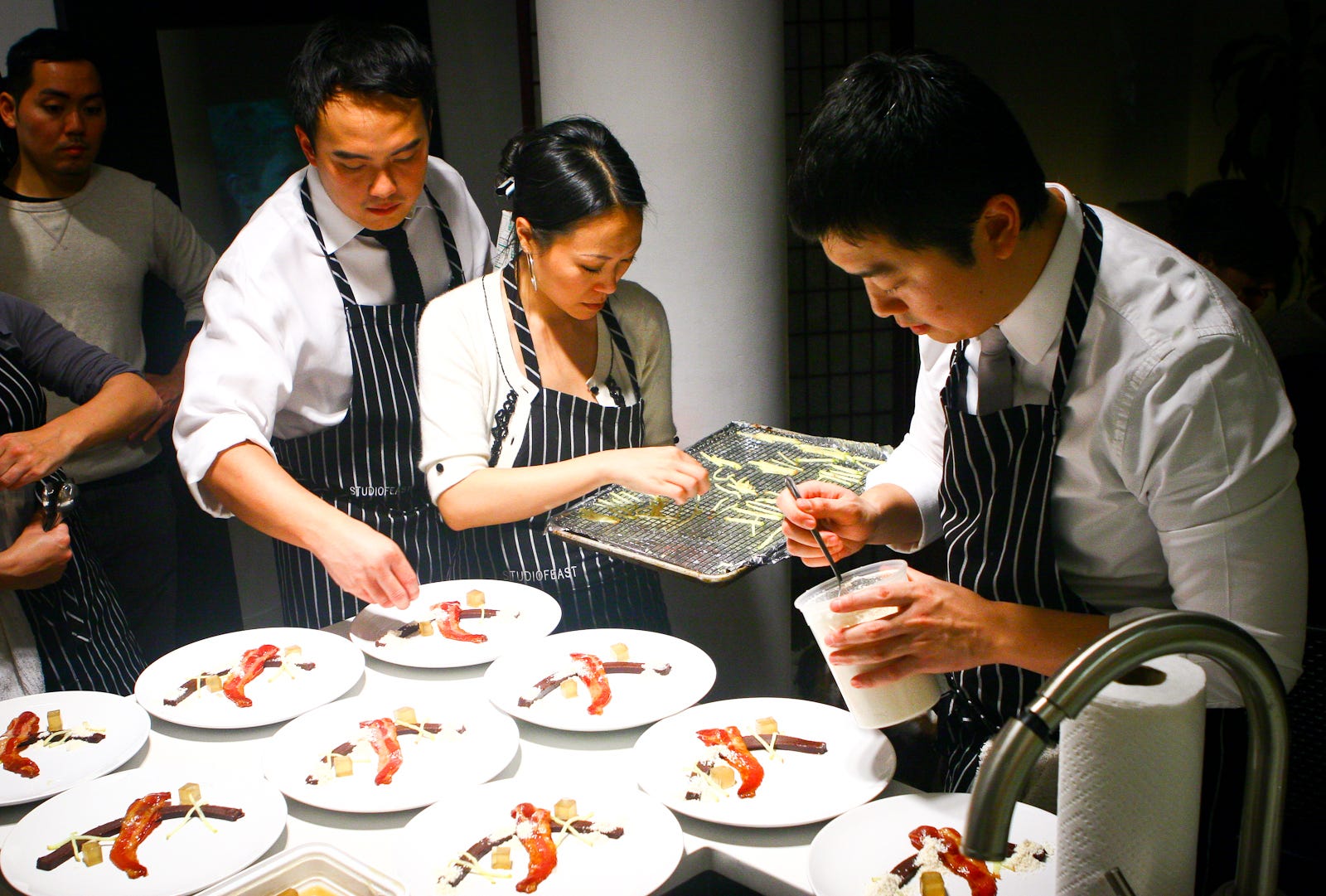
I know what that freedom is worth, because for a while I had a small version of it. Starting in 2008, two close friends and I ran a supperclub in New York called Studiofeast, and kept it going for about eleven years. It was never a business in any real sense. I worked in corporate innovation the whole time, first in fintech at American Express, then at a boutique strategy agency, so Studiofeast never had to cover my bills. That one fact was the whole point of it.
Supperclubs were having a moment then, and a wave of us used them to try forms of dining you couldn’t get away with in a real restaurant. Because Studiofeast didn’t have to make money, it could be as strange as we wanted, and it became the most valuable creative outlet I’ve had. One year we built a seven-course dinner around umami, well before the flavor had become a household name. Another night, every dish was something a guest had named as their death-row last meal. We did a Sichuan crawfish boil for a TV Show, an evening tracing the past, present, and future of protein, and a six-course lunch on a moving New York City subway car.
A recruiter found me through Studiofeast, not through American Express or the agency, and the job she brought me was at Chobani. This was back when I had to Google what “Chobani” was as I was on the phone with her. I doubt she’d have heard of me if I’d played the supperclub safe. The day job kept me afloat, so Studiofeast was free to be risky, and the risk is what got noticed. That opening turned my career toward food.
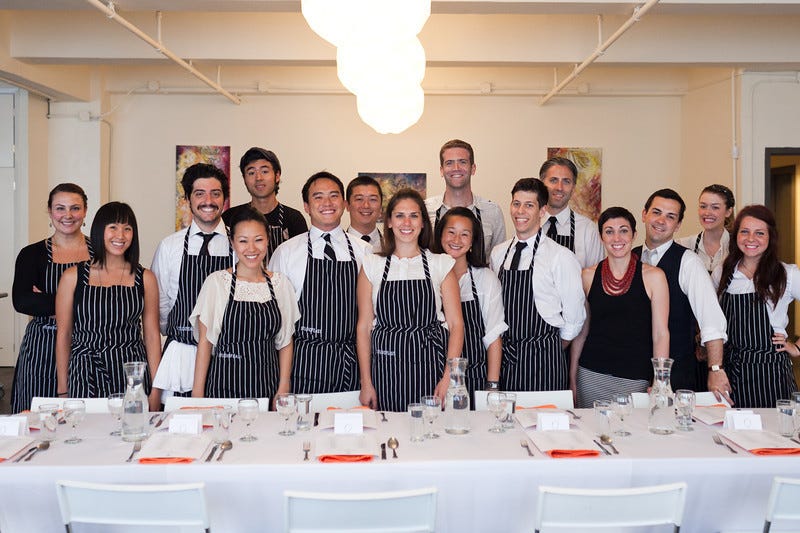
It would be easy to file Studiofeast away as a tidy lesson about funding your own freedom, and the lesson is real enough. But that was never what it was to me. Nearly every person who matters most in my life today, I met through Studiofeast, and some of the best nights I’ve ever had happened around those tables and in the kitchen, next to people I loved cooking with. The day job mattered only because it freed all of that, and all of that is most of what my life now rests on.
That’s the pattern underneath all of it, and it was never only about Big Food. Warhol had his portraits, tech has its flywheel, I had a day job. The farmer who plants one speculative acre behind a dependable one is running the same play, and so is the chef whose catering covers the tasting menu nobody ordered. Breakthrough tends to come from whoever built something steady enough to let them fail.
And the lesson I keep relearning is that the practical and the impractical belong in the same pair of hands. The boring engine is what pays for the dream to exist, and the dream is the reason you bother keeping the engine running. Lose either half and the other stops mattering.
I want that for the whole of food, the giants as much as the upstarts, and the rest of us too. Stay solvent enough to keep going, and keep dreaming anyway. The food worth eating has always come from the people who could do both at once.
—
Mike Lee is a food futurist and innovation strategist, author of Mise: On the Future of Food, host of The Tomorrow Today Show podcast, creator of Mise Futures, and is on Instagram at The Book of Mise.
—
Mise 2: The Restaurant Issue is now open for pre-orders! Ships 8/11/26. Over 200 pages of future scenarios exploring the future of restaurants.
You argue the point beautifully, but it still leaves me feeling like this is no way to feed humanity — I.e. the only people in a position to change the system for the better either have day jobs, trust funds or (e.g. in my case) got lucky and won the startup lottery earlier in life. Because what that implies is privilege, and boatloads of it.