


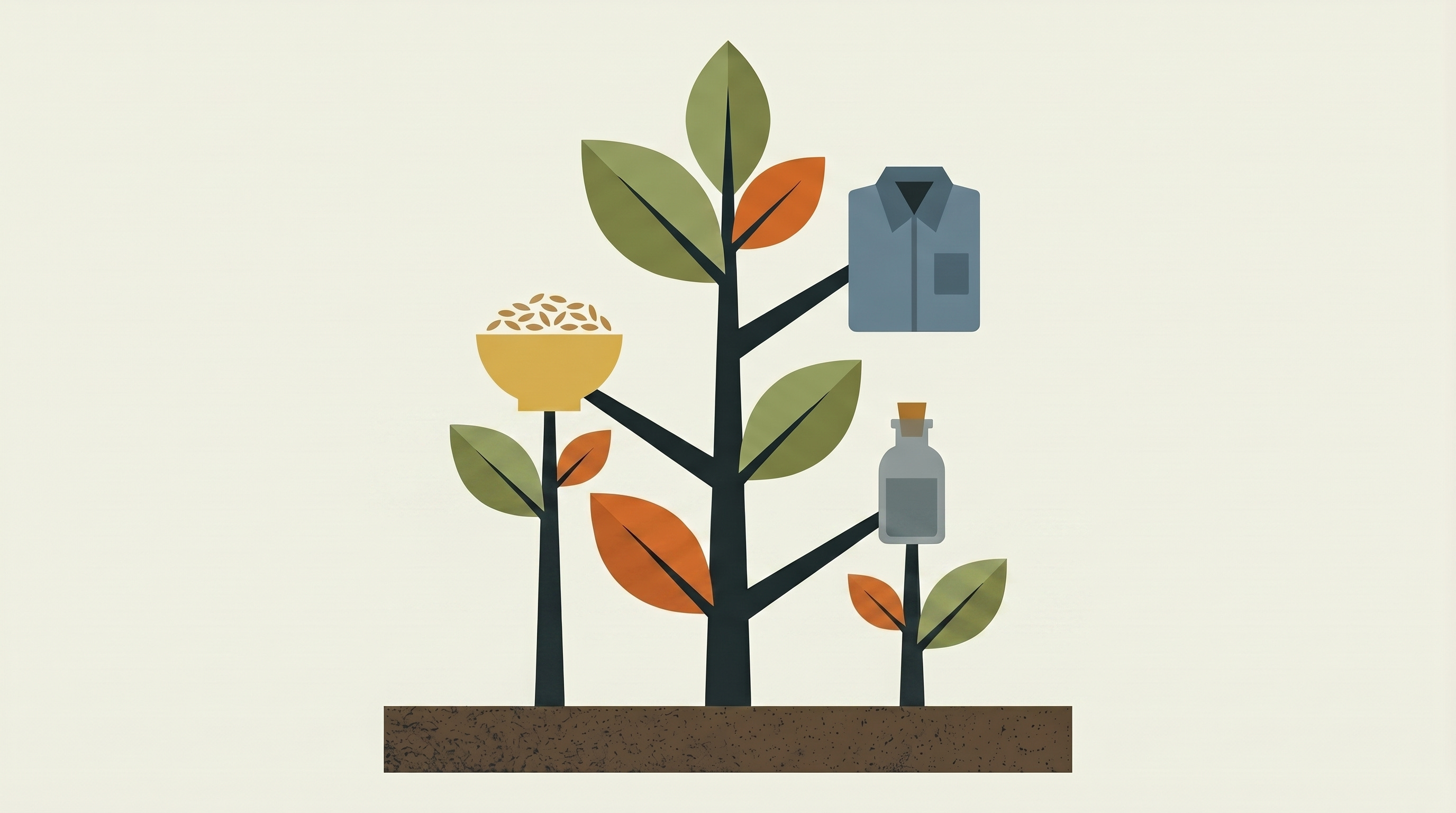
A Patagonia fleece, a tube of Burt’s Bees lip balm, and a box of cereal all start in the same place: the soil. The cotton in your t-shirt grew in the same kind of field that grows your dinner. Now and then it’s the very same field, though nowhere near as often as it could be.
We in the food industry have spent a decade learning to ask hard questions about the farms behind our food, whether they build the soil or strip it. We’ve mostly had that conversation among ourselves. We barely talk to fashion and beauty, who pull from the same ground, and there’s a lot we could do together if we did.
Same Soil, Separate Lanes
Those of us in food tend to focus on the food side of regenerative agriculture. That’s a view worth widening. For about a decade the talk has run through restaurant menus, oat milk cartons, and beef that did right by the grass. That’s real progress. It’s also mostly happening in one lane.
That isn’t because fashion and beauty have ignored the soil. They haven’t. Rebecca Burgess built the textile network Fibershed on a plain fact: the fiber and dye in our clothes come straight out of the ground. She’s spent years doing for the closet what the Good Food Movement did for the plate. Patagonia and Dr. Bronner’s have pushed on regenerative sourcing too. The thinking is alive in all three industries. What barely exists is the conversation between them.
So food companies plan around food crops, apparel around fiber, beauty around botanicals, each of us standing over the same farm and seeing only the part we buy. A field doesn’t sort itself into those categories. We do.
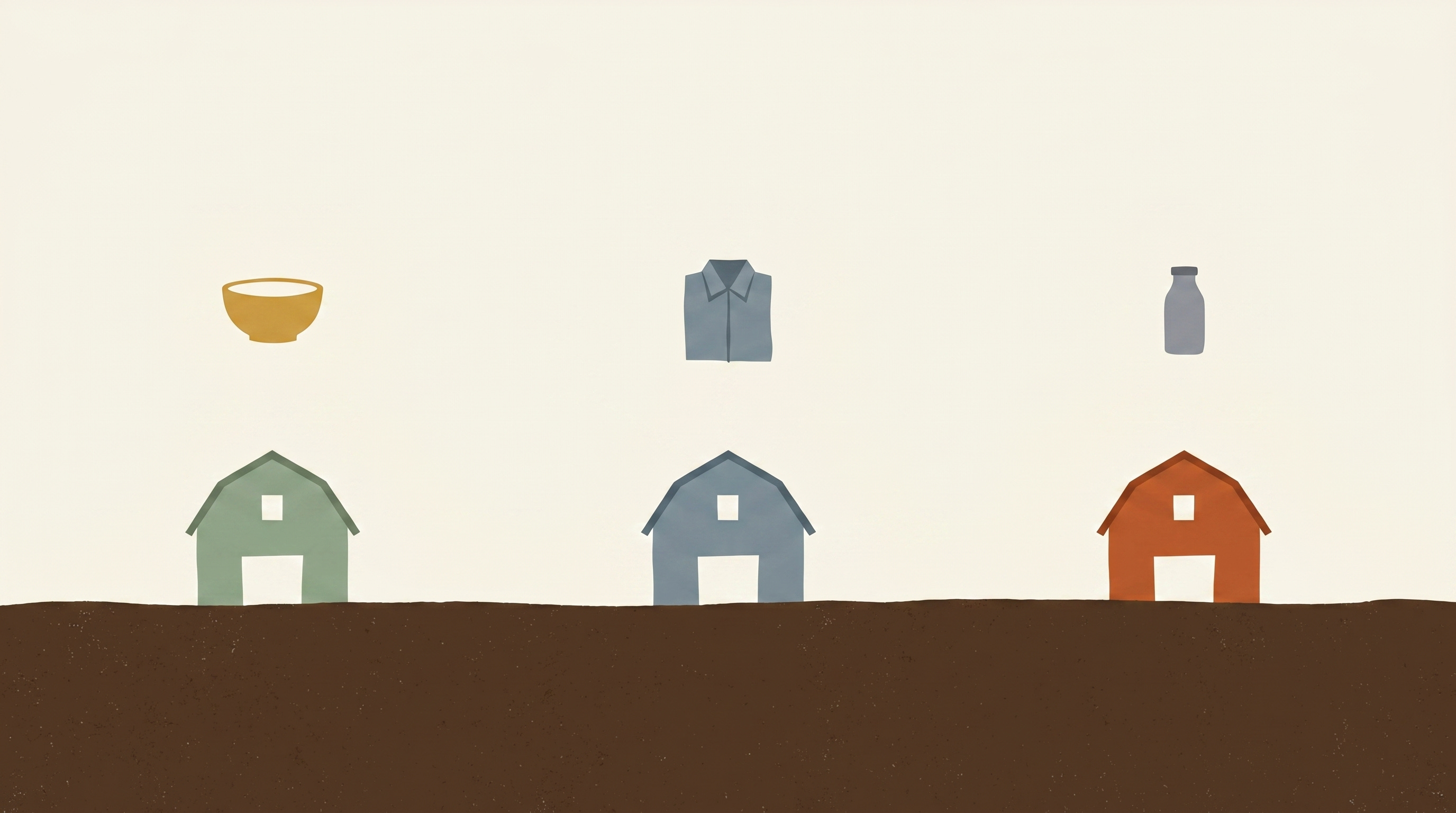
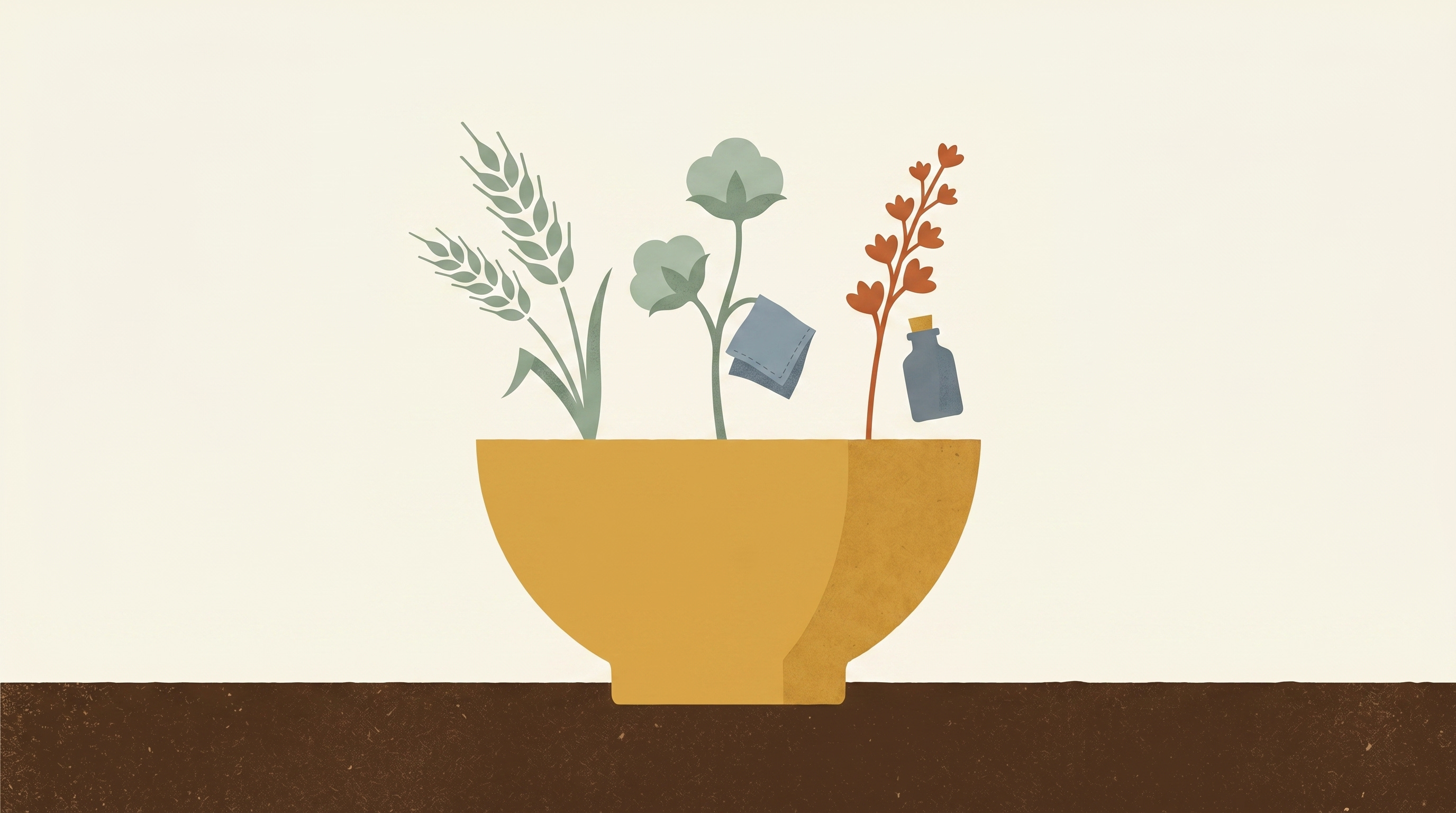
And the categories were never natural. We made them up. Before the Green Revolution paid farmers to specialize, one farm might grow food, fiber, medicine, and dye side by side. The sheep gave wool and manure. Flax became linen and linseed oil. The blue in a coat came from indigo growing a few rows over.
Then monocultures took over, the highest-yielding crop crowding everything else off the land, and the food-and-fiber split hardened into “best practice.” We’ve been paying for that narrowing ever since. A global food system leaning on twelve plants and five animals is fragile, and the Cavendish banana in every supermarket is one disease away from disappearing. Getting diversity back into the ground is the whole game, and it’s bigger than any one industry can do alone.
The Economics Of A Chaos Garden
Monoculture consumption leads to monoculture farms. A grower plants what someone will reliably buy, and nothing else. So picture a field that’s genuinely diverse. Gabe Brown, the renowned North Dakota farmer, plants cover-crop mixes so mixed he calls them chaos gardens. A field like that grows far more than food: fiber, oilseeds, dye plants, fragrance crops, feed. Only some of it is headed for a plate. The rest has to go somewhere, and somebody has to pay for it, or a sensible farmer won’t bother growing it.
The trouble is that food can only buy the food, apparel only the fiber, beauty only the botanicals. When each of us takes our slice and walks away from the rest, the math on diversity falls apart, and the field slides back to the one crop with the surest buyer. Keeping a field diverse comes down to who’ll pay for all of it, and those buyers sit in industries that rarely share a table. The most diverse fields stay the hardest to make money on, so diversity keeps losing.
Beauty runs on agriculture as surely as the produce aisle does, leaning on shea, argan, lavender, and rose. The tint in a lipstick and the plant extract in a serum are crops somebody has to grow. The fiber in a shirt is no different. None of us is buying from a factory. We’re all buying from a field, and mostly we’re each buying from it alone.
“Nose-To-Tail” Agriculture
The fix is something chefs already live by. Fergus Henderson built his London restaurant, St. John (one of my top 5 favorite restaurants on the planet), on a single rule: if you take an animal’s life, you owe it the respect of using all of it, the tenderloin and the trotter alike. Anything less is just waste with good manners.
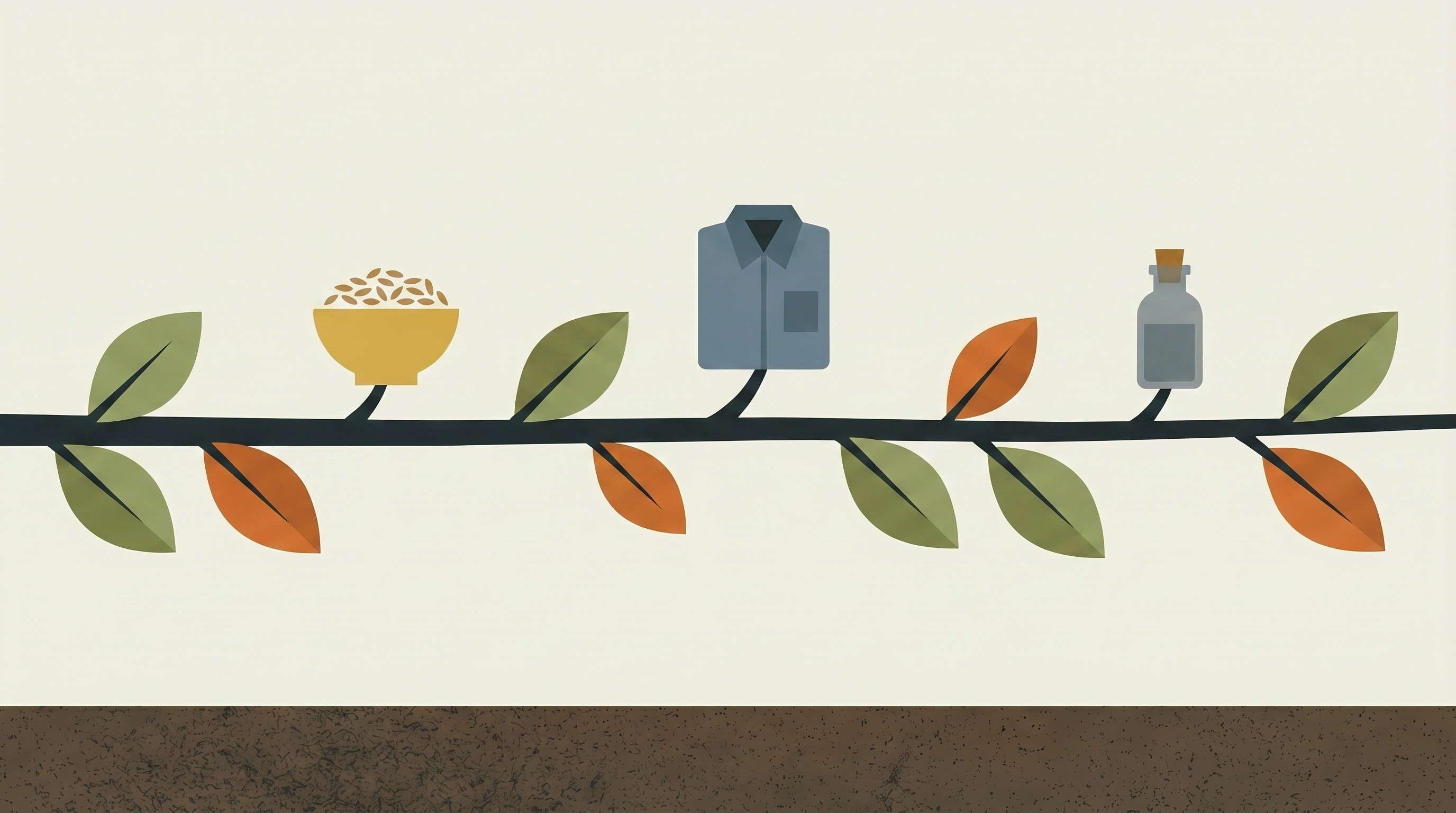
A regenerative field asks for the same discipline. It only pays for itself when somebody uses the whole harvest, not just the prestige cuts. Food takes the grain, apparel the fiber, beauty the botanicals, and the cover crops that rebuilt the soil get planted by the farmer and bought by no one. The numbers work only when the whole field has a home.
Take a cotton grower going regenerative. They rotate cotton with peanuts and cover crops to feed the soil. The apparel buyer takes the cotton, the food buyer the peanuts, and nobody pays for the cover crops. That one farm already feeds three industries at once, and the three of us keep acting like we shop in separate economies.
I won’t pretend the coordination is easy. Getting a food team and an apparel team to plan around the same farm, on the same timeline, with budgets that don’t talk, is hard. But the prize is worth the awkward meetings. If the three of us bought across the whole harvest, the farmer could plant for diversity instead of for the one crop with the surest check.
Let Soil Create the Product Line
I’m putting this forward as a vision to work toward, and I won’t pretend it’s a sure thing. What I keep reaching for is a food, fashion, and beauty industry that can sell what it makes and rebuild soil and biodiversity in the same act, so the economy and the planet pull together instead of trading off. I don’t know if it’s buildable. But it could be, and that’s the reason I keep sketching ideas like this one.
A diverse farm grows crops for several industries at once: grain for food, cotton for clothing, oilseed for beauty, and cover crops that rebuild the soil. Today each buyer acts alone, takes its one crop, and leaves the rest. Instead, they could plan the farm together. Before anything goes in the ground, every company that wants something from it agrees who buys what, right down to someone paying for the cover crops the soil depends on. The farmer holds those promises as forward contracts, the sale locked in before the crop exists, and plants the whole diverse mix knowing all of it is sold.
That alone would change what gets grown. But there’s a stranger, better version beyond that.
A company usually starts with a consumer insight. People want more protein, say, or a cleaner label, and the product team designs backward from it, then leans on the supply chain to grow what the product needs. The soil takes orders. This is how companies make products.
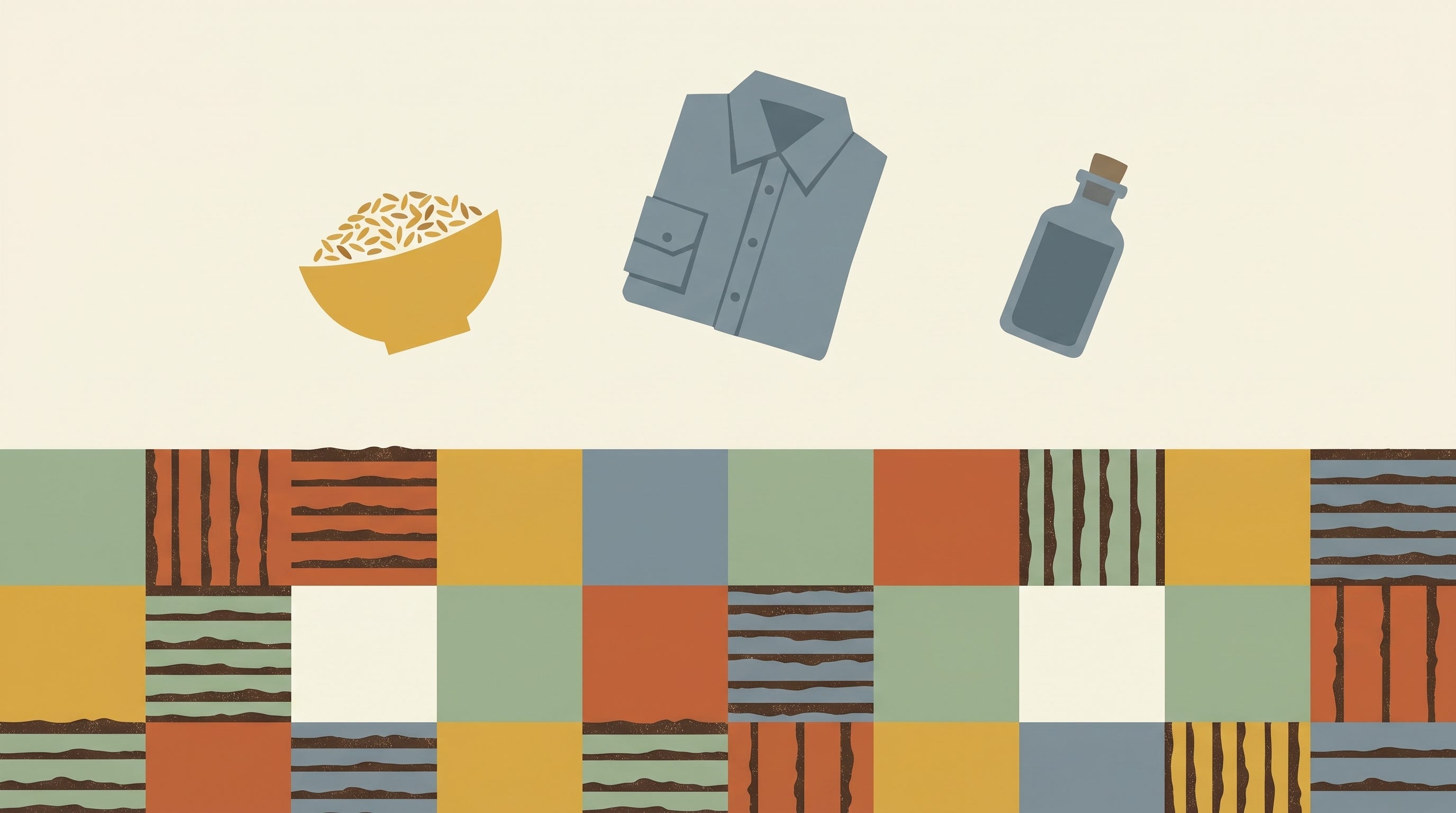
What if we flipped it? Start with the soil. Look at what a region’s farms need to grow together to stay healthy: the rotations that rebuild nitrogen, the cover crops and roots that hold water and carbon. That combination becomes the product development brief. The product line gets built out of what the land wanted to grow anyway.
It’s like the cooking show Chopped, run at the scale of a CPG portfolio. The chefs open a basket they didn’t pick, and the skill is turning whatever’s inside into something people want to eat. Except in my version, the basket isn’t random. It’s the crops that, grown together, leave a region’s soil healthier. The brand brings the creativity, finding products that make those crops worth growing. Or, plainly: it’s farm-to-table cooking, scaled from one chef’s kitchen to a whole industry’s shelves.
Cotton and peanuts already belong in the same rotation. The peanuts fix nitrogen and break the pests and diseases that hammer cotton, so both come out of the ground healthier. A company could sell a cotton product and a peanut product, both sourced from the same rotation farms. Instead of demanding cotton from one set of farms and peanuts from another, it pays a whole region for the pair, and that pair becomes a soil-led product line. For a farmer, that’s a reason to add one simple two-crop rotation, the smallest real step toward a more diverse field. Almost no company today sells both a cotton shirt and a bag of peanuts. But maybe a company like Patagonia could. It already makes clothing and, through Patagonia Provisions, food. Or a clothing brand could partner with a peanut brand, splitting the rotation.
We’re a long way off. Most companies still can’t get their own departments to plan around one farm, let alone coordinate with a competitor down the street. But the direction is the point. Right now the soil works for the product. The bet is that one day the product works for the soil, and we eat and wear and wash with whatever a healthy field hands us.
Connecting the Silos
We don’t have to invent the cross-industry playbook from scratch. The most credible standard we have was built that way on purpose. When the Rodale Institute defined a stricter farming standard, it co-founded the Regenerative Organic Alliance with Patagonia from apparel and Dr. Bronner’s from personal care, a three-industry project from day one. Its Regenerative Organic Certified seal now turns up on a bag of beans, a cotton t-shirt, and a bottle of soap, one set of soil-and-labor rules held across all three.
The One Planet Business for Biodiversity coalition does something similar, pulling food, textile, and personal care companies into the same room to scale regenerative farming. The wiring is there. What’s missing is the rest of us treating this as one project instead of three.
One sourcing decision inside a big flavor and fragrance house can move food, beauty, and apparel at once, and a lot of acres with it. When we look ahead in food, fashion and beauty belong in the room, because we’re all forecasting the same farms.
Altruistic Hedonism works in every aisle. People won’t buy regenerative fiber to save a watershed any more than they’ll eat regenerative grain to save one. They’ll buy it because it feels better and performs better. A handful of brewers turned Kernza from an obscure grain into a beer people order by name. We can build that same taste for quality around a fabric or a dye, and every time we do, a farmer gets one more reason to keep the field diverse.
The food industry treats regenerative agriculture like it belongs to us. It doesn’t. Farms feed looms and labs as easily as they feed us. The soil has never cared whether it was growing a dinner or a dress. Keeping it to ourselves is costing us the biodiversity we keep saying we want. The field is already whole. We’re the ones still talking about it in separate rooms.
—
Mike Lee is a food futurist and innovation strategist, author of Mise: On the Future of Food, host of The Tomorrow Today Show podcast, creator of Mise Futures, and is on Instagram at The Book of Mise.
—
Mise 2: The Restaurant Issue is now open for pre-orders! Ships 8/11/26. Over 200 pages of future scenarios exploring the future of restaurants.
I'm so glad you're exploring this! I know so much less about fashion and beauty, but have been itching to learn more about the ag systems that supply these industries and the overlap with food.
Another great piece, thank you! My question is, which grain company buys the Kernza, who malts it, and what does the production contract look like? Those can be really powerful tools for incentivizing farms to plant novel crops, as long as the company performs on the contract. Here in western Canada there grew up a thriving pulse and special crops trade using production contracts 30 years ago, but the small offshore companies that buy most of our peas, lentils, chickpeas, mustard, flax and sunflower seed go broke and leave farmers unpaid fairly often. And the big grainco's have no interest or much handling capacity to trade in small-volume special crops, compared to canola and wheat, leading to the monocrop outcome.