


No one knows for sure what the future holds. And anyone who tells you they do (me included) is either lying or trying to sell you something. We live in a society where having the right answer is the ultimate virtue. We’ve conditioned ourselves to view uncertainty as weakness and certainty as strength, especially among the pundit and consultant class, where having the answers is literally why people pay us.
But I’m much more interested in great questions than great answers. Especially about the future. Questions keep you sharp and force you to observe. They’re a call to stay vigilant. Answers, if not handled correctly, can breed tunnel vision, complacency, or even hubris. Foresight is far more about asking the right questions and thinking critically and expansively about what’s coming. Not about predicting it.
In that spirit, today I want to share and explore three big questions I have about the future of food. I think these questions are “big” because their answers create a massive domino effect throughout the food system. They poke at human nature and how our thoughts and behaviors shape the food system each day.
The questions below don’t address any specific trend prediction (e.g., will we still be obsessed with protein in 20 years?), but they can help you describe what you think the next big thing might be. They explore our core relationships with information, with each other, and with fear, and consider the downstream effects of the range of outcomes in those three things. Or if you want something with slightly more weight: Pull on any one of them and the whole system moves.
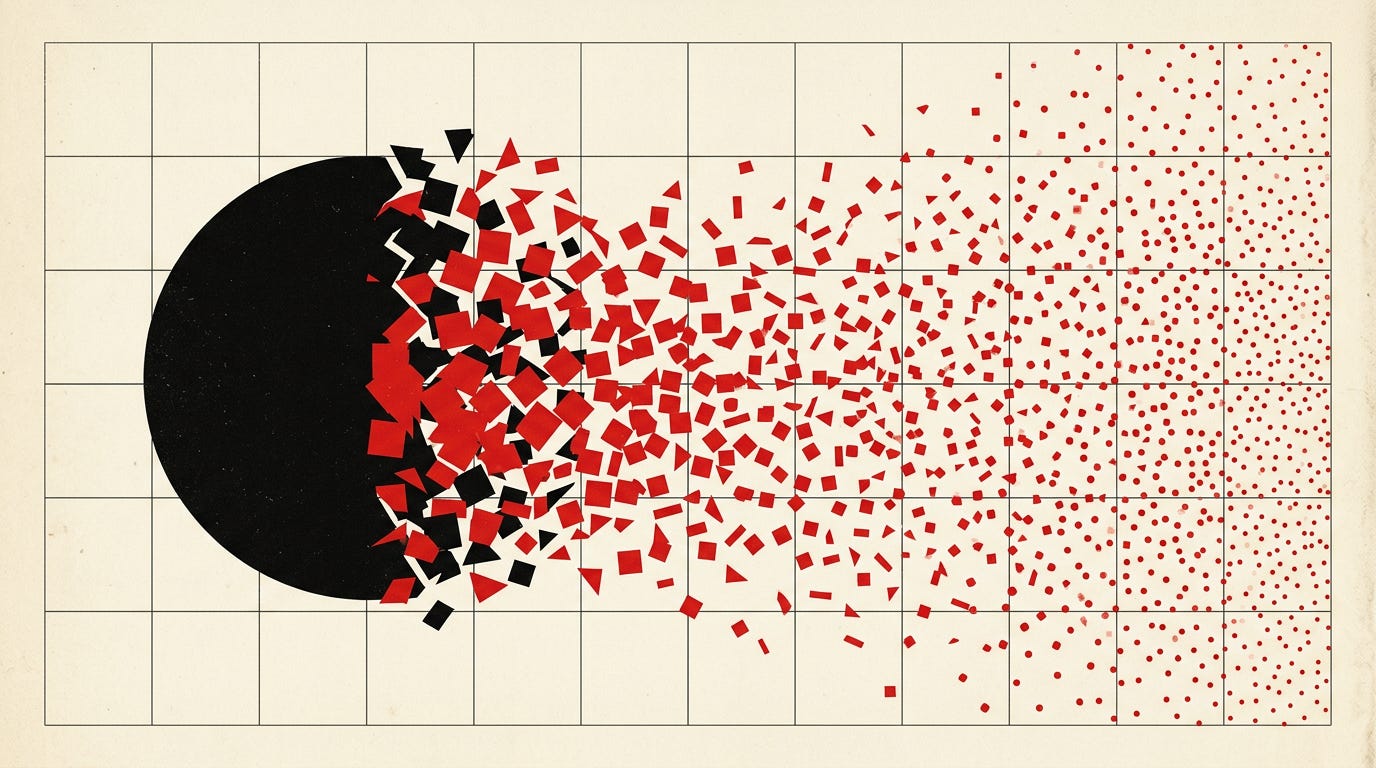
Is influence concentrated or distributed?
The food industry is highly consolidated. In meat, just four packers (Tyson, Cargill, JBS, National Beef) handled around 85% of the cattle in America. In chemistry, Bayer bought Monsanto for $63 billion in 2018. In grocery, Kroger chased after Albertsons for two years until a judge finally killed the deal in 2024. And they did that to compete with Walmart, which represents about a quarter of US grocery sales.
And consolidation snowballs. More consolidation begets more consolidation. Because every merger expands a company’s leverage over the retailer and the customer. And that leverage helps a company get even bigger, which means more leverage, then more size, and so on.
But while the “stuff” of the food industry got concentrated into a few big hands, people’s attention spans went the other way. Things like the food dye bans we see happening now didn’t really originate with the FDA. They started with podcasters and angry parents, appointed by no one. A dietitian with a ring light can sell more yogurt than a Super Bowl ad. Over the past 20 years, trust got distributed.
The internet blew up the attention hegemony that three television networks and a handful of newspapers had over society for generations. We no longer had a single source of truth, but the ability to choose from dozens of different truths. Reddit is a tangible illustration of this, as virtually every type of mainstream to fringe food trend or belief system is represented on one website. In about 40 years, we went from Walter Cronkite being the voice of truth on the CBS Evening News, to a site like Reddit, which lays the ground for millions of tiny Cronkite voices to bloom.
Food looked a lot different before the Internet than it does now. We treated food a lot different before the Internet than we do now. So in the future, does the source of influence and trust come from central institutions (universities, governments, academics) once again, or do we continue to descend into the rabbit hole of influencer culture defining the truth in more varied and fantastical ways?
The signals that suggest which direction the future of influence and truth might be headed will help determine which direction the food system itself will go.
Are we united or divided?
Carnivore, vegan, seed oil people, raw milk people, plant-based, blue food, ancestral, etc. Each one is an oasis of certainty about a question (what should I eat?) that is incredibly complex. And in that complexity, we as eaters, already stressed out and neurotic to begin with, want to lean into the things that feel comforting and safe to us. Only, the definition of what is “comforting and safe” to people varies widely.
It’s common to feel like you’re swimming alone in this ocean of health, food, and wellness advice out there today. So joining a tribe feels good. It feels safe. It may not be perfect, but it at least anchors you to others who might have the same fears and aspirations about food as you do. We’re all in this together!
But across food and wellness tribes, facts can vary or contradict. The pro-vaccine and anti-vaxx crowd are both huge tribes. And both think the other is wrong. One tribe’s objective truth sounds like a total lie to the other. While the quality of evidence is vastly different between those two tribes, the conviction on both sides is unimpeachable.
We are all free to believe whatever we want to believe. And if what you believe doesn’t harm anyone else, then go for it. But there’s a limit to how far we can retreat into our own little bubbles. We still live in a commons. We share a planet. Share air. Share water. Share resources. At some point, the tribes may have to figure out how to work together again to solve some huge common problem, like climate change.
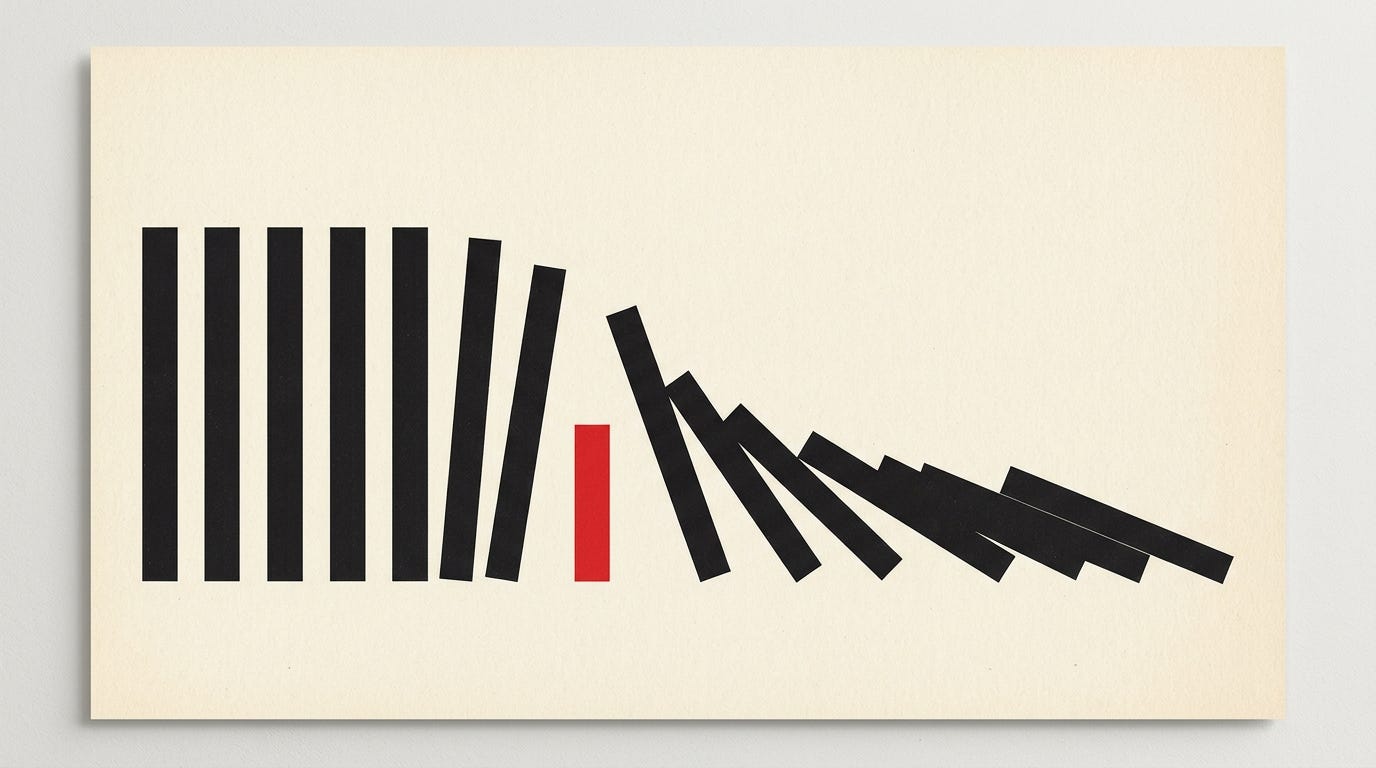
Will we prevent or react?
We are hardwired to respond to threats we can see. That’s nature. When danger is immediate and tangible, we move swiftly and decisively. But when the danger forms slowly, we mostly don’t do much at all. A slow-boiling frog doesn’t know it’s boiling.
During the Dust Bowl, soil scientist Hugh Hammond Bennett spent years writing about the dangers of soil erosion and nobody moved. Then in April 1935, Bennett happened to be testifying to Congress about soil erosion at the exact same time a dust storm from the Plains blew east and dimmed the sky over Washington DC.
The Soil Conservation Act passed in weeks. The problem didn’t change. The evidence didn’t change. The only thing that changed, as the story goes, is that the people who could do something about the problem, actually got to see the problem firsthand.
The food system has many slow disasters. Climate change, of course. A drought here and there. An aquifer slowly draining here. A bit of topsoil thinning there. All these things where one day’s damage is imperceptible, but that danger compounded over decades or centuries can lead to catastrophe.
So the more precise question is: do we as a society start acting on problems while they’re still inexpensive (relatively speaking) to fix, or does human nature require a cataclysmic event to go off in our faces before we move?
I want to believe we can act early. But everything in our wiring seems to point the other way, and the events that would suddenly feel immediate (two major breadbaskets failing in the same season, a second Irish Potato Famine type situation) are the ones that I’d rather not see.
The value of a great question isn’t the answer it might give you one day. It’s what the question tells you to do today.
—
Mike Lee is a food futurist and innovation strategist, author of Mise: On the Future of Food, host of The Tomorrow Today Show podcast, creator of Mise Futures, and is on Instagram at The Book of Mise.
—
Mise 2: The Restaurant Issue is now open for pre-orders! Ships 8/11/26. Over 200 pages of future scenarios exploring the future of restaurants.