


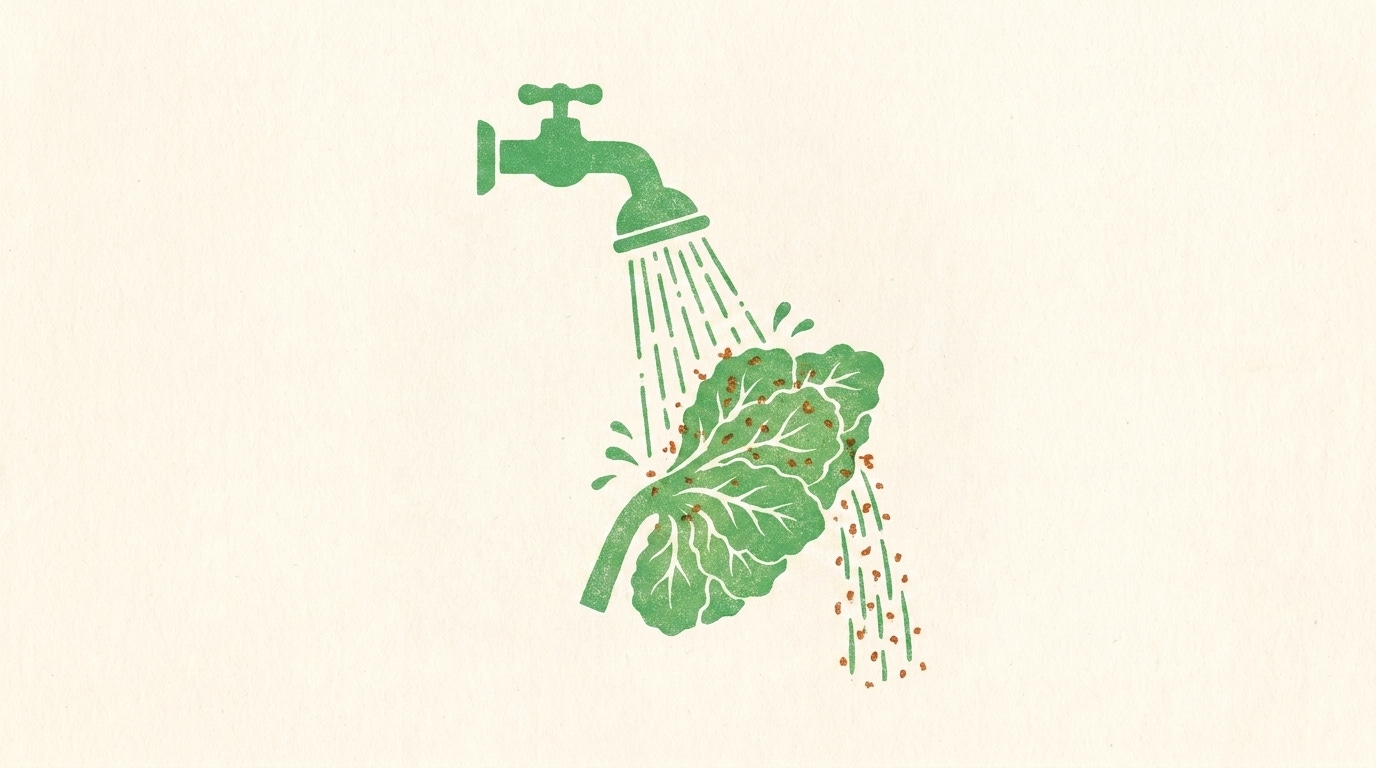
Somewhere in the design of a lettuce operation there used to be a check. Not much of one. A water sample, sent to a lab, run against a number the grower had to meet. That test was never a selling point. It was a compliance line, and as compliance came under review it caught the attention of the business as what it had always been in accounting terms: money going out, time going by, producing nothing.
In May 2024 the FDA rewrote the rule. In the agency’s own words, it replaced “the previous microbial quality criteria and testing requirements” for pre-harvest water with “systems-based” assessments the farm conducts itself, once a year, with testing required only in certain circumstances. Growers now largely evaluate their own water and decide what it needs.
An honor system, essentially. Almost nobody outside the industry noticed, because water testing is the dullest sentence in any food safety document. It also happened to be the whole game.
Nothing Downstream Catches It
Food safety is built in layers, on the assumption that if something slips past one step, a later one catches it. Contamination gets into the field, but the chlorinated wash knocks it down. Something survives the wash, but a finished-product test flags it before shipping. Belt, suspenders, another belt.
For this parasite, the later layers barely function.
Start with the wash. The chlorine in a processing line is dosed to keep the shared water from spreading contamination between heads of lettuce, not to sterilize the leaves moving through it. At those concentrations and contact times, Cyclospora is largely unaffected. What a processor calls a kill step is, for this organism, closer to a rinse.
Testing the finished product barely works either. You are hunting a rare contaminant lodged in the folds of a leaf, sampling a few pounds out of a lot measured in tons, using a lab method that is recent and finicky. Which is exactly what last week demonstrated. The FDA reported a positive lettuce sample on Saturday and pulled it back Sunday as a lab error.

So there is one control that reliably works, and it sits at the very front: keep contamination out of the water sprayed on a crop people eat raw. That is the control made optional two years before the worst cyclospora year in American history, roughly 7,000 cases across 34 states and a recall covering 27 states in eighteen days.
And a water test takes days, which is what this business cannot spend.
A processor signs a supply contract with a restaurant chain or a grocery retailer: fixed volume, fixed price, fixed delivery dates, agreed months ahead. That means harvest crews booked against specific acres on specific days, coolers scheduled, trucks routed, shelf life burning the whole time. Every step that waits on a lab result is a step where product ages, crews idle, and a delivery window narrows. The clock governs everything, and the product starts dying the moment it is cut.
So a test that comes back in three days is not a safeguard inside that system. It is a scheduling problem. And a test that has come back clean every time for years reads, on a spreadsheet, like a scheduling problem with no upside.
Nobody Decides to Be Fragile
The tempting story is that someone chose speed over safety. I’ve been inside enough food companies to know that meeting never explicitly happens. Nobody convenes to trade lives for margin.
What happens instead is a decade of small, individually sensible improvements. Consolidate two processing lines into one, because two lines at 60 percent is worse than one at 95. Pool harvest from more farms, because pooling smooths supply and lets you promise a retailer year-round volume at a fixed price. Standardize the cut, because a chain wants the same shred in Tulsa and Toledo. Streamline a test that has never come back positive, because it never comes back positive.
Each of those is an ok sounding decision. Each one is also, incidentally, a decision about blast radius. Consolidating lines means one line’s contamination is now everyone’s. Pooling farms means a single bad field enters a stream that touches a continent. And loosening the water rule means removing the only thing standing between an irrigation ditch and half the country’s salad.
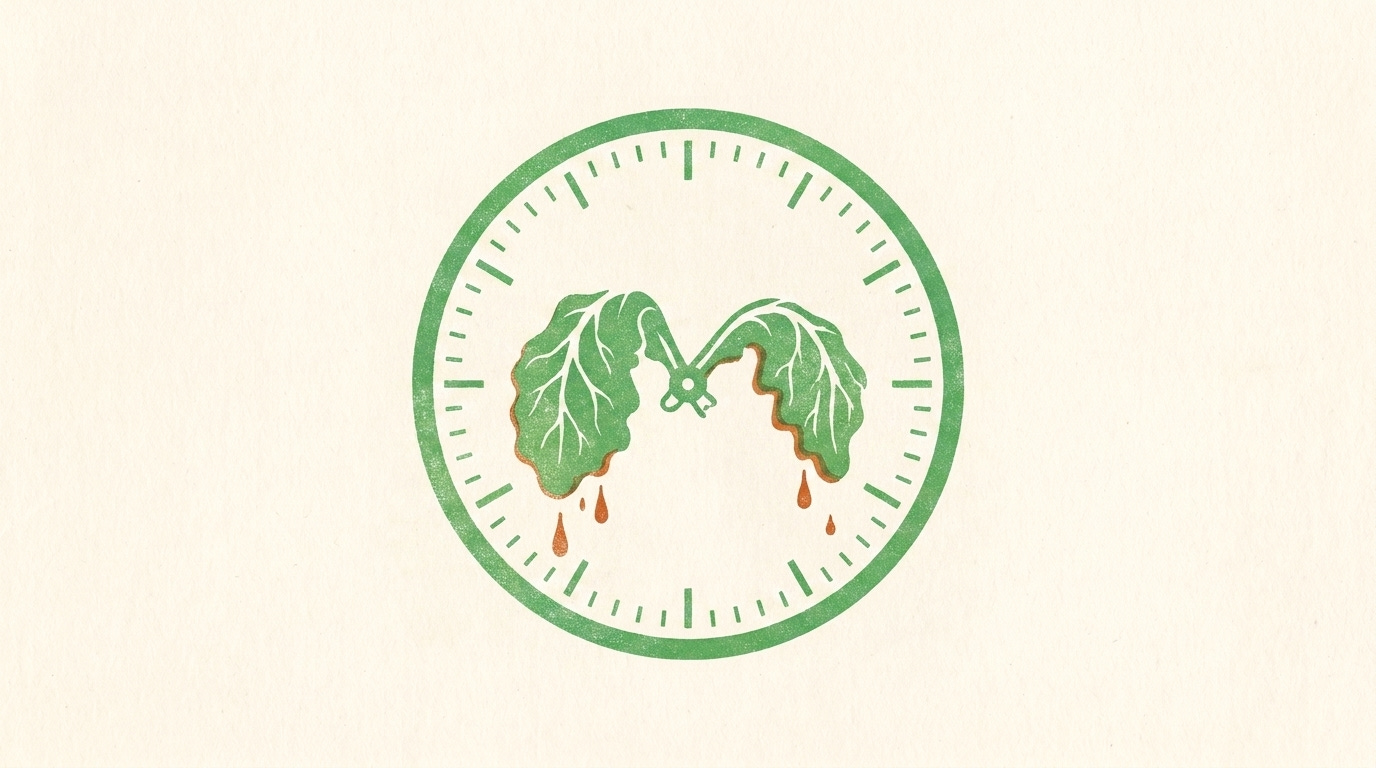
Nobody was choosing fragility. Everybody was choosing efficiency, and fragility is what efficiency is called after something goes wrong.
This is why the after-action reports never fix it. Investigators look for the failure inside the event: which field, which lot, which supplier. They find it, usually. The supplier here noted that the traceback points to one independent farm accounting for “less than 1%” of American iceberg supply, offered as reassurance and landing as a measurement. One percent of national supply reached half the country. But the thing that turned one field into 27 states was never in the field.
Everybody Wants It Faster and Cheaper
There is a version of this essay where industry is the whole story, and it would be dishonest.
Bagged greens exist because washing and chopping lettuce is work, and most people would rather that work were somebody else’s problem. Cheap year-round produce also put vegetables within reach of households that could not otherwise afford them, which is why any conclusion amounting to “buy the expensive lettuce” is advice for people who were never at risk. Everyone wants convenience. Nobody has ever stood in a grocery aisle and asked for a slower supply chain.
But wanting something is not the same as engineering it. No shopper asked that water testing become self-assessment. And no consumer spent money to keep a safeguard from arriving. A rule requiring records good enough to trace contaminated food to its source in hours instead of weeks was set to start this January. Last March the FDA moved it to 2028, after grocers argued the timeline added, in their trade association’s words, exorbitant costs and operational complexity. In November, Congress wrote the delay into an appropriations bill. Nobody argued the rule wouldn’t work.
Underneath both is the same arithmetic. The savings from dropping a control are immediate, certain, and legible: they land in a quarter, attributable to a named decision, on a slide. The cost is deferred, probabilistic, and paid by other people. Cyclosporiasis runs for weeks and can relapse, so it lands as somebody in Kalamazoo out sick for most of a month, and their employer covering it, and their kid missing camp.

Every institution we’ve built sees the first number and not the second. Quarterly reporting. Bonus cycles. Procurement contracts. Nobody has ever been promoted for the outbreak that didn’t happen, because its only evidence is an absence.
And when the deferred cost arrives, it arrives small. An average recall runs around $14 million against a supplier doing roughly $7 billion a year. After a 2024 E. coli outbreak that killed one person and hospitalized 34, FDA inspectors documented conditions at that supplier’s plant including inadequate handwashing and unclean equipment. The company said the agency classified the inspection as producing no administrative or regulatory action.
I don’t think anyone calls an outbreak a cost of doing business. I doubt it’s been written down. But the math behaves as though it had.
What We Decided Waiting Was Worth
The same week the recall spread, Detroit’s air quality index hit 724 on a scale built to stop at 500, the worst of any major city on earth. Canadian smoke, several hundred fires, nothing to do with lettuce. Living in the area made it hard to treat as an abstraction.
Except the forest also used to have a margin. Moisture, cool nights, small fires clearing fuel before it stacked up. That margin is thinner now for reasons contested in their particulars and not in their direction. Same shape: a hazard that always existed, meeting a system with less room to absorb it, going further than it used to.
We have gotten very good at running things at full speed and very bad at valuing whatever used to catch our mistakes. Which is the actual problem, and it is not going to be solved by anyone shopping differently.
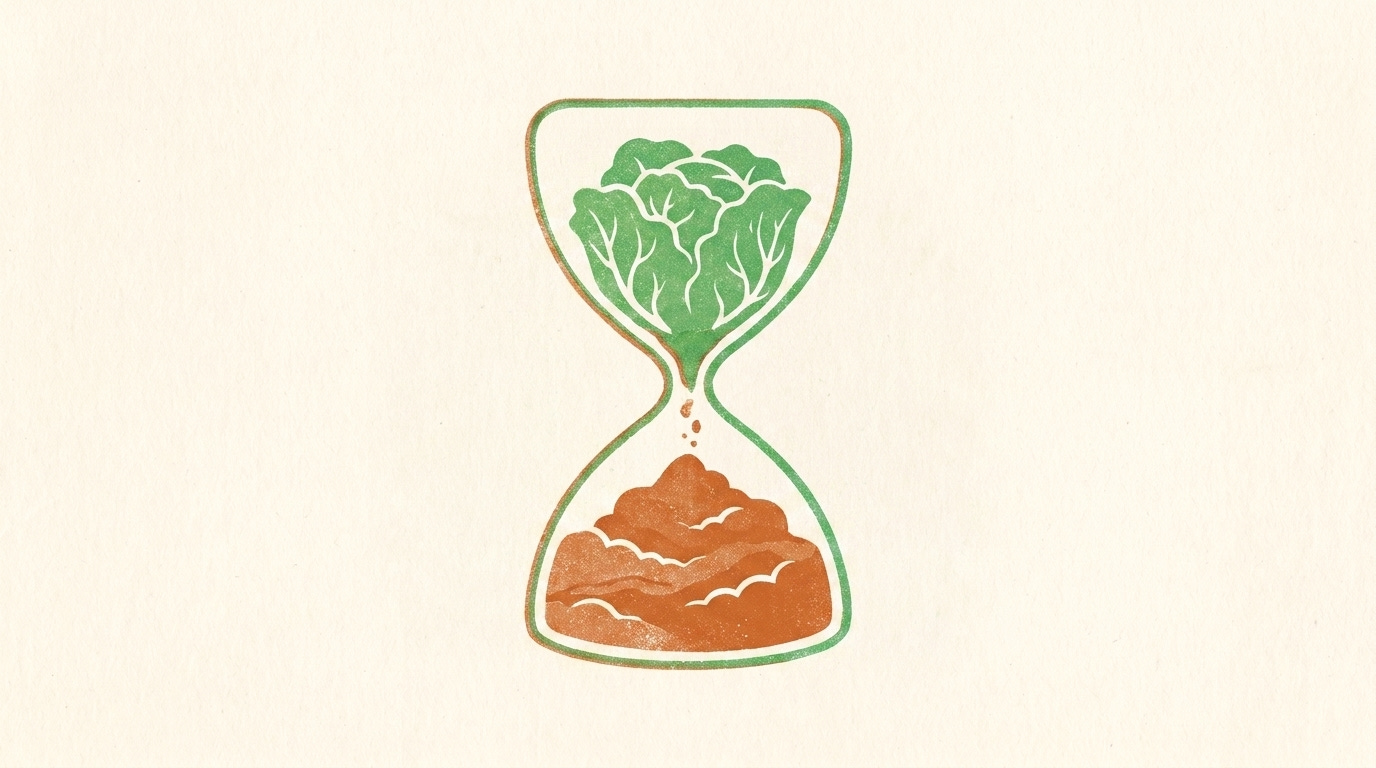
Waiting currently appears on exactly one side of the ledger. For a grower it is cost. For a processor it is spoilage. For a retailer it is an empty shelf. For an eater it is an inconvenience, because we have been trained for thirty years to read speed as freshness and to treat February strawberries as ordinary. Nowhere in that chain does anyone book the value of the days spent, because what those days buy is an outbreak that never happens, and nobody has figured out how to put an absence on a balance sheet.
Until that changes, every rule is temporary. A water standard restored in a safety-conscious year gets softened in a cost-conscious one, because the underlying arithmetic never moved. What has to shift is the assumption underneath the whole arrangement: that time is waste, and that anything which slows the line down is a problem to be engineered away.
It isn’t waste. It’s the only thing standing between an irrigation ditch and half the country’s salad, and we priced it at zero.
The recall will finish and the lots will get pulled. Somewhere this week a grower is looking at his own irrigation water and concluding it’s fine, in good faith, on a schedule with no room for finding out otherwise. That’s the decision that mattered. We made it optional, and then we made it fast.
—
Mike Lee is a food futurist and innovation strategist, author of Mise: On the Future of Food, host of The Tomorrow Today Show podcast, creator of Mise Futures, and is on Instagram at The Book of Mise.
—
Mise 2: The Restaurant Issue is now open for pre-orders! Ships 8/11/26. Over 200 pages of future scenarios exploring the future of restaurants.