


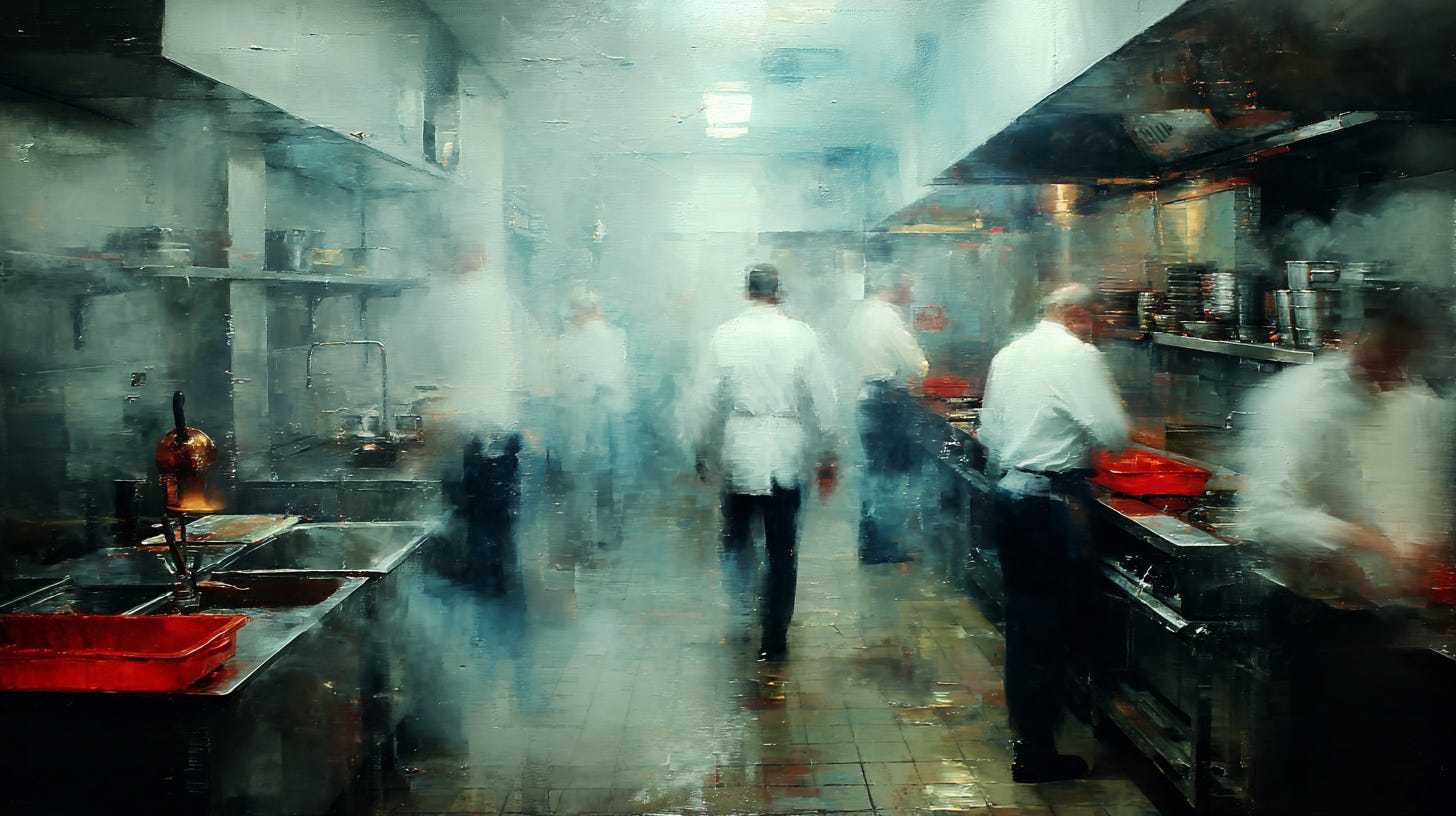
The New York Times recently profiled Valentino Luchin, the 62-year-old chef who robbed three San Francisco banks in a single afternoon this past September—seven years after robbing his first. The piece traced his arc from James Beard Award-winning kitchen to county jail, from his acclaimed Walnut Creek restaurant Ottavio to bankruptcy. It was a compelling portrait of one man’s unraveling.
But the Luchin story isn’t really about Luchin. Tough economic circumstances don’t justify robbery—thousands of restaurant owners face serious financial stress every year without crossing that line. The choice to walk into a bank with a demand note was Luchin’s alone.
What’s worth examining isn’t that he snapped. It’s the grinding desperation that preceded the snap—and how many restaurant owners are living some version of it right now, without the felonies. Economic cycles, real estate markets, tariffs, labor dynamics—these forces grind people down over years until survival feels impossible. A pandemic closes your dining room. Rents rise while foot traffic declines. Delivery apps extract commissions your margins can’t absorb. The structural forces that pushed Luchin toward the edge are pushing an entire industry toward extinction.
The question is what we’re losing as independent restaurants become economically harder to sustain—and whether we’re okay with what replaces them.
What Desperation Looks Like
Desperation doesn’t arrive all at once. For restaurant owners, it accumulates slowly—a grinding daily experience that compounds over months and years until the weight becomes unbearable.
It’s staying up until 3 AM after closing, calculating whether you can make payroll that week. It’s watching your credit card debt climb while your savings account empties. It’s knowing that produce costs more than last month, and the month before that, and that you can’t raise menu prices again without losing the customers who are already coming less frequently. It’s fielding calls from vendors you’ve known for years, explaining why their invoices are 60 days past due. It’s the mental arithmetic of which bills to pay and which to let slide another week.
Many small business owners experience variations of this stress when economic conditions deteriorate. But independent restaurants operate with unique vulnerabilities. Their margins are brutally thin—typically around 5% according to industry data. Their costs are largely fixed. Their inventory is perishable. Their labor is intensive and increasingly expensive. And unlike other small businesses, restaurants can’t simply reduce hours when times get tough without destroying the experience they’re selling. A half-staffed restaurant doesn’t just serve fewer customers—it serves everyone worse. And as a diner, the dining room vibes hit different when a restaurant is on its last legs.
I grew up in a multi-generational restaurant family. My parents, grandparents, aunts, and uncles owned a number of independent Chinese American restaurants in the Detroit area, and I watched them fight to keep those places open for decades—usually from a booth by the register where I was supposed to be doing my homework. None of them, as far as I know, ever reached the point of true desperation. But I saw enough to understand that even in good times, restaurants are hard.
The struggle is constant. Keeping one alive for years is no small feat—and keeping one alive today feels increasingly like defying gravity.
How Did We Get Here?
The fundamental economics of running a restaurant have always been demanding. But in recent years, every line item on the ledger has moved in the wrong direction simultaneously.
In the first four months of the pandemic, nearly 16,000 restaurants permanently closed. In 2024, with no pandemic to blame, twenty restaurant companies filed for Chapter 11 bankruptcy—the most since 2020. Red Lobster, TGI Fridays, Buca di Beppo—chains with national scale and access to capital markets. If operators with those resources are struggling, imagine the position of someone running a single neighborhood spot with twelve tables.
Start with labor. According to the National Restaurant Association, 88% of restaurant operators reported increased labor costs in 2024—and 79% expect further increases in 2025. In California, minimum wages for fast food workers hit $20 per hour in 2024, and hospitality wages have climbed across the board. These higher wages are closer to what restaurant workers deserve to make a living on. But for decades, menu prices never reflected the true cost of paying them—tips covered the gap.
Then there’s rent. Commercial landlords in major cities largely didn’t adjust expectations after the pandemic. In many cases, rents increased while foot traffic remained depressed. For a business already operating on single-digit margins, any rent hike could be fatal.
Then add the delivery apps. DoorDash, Uber Eats, and Grubhub promised to expand restaurant reach, but they extract 15% to 30% commissions on every order. For a business operating on 5% margins, surrendering a quarter of revenue to a delivery platform doesn’t work. Many restaurants find themselves trapped: they can’t afford to be on the apps, and they can’t afford not to be, because that’s increasingly where customers expect to find them.
And independent operators, lacking the leverage to negotiate favorable supplier contracts or spread fixed costs across multiple locations, face all of it—and when they can’t absorb the hit, they close.
The Chain Question
When an independent restaurant closes, what fills the void?
Sometimes another independent opens—scrappy entrepreneurs who believe their concept will be different. But increasingly, the answer is chains.
This dynamic plays out differently depending on where you live. In New York, San Francisco, Los Angeles, and a handful of other cities, diners have access to extraordinary variety. Korean barbecue next to Ethiopian next to farm-to-table next to hole-in-the-wall ramen. Running an independent in these cities is still grueling, but the density and clientele at least make a unique concept theoretically viable.
Most Americans don’t live in food meccas. Most live in suburbs, smaller cities, and rural areas where chains have always dominated. When independents close in these communities, chains typically replace them. Applebee’s. Chili’s. Olive Garden. These companies usually have the capital to weather downturns, the scale to absorb cost increases, and the infrastructure to expand when independents contract. The safety net extends even to failure—Red Lobster, after decades of mismanagement that would have killed any independent ten times over, recently emerged from bankruptcy with new ownership and fresh capital. A mom and pop diner that ran their business half as poorly would simply disappear. No second chances.
Chains aren’t necessarily good or bad. Chains provide consistency, affordability, and jobs. I grew up in suburban Michigan eating at Olive Garden for birthdays, Red Lobster for weekend family dinners—even as my family ran their own Chinese American restaurants. The two generations before me had immigrated here, and these chains were part of their American experience. Those meals mattered to them. They matter to a lot of families.
But we should be honest about what a chain-dominated landscape does over time. It doesn’t just change what’s available—it changes what people expect. When you grow up where the only sit-down options are Applebee’s and Olive Garden, that becomes your baseline for eating out. The portion sizes. The flavor profiles. The laminated menus. That’s just how taste works. We learn to like what we’re exposed to, and we don’t miss what we’ve never had.
The implications run deeper than palate. Independent restaurants are where regional traditions take root, where immigrant families introduce their cuisines to new communities, where young cooks experiment before they know the rules. A town with nothing but chains isn’t just eating differently—it’s losing places where local identity gets expressed through food. There’s an economic dimension too: money spent at a local independent circulates differently. The owner banks locally, sources locally, lives in the community. The chain sends profits to a corporate headquarters in another state.
None of this means chains are villains. They’re responding to the same pressures crushing independents—they’ve just got the scale to survive. And for many communities, a chain is better than no restaurant at all.
What We’re Losing
When we lose independent restaurants, we lose more than individual businesses. We lose the kind of community infrastructure that takes decades to build and can vanish in months.
The regulars who gather at the dive bar on Tuesday nights. The owner who remembers your name, comps your drink when you’ve had a rough week. The menu item that exists because it was the chef’s grandmother’s recipe, not because it tested well in a focus group. The supplier relationships built on handshakes over decades. The place you take out-of-town guests because it says something about where you live that a franchise never could.
These aren’t sentimental abstractions. They’re the connective tissue of community life. When a beloved independent closes, the regulars scatter. Some find new spots. Most just stay home more. The gathering place becomes a memory, and the community becomes a little more atomized, a little more isolated, a little more dependent on screens for connection.
We also lose a pathway to economic mobility that has defined the American experience for generations. Restaurants have historically been one of the few industries where someone with relatively little capital but substantial talent could build something of their own. For immigrant families especially, the restaurant has been a foothold—a way to employ relatives, build equity, and establish standing in a new country. It was for mine. It has been for millions of others. When that pathway narrows, we’re not just losing businesses. We’re losing one of the last accessible routes to the middle class for people who don’t have degrees or connections or inherited wealth.
And we lose something harder to name: the sense that a place has a food identity at all. New Orleans without its neighborhood po’boy shops. San Francisco without its Mission taquerias. Philadelphia without its cheesesteak joints. These aren’t tourist attractions—they’re living traditions maintained by families and small operators who chose to stay when leaving would have been easier. A city that loses its independents doesn’t just lose restaurants. It loses the thing that made it taste like itself.
The Bigger Picture
One chef robbing banks makes headlines. Thousands of restaurants quietly closing doesn’t.
Opening a restaurant has always required a leap of faith. But increasingly, it also requires a safety net—savings, family money, investors willing to wait years for a return. When the economics get this brutal, the people who can afford to take the risk start to look different. Fewer immigrants bootstrapping a family business. Fewer line cooks saving up to open their own place. The pathway that made restaurant culture so dynamic—outsiders with something to prove and nothing to lose—narrows.
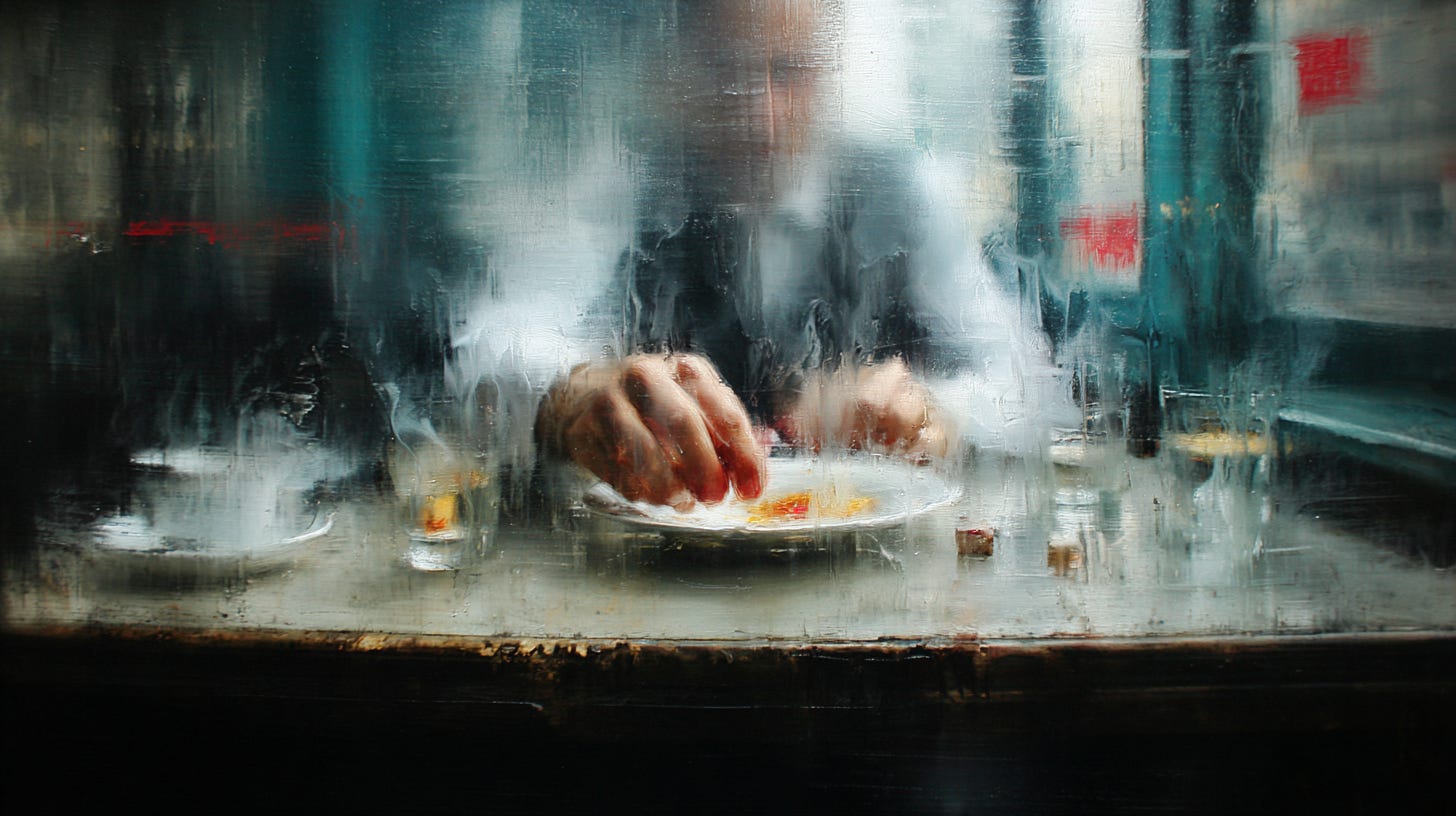
And what about the kids who grew up in the back of the house, watching their parents fight to keep the doors open? How many of them will look at this industry and say, “I want that life too”?
There’s also a question we don’t ask enough: What’s our role in this? We want restaurants to pay workers fairly, source great ingredients, and create a great vibe, but we don’t want to pay $28 for a burger. We want independents to survive, but we order their food through apps that take a third of the ticket. We post one-star reviews when a short-staffed kitchen takes too long. We’ve built expectations that only chains can reliably meet—and then we mourn when the neighborhood spot can’t keep up. How many of us have mourned a restaurant we quietly stopped visiting years ago?
Luchin made his choices. But the rest of us are making choices too, every time we eat out or don’t. Are we paying attention to what those choices are building—and what they’re quietly letting disappear?
Because somewhere right now, a line cook is saving up to open their own place. An immigrant family is figuring out how to introduce their cuisine to a new community. A young cook with her grandmother’s recipes is wondering if she can make it work. I hope they make it.
—
My Book - Mise: On the Future of Food
My Podcast - The Tomorrow Today Show
My Instagram - The Book of Mise
My Other Instagram - Mike Lee
My Consultancy - Mise Futures