


On the morning of August 26, 2026, a giant slab of rock and ice broke off at the Nepal-Tibet border and fell into the valley beneath. The flash flood it created ran down the Trishuli River into Nepal and took villages, infrastructure, and lives with it. One week later, over a thousand were dead and many more were missing.
Floods like this get more likely as glaciers warm and the permafrost thaws. The response from government and business leaders is predictable: have a summit, sign a pledge, create a fund.
It’s hard to watch our world leaders trip over themselves to take action against climate change. And I don’t fault anyone for feeling the impossibility of being able to solve the problem in time.
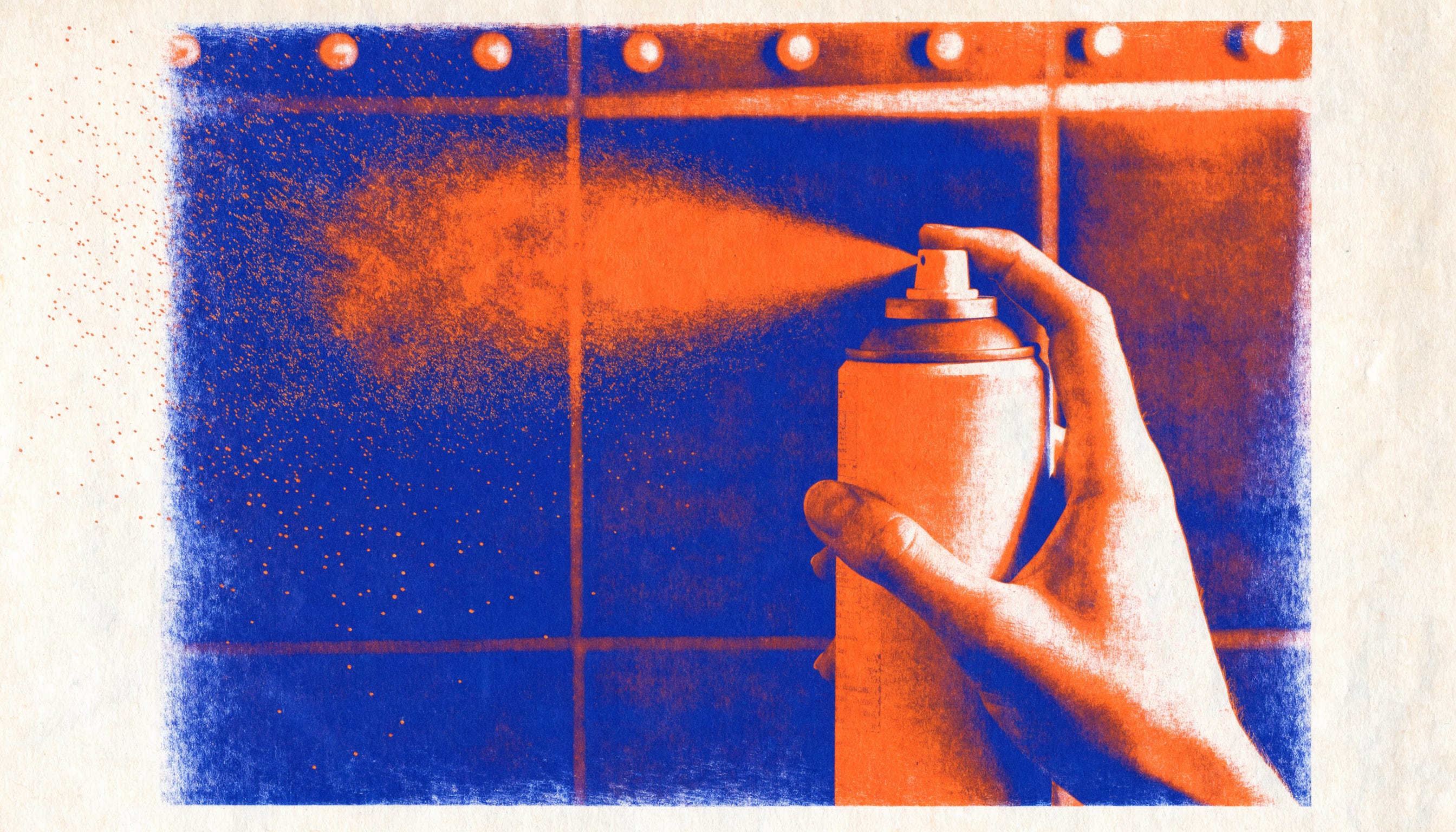
Except, we did tackle a big problem like this once. In the 1970s, scientists determined that chlorofluorocarbons (CFCs), the chemicals inside fridges and hairspray cans, were eating the ozone layer, which helps shield us from ultraviolet sunlight.

By the 1980s, the ozone had thinned so much over Antarctica that scientists called it a hole. Growing up in the 80s and 90s, it was an ever-present topic that we heard about at school from our teachers and in the echoes of the evening news our parents watched in the living room.
In 1987, world leaders met in Montreal and came to an agreement to cut CFCs. The hole is not fully closed. It’ll still open up over Antarctica every spring, but the UN projects a return to its 1980 condition by 2066, assuming continued compliance. So the problem isn’t totally solved yet, but it’s on a trajectory toward success.
On the surface, it seems like the scientists won this one. They rang an alarm and the world followed them toward a solution. But science didn’t win that argument alone. And the way that money flowed matters.
Concentrated Choices
For the ozone problem, there were a handful of chemical companies who made most of the CFCs in the world. No one had to change the air conditioning or hairspray habits of hundreds of millions of households (imagine telling someone in the 80s they couldn’t use hairspray anymore).
DuPont was the biggest CFC producer. A CFC ban could kill off one DuPont product line and give birth to another one.
The business case and the science weren’t the only factors that encouraged adoption. It took the rich countries to pay their fair share too. India and China refused to sign the agreement because it would force them to skip using the cheaper CFCs that the already richer countries had used to build their refrigeration industries. To India and China, not having access to CFCs would make their impending economic growth more costly.
So in 1991, wealthy countries helped cover the cost of converting factories in the poorer countries through the Multilateral Fund. This led to China and India adopting the ban too.
This kind of “pay it forward” feels foreign to us in today’s tense geopolitical climate. But for perspective, contributions were about $5 billion by 2023, compared to the kinds of financing we need today to put a dent in the climate change problem.
The replacement chemicals were not free of faults. Some CFCs were replaced with HFCs, and while they don’t harm ozone, they trap heat. HFCs can cause over a thousand times more global warming than an equivalent amount of CO2. But a second agreement happened in 2016 to eventually phase them down too.
Manufacturing the Motive
So while the food and agriculture system is enormous, the decision makers are relatively concentrated, like in the CFC fight. Lower-emission fertilizer exists; the challenge is making it more profitable.
Food doesn’t have something as discrete as CFCs that we can simply ban to solve an environmental problem. But the conditions that made the ozone fix work can be manufactured and emulated.
To me, the ozone hole felt like more of a tangible threat relative to climate change. Less ozone means more UV light, and more UV light means you get a sunburn faster.
Unless you’re in the path of a climate-driven natural disaster, the effects of climate change on food can reach us through our grocery bills. But it’s not as easy to create a feedback loop in society where pain in the wallet is attributed directly to climate change. If coffee costs more this year, that could be for any number of reasons that may or may not have to do with climate: a drought, fuel costs, shipping costs, tariffs, or a company feeling itself and deciding to charge more.
The challenge is getting people to notice the effects of climate change on our food system while the damage is still small. The alternative is waiting for some disaster that’s big enough to convince everyone that there’s a problem, but is far too big to fix.
I’m not sure talking about it louder and faster would make a difference, because we’re drowning in messages today and the climate alarm has already been ringing for decades.
It’s not enough to give people stats about climate change. We need to hit their emotions with content and activism that feels as tangible as a sunburn. And we can’t expect mega-businesses to act on morality alone; they need to see that the right moral choice is also more profitable.
The message of how bad climate change can hurt is crystal clear if a flood just washed away your family and home. The challenge for us is how to get everyone in the world to feel that level of pain without having them actually endure that pain.
—
Mike Lee is a food futurist and innovation strategist, author of Mise: On the Future of Food, host of The Tomorrow Today Show podcast, creator of Mise Futures, and is on Instagram at The Book of Mise.