


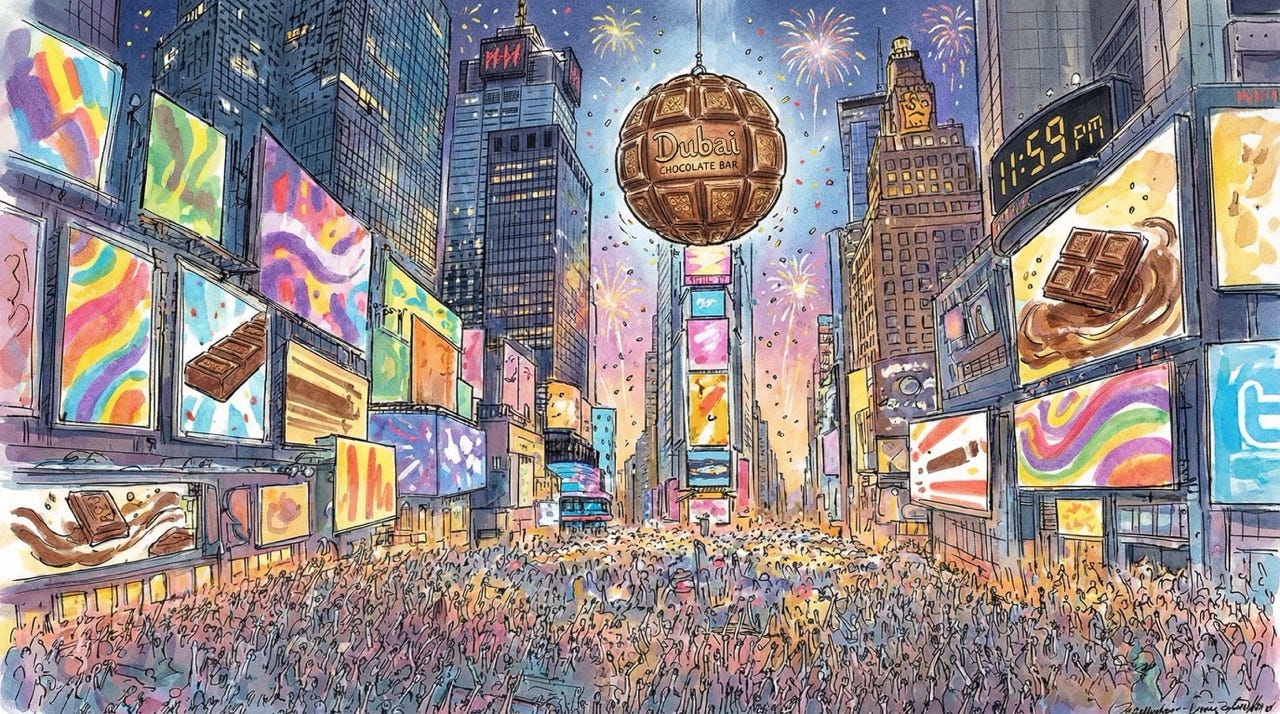
This is my last piece of 2025. It’s also, I suppose, my trend piece for the year—which feels appropriate, given what I’m about to argue.
Every December, the food industry performs a ritual. Retailers publish forecasts. Consultancies release white papers. Editors compile top-ten lists. I’ve been part of this machine for years, writing and speaking about emerging patterns in how we grow, distribute, and eat food.
But I’ve grown skeptical of what the exercise has become. Too often, the annual trend cycle functions as a selection mechanism for the photogenic and the frivolous, and the things it selects for are rarely the things that matter most.
The December Machine
The food media world needs annual trends. Without them, what would fill the conference agendas, the podcast episodes, the newsletter slots? The cycle gives everyone something to react to. It creates shared vocabulary for an industry that otherwise fragments into a thousand specialized conversations.
I get why the ritual persists. A major grocer publishing predictions gives brands something to build toward. A consultancy’s trend report helps clients feel oriented. The forecast becomes a coordination mechanism—a way for disparate actors to align without explicit negotiation.
But these packages present themselves as observations when they actually function as instructions. They tell the industry what to build, what to pitch, what to stock. The moment a major player publishes what will be big next year, it becomes an actor in the play. Brands retool to fit the brief. The forecast becomes a directive—and then, as I wrote recently, a self-fulfilling prophecy.
Not All Trends Are Created Equal
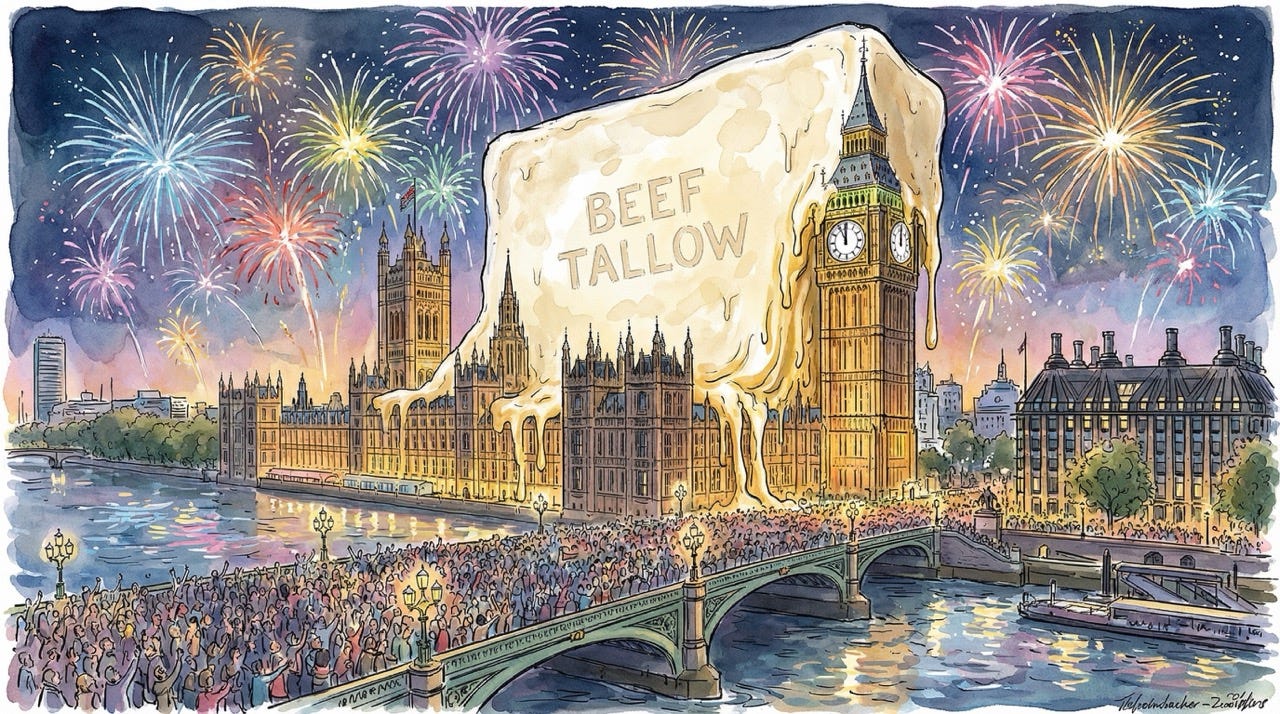
There are different ways to be a “future of food” person. Some forecasters specialize in naming the next novel thing—declaring that 2026 is the year of beef tallow, or identifying which ingredient will dominate restaurant menus by spring . Others track longer-arc shifts that have been building for years and will continue for years more. Both have their place. But they get conflated constantly, and the conflation matters.
I sit in the second camp. The shifts I care about—the revival of regenerative agriculture, the generational retreat from alcohol, the slow redefinition of what pleasure and health can mean together—don’t generate annual headlines. Not because they’re boring. To the people doing the work, they’re thrilling. But steady progress within a decade-long transformation doesn’t fit a media landscape built for novelty. There’s no launch date, no single moment to declare it “trending.”
The annual trend report format—and the media landscape that amplifies it—structurally favors things like Dubai chocolate over things like soil health.
Not all trends are the same. At one end you have viral fads—Dubai chocolate, baked feta pasta, the latest TikTok kitchen hack. Content trends that happen to involve food. Forgotten in weeks. At the other end: systems-level shifts that unfold over decades and can’t be easily undone. They’re not really “trends” at all—they’re transformations.
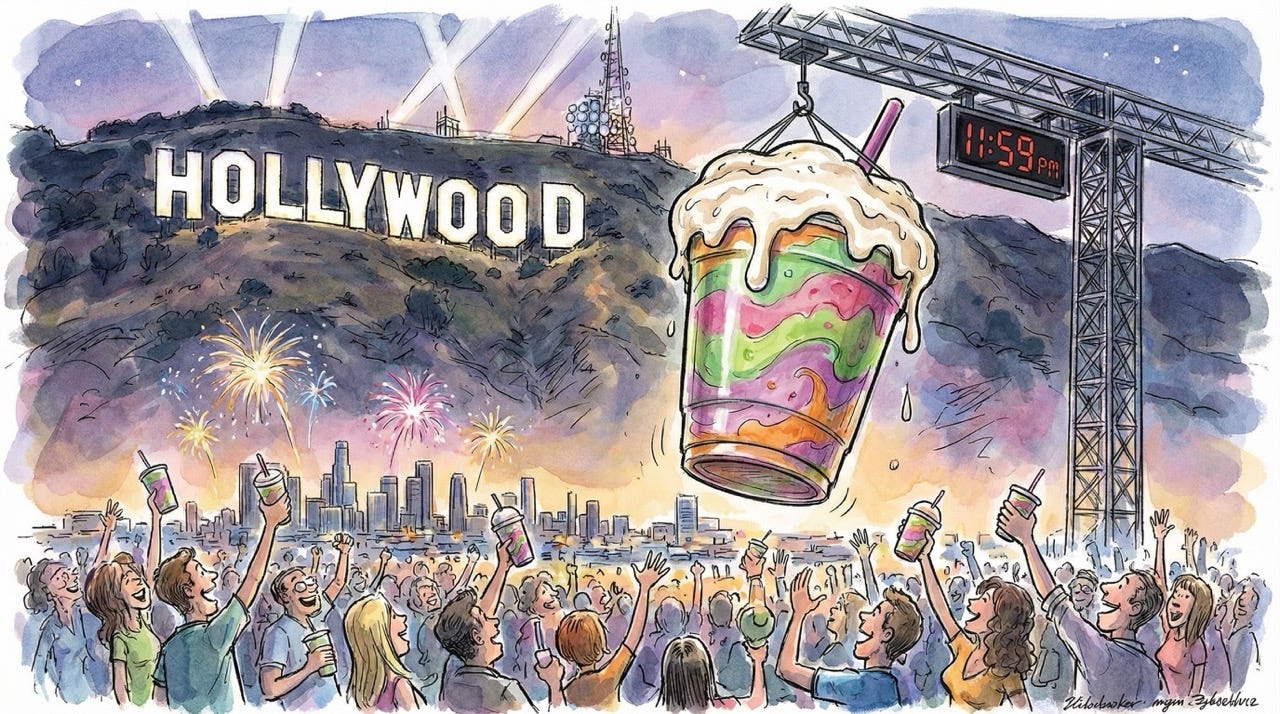
In between: ingredient obsessions like protein-in-everything or the seed oil panic. Cultural memes like Girl Dinner or the charcuterie board era. Wholesale behavior shifts like the collapse of alcohol among younger generations or the mainstreaming of cannabis. Some things straddle categories—gluten-free started as an ingredient obsession and became a lifestyle.
Not everything fits cleanly into one category. But generally: the more consequential the shift, the longer it takes—and the worse it fits the annual format. Converting a farm to organic certification takes three years minimum. Rebuilding depleted soil takes a decade. Shifting dietary patterns at a population level takes a generation. None of this fits a calendar that resets every January.
The work I find meaningful starts around the middle of that spectrum and moves outward. The collapse of drinking among younger generations matters. GLP-1s reshaping appetite at a population level matters. The regenerative farming revival matters. The next viral chocolate does not.
There’s value in situational awareness—you should know what people are talking about, and sometimes fads reveal something about underlying forces. But awareness shouldn’t dictate strategy.
The things I’m most excited about don’t fit the annual format. Regenerative agriculture dates back millennia; we’re in a revival movement trying to reclaim those principles from industrial farming. Sustainable hedonism—the idea that pleasure and planetary health can align—should be a movement by now, and work like Row 7 Seeds shows it’s possible: vegetables bred for taste, not shelf stability.
You can’t declare 2026 “the year of regenerative agriculture” any more than you could declare it “the year of patience.” These movements take years of grinding, incremental work—the kind that doesn’t photograph well and rarely gets written about. And yet this is where actual change is happening.
The Distraction Economy
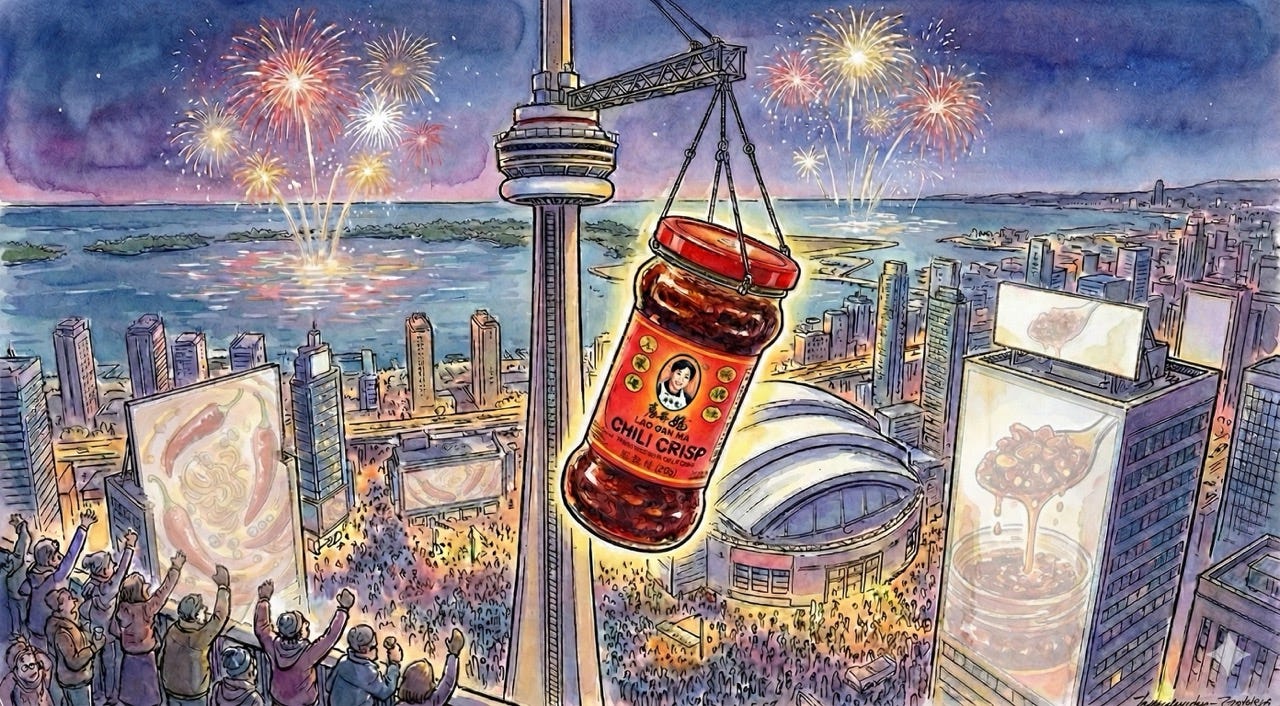
The trends that gain traction share characteristics: they’re visual, novel, and resolve quickly. A color-changing drink photographs well. A celebrity snack brand provides a narrative hook. A viral feta bake gives everyone a reason to open TikTok.
These are distractions, and that’s not entirely bad. We all need a break from reality sometimes. A pistachio chocolate bar can be a small pleasure—and these products do become part of food culture, whether we like it or not.
But distractions shouldn’t define the system. Most of this stuff is weightless. It won’t change how food is grown, who grows it, whether farmers can make a living, whether our agricultural systems will function in fifty years. It’s content that happens to be edible. And if we’re thinking more about Dubai chocolate than climate change and agriculture’s role in it, we’ve lost the thread.
The annual frame rewards what can be photographed now, named now, launched now. It forgets what requires patience. And because the format shapes what gets attention, and attention shapes where resources flow, work that can’t be rushed gets systematically underfunded and underseen.
The GLP-1 phenomenon will unfold over years as we learn what happens when millions take appetite-suppressing medications indefinitely. The MAHA movement—a tangle of legitimate concerns about food quality wrapped in an administration I wouldn’t trust to run a lemonade stand—is attempting to reshape institutional food policy in ways that won’t be visible for a decade. These are slow stories with no moment of arrival.
Covering the Slow Stories
We should be writing about the same big projects every year, finding new angles as circumstances evolve. The regenerative farming movement in 2025 looks different than in 2020. New research has emerged. New companies have scaled. New policies have passed or failed. The story advances even when there’s no single moment to announce.
Find the human moments inside systemic stories. A farmer three years into transition, watching soil tests improve. A plant breeder tasting the variety they’ve spent seven years developing. These moments are as compelling as any viral video—they just require more effort to find.
And stop apologizing for complexity. The idea that people can’t follow complicated, slow-moving stories is a lie we tell ourselves to justify lazy storytelling. People binge multi-season television with dozens of characters. They track sports dynasties over decades. They follow true crime cases for years. They master fantasy football leagues requiring hundreds of players. They maintain encyclopedic knowledge of cinematic universes spanning twenty-plus films. They spend hundreds of hours in video games with lore so dense it requires wikis to navigate.
We don’t have short attention spans. We have selective attention spans. People will follow anything—no matter how complex or slow—if it’s told well and they care about the outcome. The failure to make food systems legible isn’t a problem with the audience. It’s a problem with how we’ve been telling the story.
The Prediction I’ll Make Every Year
Transparent supply chains shouldn’t need to “trend.” Neither should fair wages for food workers or agricultural practices that don’t deplete soil. These aren’t innovations. They’re baseline ethics. Calling them “emerging trends” is like calling healthcare access “on trend” or describing “not polluting the water supply” as a hot new movement. The fact that basic dignity for workers and basic stewardship of land still get framed as forward-thinking tells you how broken the baseline is.
The annual cycle has trained us to treat the trivial and the essential as if they belong in the same bracket. We spend weeks dissecting a viral confection while barely sustaining a conversation about farmworker housing, drought policy, or the fact that we’re losing topsoil faster than we’re building it.
So here’s my prediction for 2026, offered with full awareness of the irony: what I hope will trend is the end of how we currently do food trends. The end of annual prediction cycles that mistake novelty for significance. The end of treating the calendar as if food systems operate on fiscal years.
What I hope becomes fashionable is patience. Sustained attention. The radical act of caring about the same things year after year, not because they’re trending, but because they matter. I hope it becomes embarrassing to ask “what’s the next big thing?” and prestigious to ask “what happened to the last thing we said mattered?”
That probably won’t photograph well. It definitely won’t go viral. But a food culture worth building would be one capable of holding more than twelve months of memory—one that can attend to slow work without needing it to be novel, that doesn’t require a crisis to be photogenic before it earns attention.
The shifts that actually matter will keep unfolding whether or not they make a trend list. They just need people willing to keep paying attention after the algorithm moves on.
—
Happy New Year, everyone—here’s to a great 2026.
—
My Book - Mise: On the Future of Food
My Podcast - The Tomorrow Today Show
My Instagram - The Book of Mise
My Consultancy - Mise Futures