


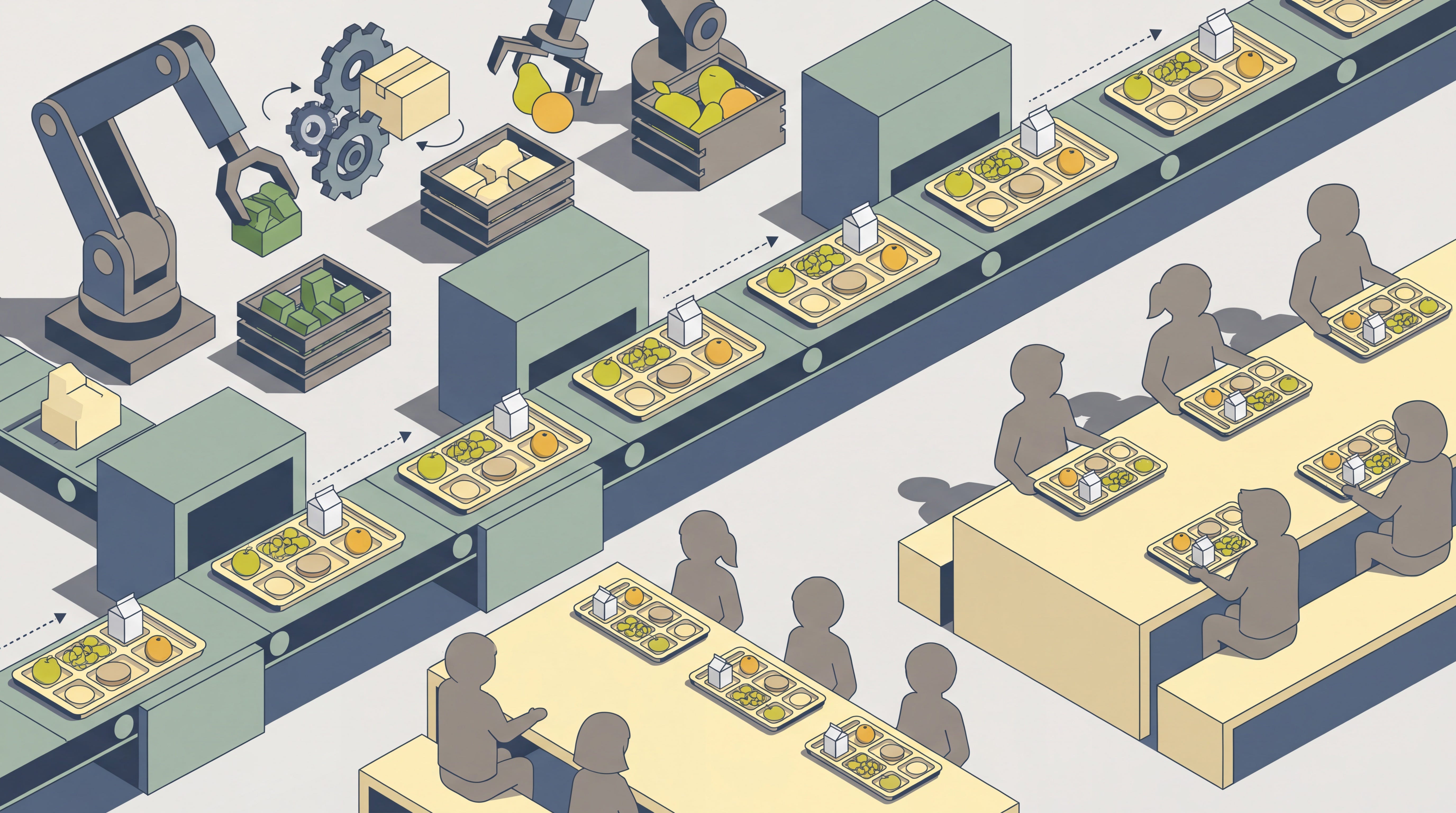
Supply-side wins still matter, and the good food movement should keep pushing for more of them: better ingredients, better animal welfare, better farming practices, better corporate behavior behind the labels. But supply is half the system. The other half is the conditions under which an actual person, in an actual life, decides what to eat. Time, money, kitchen skill, and access are all barriers to eating well. Households face different combinations of them, and when several are in play at once, fixing one alone doesn’t unlock much.
Big Food didn’t engineer those conditions, but its business model depends on them staying the way they are. A household running short on cooking skill, bandwidth, and food IQ is the most reliable repeat customer there is for cheap engineered food, regardless of income. Nothing in the current incentive structure rewards changing that. The next thirty years gets won by working both sides at once: keeping pressure on the supply side, and starting the much harder work of decoding what would actually shift eater behavior at scale.
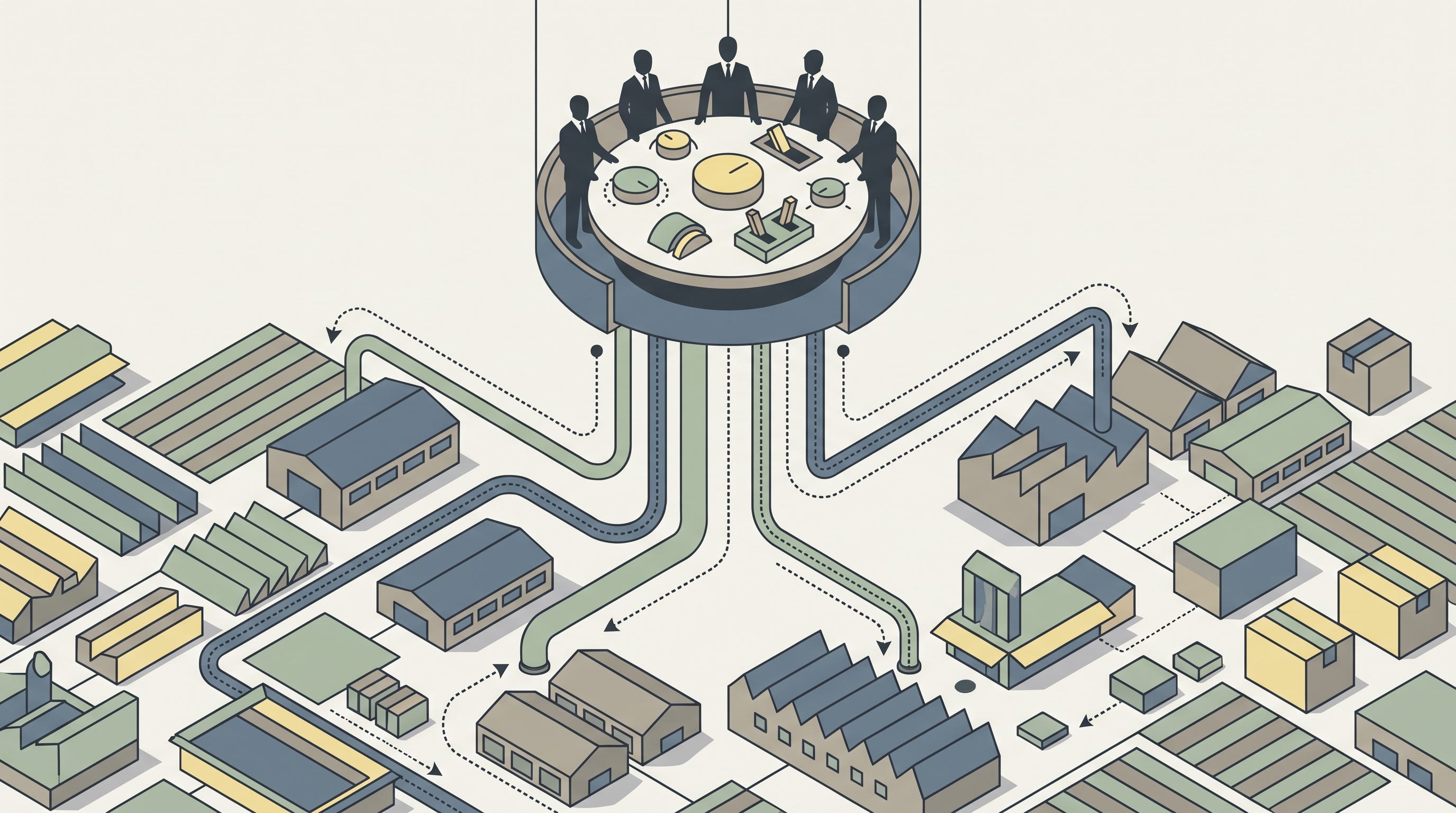
On the supply side, control is concentrated. A few hundred people make the decisions that move the system at scale: the C-suites at Cargill, Tyson, PepsiCo, Nestlé, and ADM; the buyers at Walmart, Costco, and Whole Foods; and a few dozen other food and agribusiness giants. Corporate power in the food industry is so deeply concentrated that a single large dinner table could seat the CEOs who control the majority of global consumer brands—and it would only take a few extra chairs to include the agribusiness leaders who run their supply chain.
The demand side is the opposite. Power is diffused across billions of eaters worldwide, each making one of the most personal decisions there is to make, many times a day. No procurement contract changes the default at someone’s kitchen table. No proxy fight decides what a tired adult reaches for at 7 PM. The same person can be a careful shopper on Sunday and reach for a bag of Doritos on Thursday at 11 PM. Multiply that by 8.3 billion eaters living 8.3 billion different lives, and you don’t have one demand side. You have 8.3 billion of them.
The Reasons Are Stacked
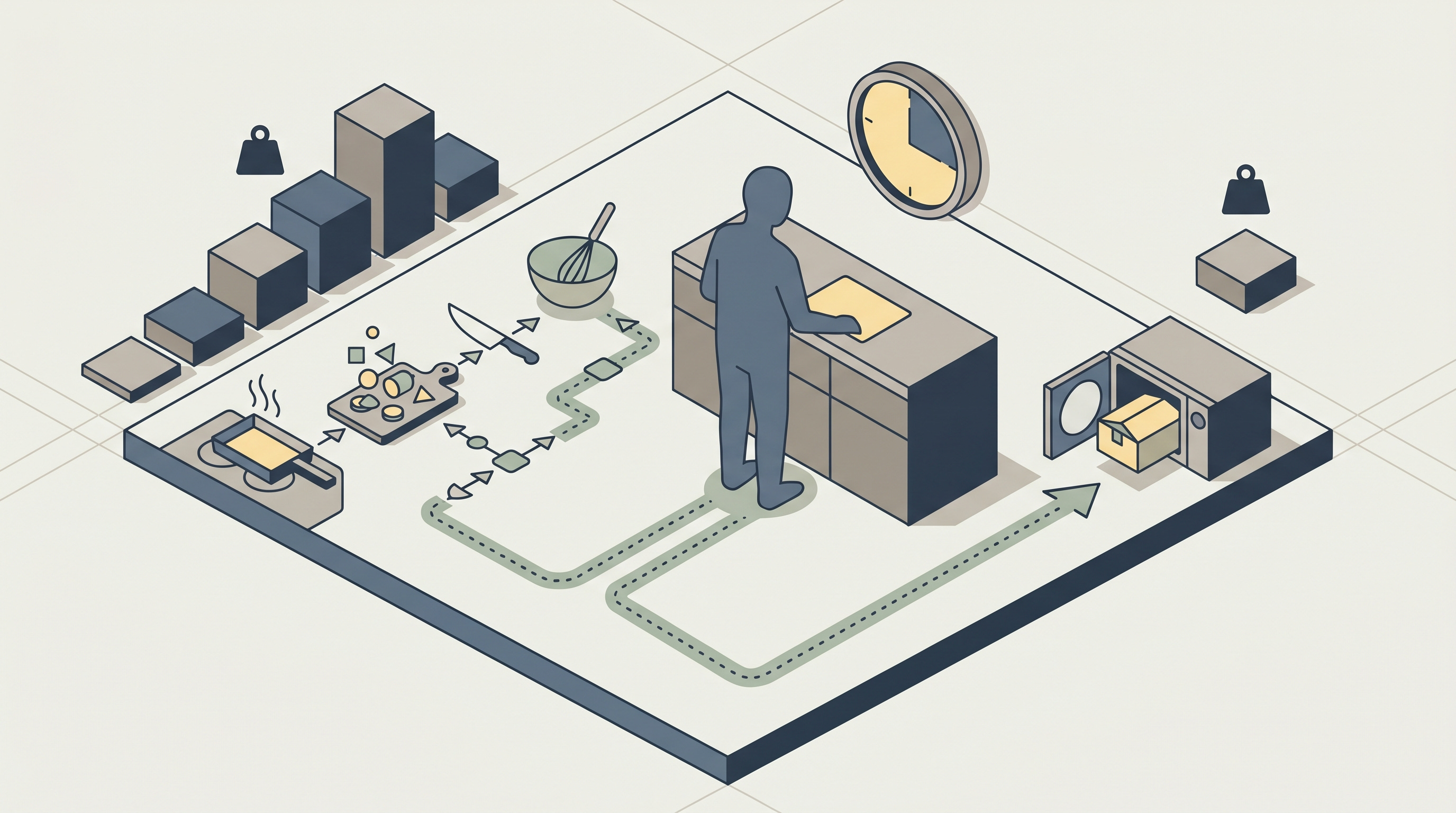
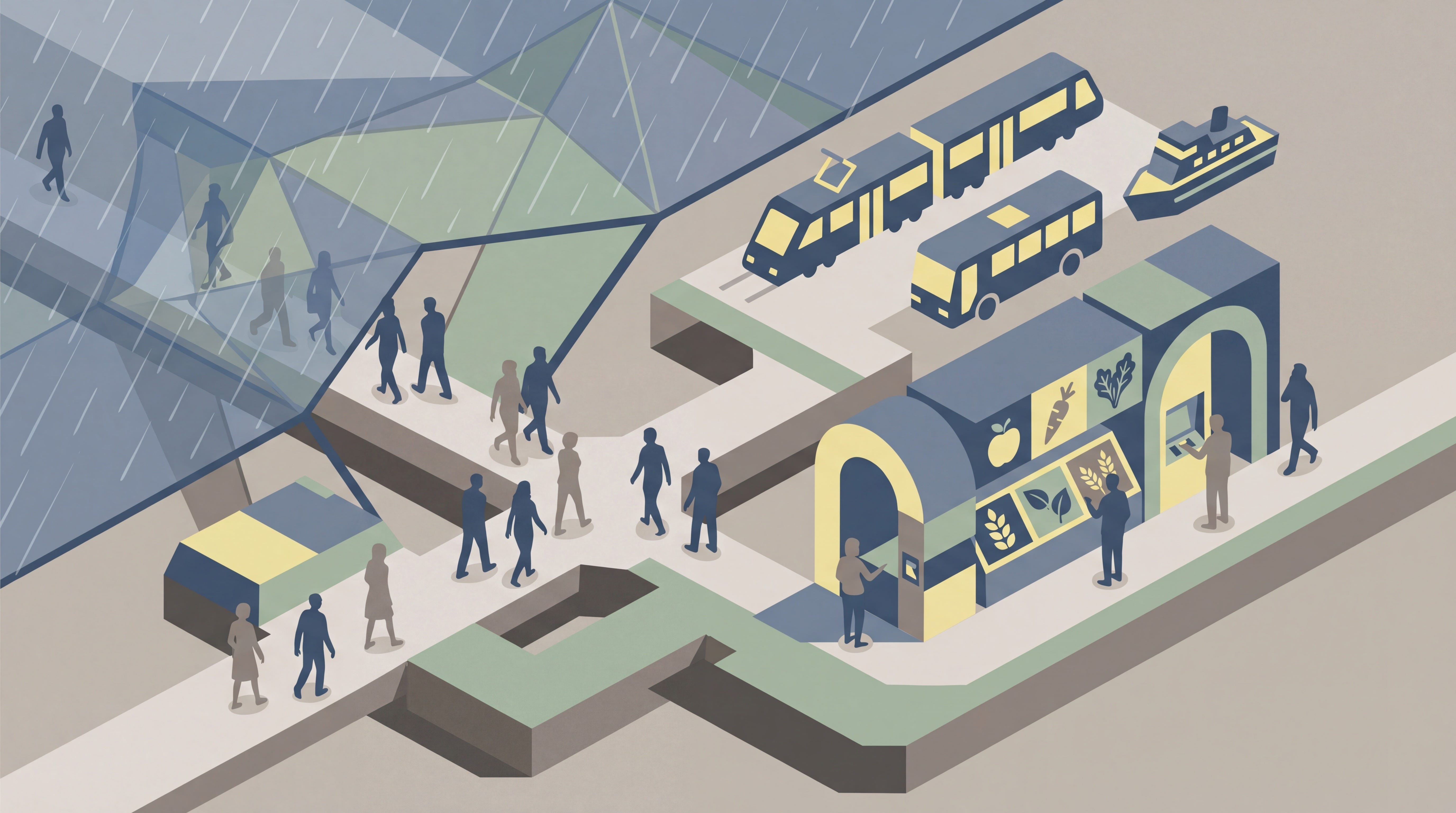
None of the big friction points—time, money, access, skill—to eating better are new on their own. What’s gotten worse is how many American households face several at once, and how thoroughly the cheap engineered food economy has built itself around that fact.
Start with time. The Bureau of Labor Statistics shows the average American adult now spends roughly 37 minutes a day on food preparation and cleanup combined, down sharply since the mid-1960s. The economist Daniel Hamermesh, in Spending Time, found that the households most likely to need cheap fast food are the same ones with the fewest minutes to cook anything else. The home kitchen became less of an everyday place, and the household with the least slack lost it first.
Money is its own constraint. A box of Kraft mac and cheese feeds four for under three dollars. Real food costs three or four times that, and a lot of households don’t have the gap to close.
Access is its own thing too. The USDA defines a food desert as low-income tracts more than a mile from a supermarket in urban areas and ten miles in rural ones, but the distance is only the start. A mile in a car-centric suburb is a five-minute errand. A mile in an urban neighborhood with no good transit, carrying four grocery bags with two kids in tow, is a different sentence entirely.
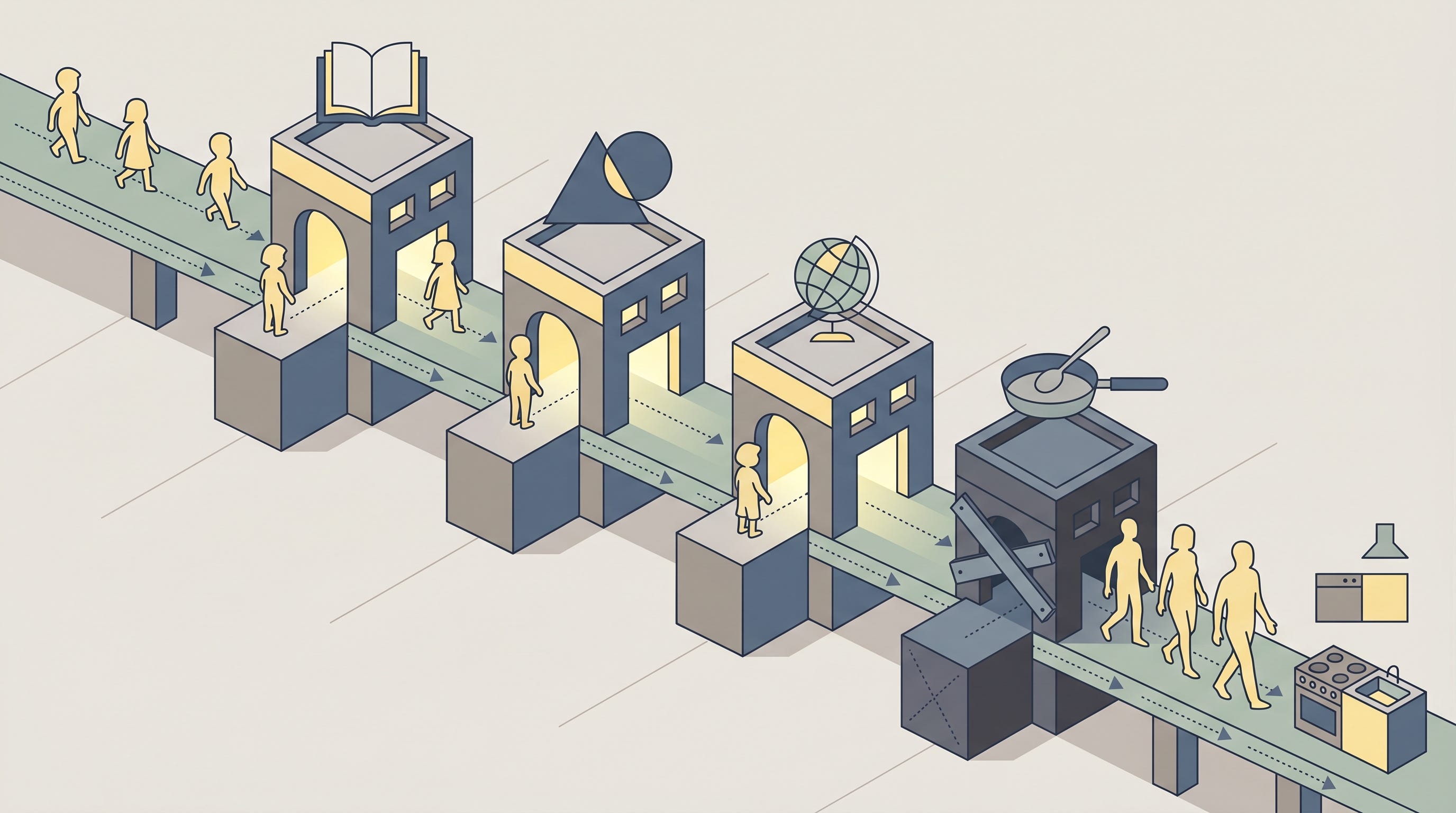
Skill is the fourth piece. Family and consumer sciences classes (a.k.a. home economics) have been steadily cut from American public schools over the last forty years, mostly for understandable reasons: budget pressure, gendered baggage around domestic labor, the squeeze toward reading and math, schools deciding food competence wasn’t the most urgent thing on their plate.
Exceptions exist. Some districts and charter networks still teach culinary basics, and a handful of programs are bringing it back. For most American kids, though, K-12 finishes without a single hour spent on how to cook a meal, plan a week, read a label, or stretch a pound of beans.
The internet has filled part of the gap, but the wrong part. Gimmicky sheet pan dinners, TikTok hacks, three-week meal plans, influencer cookbooks: there’s a recipe for everything. For the household that already has the time, the ingredients, and basic knife skills, recipes can genuinely be useful.
But what recipe centric food education doesn’t teach is what’s actually missing: the food intelligence and insticts to combine ingredients on the fly, using what’s in the fridge without a phone open, or how to effortlessly stretch a $7 chicken into four meals. A nation of rote recipe followers is still a nation that can’t cook without instructions. And does anyone after a hard day at work really want to come home to follow more instructions? No. So DoorDash it is.
The world needs more home cooks who can improvise their way to a solid, home-cooked meal any night of the week, not because they have tons of time, but because they have cooking intelligence. To them, 10 minutes is more than enough time to cobble together a simple dinner using whatever is laying around. Forget Michelin stars. This is the kind of cooking that puts whole foods on plates that would otherwise not.
These kinds of instinctual home cooks play jazz, not classical in the kitchen. And because they don’t need sheet music, they can riff and be nimble getting dinner made. How might we shift the atomic unit of mass media food education/edutainment away from the recipe and toward ratios and patterns? And how can we empower more home cooks to cook this way?
Whole industries have built themselves around this skill gap. Big Food has spent decades studying what a tired adult with $30 and twelve minutes will buy at 7 PM. The frozen lasagna at the freezer aisle endcap and the rotisserie chicken under the heat lamp at Costco are engineered to fit a household running short on time and skill, with subsidized commodity inputs to make the price work.
Fast food fills the same gap from a different angle: a McDonald’s drive-thru on the way home from the second job, the Taco Bell value menu priced to beat cooking it yourself. Delivery apps are the newest version. DoorDash and Uber Eats put a Pad Thai or a burrito bowl at the door inside 35 minutes, and for a lot of younger eaters, many restaurants only exist as an icon on a phone.
None of this is bad in isolation and on occasion. A frozen pizza on a Wednesday is fine. A drive-thru after a long shift won’t hurt anyone, and a Costco rotisserie that becomes four dinners across the week is great. The trouble is the gap between using these as shortcuts and depending on them as the entire food infrastructure of a household.
Two families can order the same Pad Thai on a Tuesday: one because they chose not to cook, one because no one in the kitchen could have. One has options. The other has a dependency.
Calling that a willpower problem is a misread. The conditions are what put the problem in front of so many households at once. And the industries that profit off those households have little incentive to change the conditions.
Why Silver Bullets Win
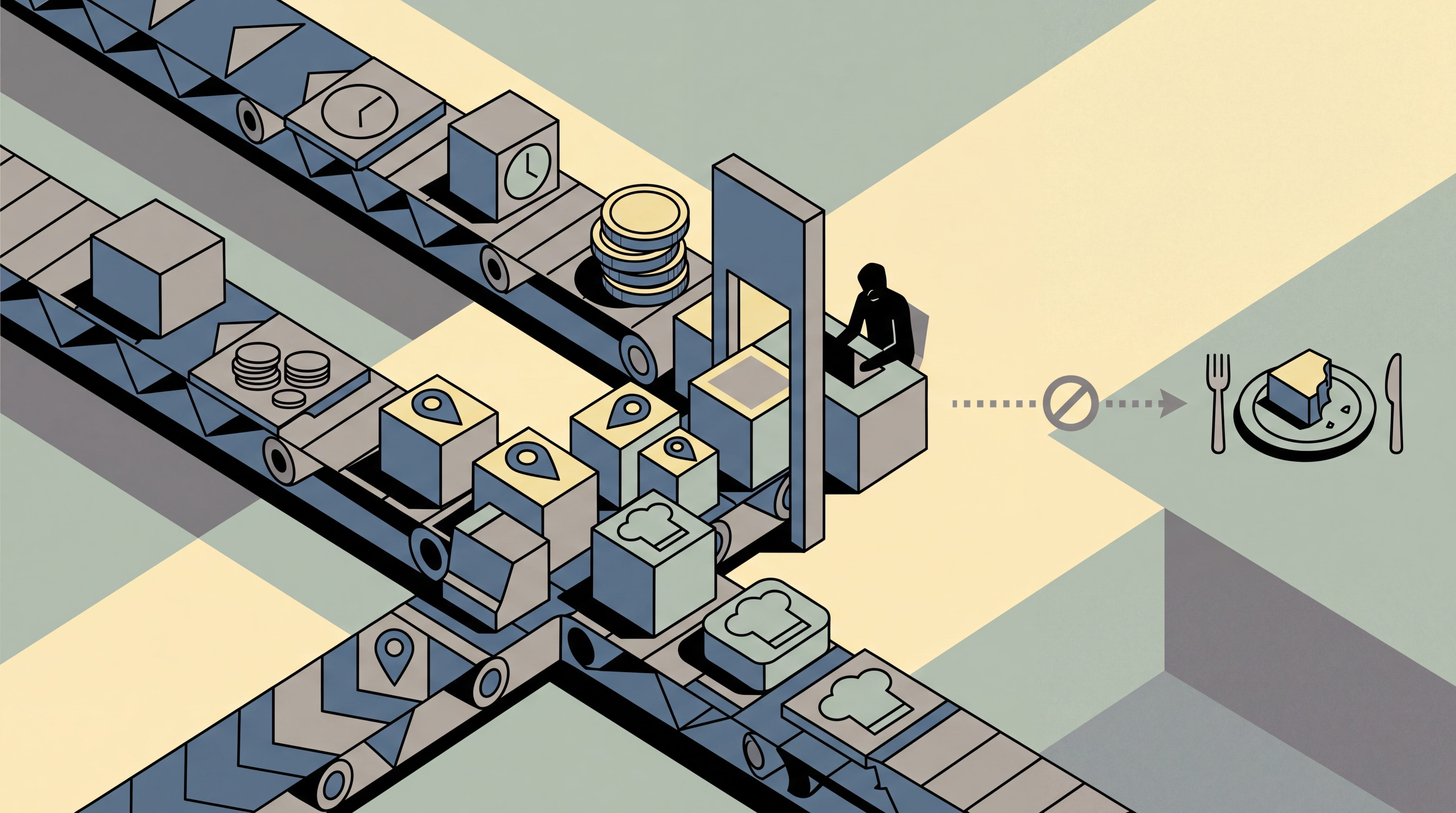
Those same conditions explain why silver bullets sell when it comes to health and wellness. By silver bullet I mean the single product or protocol that promises to substitute for the slow project of building a food life: the 7-day cleanse, the detox tea, the apple cider vinegar gummy, the fat-burning supplement nobody can pronounce, the TikTok promise of ten pounds gone in two weeks. The pitch is always the same: skip the longer, harder work but still get the result.
People reach for them because the alternative is genuinely hard. Building food habits for reasons you can’t taste at the table is difficult to sustain across a life, especially against everything pulling in the opposite direction. Sometimes the trick helps a little. Mostly it doesn’t. Either way, the demand stays strong, because humans are wired to want the trick.
And the trick has never been better packaged. The food system is genuinely confusing. The science contradicts itself depending on what study you read, and most people don’t have time to figure out which half of the processed shelf is actually fine. A friendly face on a phone screen offering a clean five-step plan is hard not to click on. Some guy on TikTok telling you that kale is bullshit makes for an easy new food rule to follow. Take (or avoid) this or that, and you can skip the critical thinking. The influencer ecosystem has industrialized that pitch, and the algorithm rewards the loudest version of it.
I don’t blame anyone for reaching. People in the fad-diet aisle know what they’re doing; they’d just rather be told there’s a trick than told there isn’t. Fad diets and wellness influencers are the food version of Las Vegas, where we all know it’s fake but want to believe anyway. Deep down, we’re in on the joke. And like Vegas, the next trip is always going to be the one.The good food movement’s response has mostly been to mock the fads (I am guilty of this), which might have been a missed learning opportunity. Fads are filling a real demand for a simpler story, and that story will keep winning until the better one becomes easier to find and easier to live with.
Stop telling eaters to just try harder
You can’t fix the food system by telling people to cook more at home. It’s one of the most repeated lines in the entire food conversation, and it does almost nothing, because it skips the question that actually matters: cook more at home with what skills, in whose kitchen, at the end of which workday, for whom?
Telling someone to cook more is a moral demand dressed up as advice. The person you’re talking to almost always already knows they “should” cook more. They are not failing for lack of being told. They’re failing because nobody ever taught them how to make a pot of beans taste like something they’d want to eat again, and because the cheap engineered version on the next shelf was designed to taste better than the version they’d cook from scratch.
That last part is on Big Food. The product was engineered to hit a flavor target most whole foods can’t reach, the price was dropped below the cost of cooking it yourself, the marketing taught a generation that this is what dinner tastes like, and the kid grew up wanting more of the same. Philip Morris ran the same playbook for sixty years. None of that absolves the industry.
But shaming the industry doesn’t put a better dinner on the table tonight. Neither does shaming the eater. What does is closing the gap between the household that has the tools to cook a real meal and the household that doesn’t.
Build the food IQ infrastructure
The work of raising a country’s food and cooking IQ has been underfunded and treated as charity. It should be infrastructure, as essential to public health as clean water.
Some pieces of it are already running. Edible Schoolyard turns school grounds into food-literacy classrooms. Stephen Ritz’s Green Bronx Machine puts working farms inside Bronx classrooms, where kids grow what they cook. The Chef Ann Foundation rebuilds school cafeterias around scratch cooking. Samin Nosrat’s Salt Fat Acid Heat and Kenji López-Alt’s The Food Lab teach the underlying principles that a recipe never does: fat, heat, salt, acid, technique. Karen Page and Andrew Dornenburg’s The Flavor Bible and Michael Ruhlman’s Ratio teach how to combine flavors and balance ratios on the fly, no recipe required.
What’s missing is scale and integration. Despite the great progress these organizations have made, most of the people who’d benefit most from these have never heard of them. The ones who have encounter them once, in a community-center workshop or a single school year, and never again.
The right model is closer to a personal trainer than a single class. People don’t get fit from one gym visit. They get fit from a coach, a community, a routine, and enough early wins to keep showing up. Food IQ works the same way. The eater who masters one weeknight meal and gets a real compliment for it cooks the next one. The eater who never makes it past an inedible first attempt buys the frozen lasagna for life.
Meeting people where they are
The supply-side fight has to keep going. So does pressure on procurement, school food, freezer-aisle policy, and the labor conditions that decide how much time a household actually has. But there’s a lane the food movement has barely begun to seriously fund: making it easier for ordinary people to build the skills, confidence, and means to feed themselves better.
That’s a federal cooking-and-food-literacy curriculum that actually gets taught, subsidized community kitchens, a real budget for after-school food programs, grocery store dietitians who do more than hand out coupons, media that teaches as it entertains, and workplace programs that turn lunch into something other than a vending machine.
Not one of them alone makes a headline that can compete with clickbait and sensationalism, sadly. But all of it changes more dinners than the next labeling requirement or federal dietary guidelines.
The journey toward a better food system is real. And most of the country doesn’t even know there is a journey. The job is to make the better choice easier to learn, easier to afford, easier to taste, and easier to repeat. That is the next thirty years and beyond.
—
Mike Lee is a food futurist and innovation strategist, author of Mise: On the Future of Food, host of The Tomorrow Today Show podcast, creator of Mise Futures, and is on Instagram at The Book of Mise.
—
Mise 2: The Restaurant Issue is now open for pre-orders! Ships 8/11/26. Over 200 pages of future scenarios exploring the future of restaurants.
This is a fantastic post that gets to heart of what needs to change. It's easy to tell people to eat less UPF and to cook more, but there are a lot of barriers in place to doing that. I like the suggestions you offer for changes at a structural level but I'm doubtful that a federal food and cooking literacy curriculum will happen, at least under this current administration — not when their singular goal seems to be to increase inequality and make SNAP harder to access.
One thing that has helped me build a food culture in my family, and teach my kids (aged 6 and 8- how to cook, how to meal plan, how to shop for food, and how to eat well, is something I don't often see mentioned: food and cooking has become a hobby for me. It didn't used to be. I used to just eat food because I needed to, but I didn't have an interest in it. Somewhere long the way, cooking and baking became things I was genuinely interested in, the way someone else might be interested in gardening or vintage cars. I read about food, I watch YouTube videos about food, I write about food. I learnt about the food system, food industry, the provenance of food, the power of large food corporations. But I also learnt about cooking and baking as practices — techniques, flavours, traditions, recipes. This has been a very important part of building food IQ infrastructure within our little family.
This is one of the most well written articles with real, actionable steps presented to counter issues I deal with daily as a diabetes educator. The one thing not discussed at length in this article, and I would love to have Mike's insight about, is that not only do I fight food and housing insecurity, lack of transportation, food deserts, co-morbidities, literacy and language and cultural barriers, all factors in the bigger system rigged against us, but I am very much up against the addictive qualities of hyper-palatable foods.
These are foods that not only my patients admit to indulging in (as we all do) but that they often describe as feeling they deserve, or look forward to. I am guilty of adopting the same mindset when I reach for that cookie at the local market when I stop in for last minute groceries for the night's dinner. It would be one thing if my patients offset the indulgent foods with whole, unprocessed food, but for many reasons they struggle to do so, and for reasons you articulated well here.
I am wondering if you have done any research or taken action to raise awareness of addiction to processed/hyper-palatable foods. I am really glad I found your Substack and am excited to dig into your podcast, etc. Thanks for the good work.
Also, for some good reading on the "I deserve this" mindset that accompanies small indulgences, check out this really great post: https://wellgoodblog.substack.com/p/small-treats-culture?r=18jfjx&utm_campaign=post-expanded-share&utm_medium=post%20viewer