


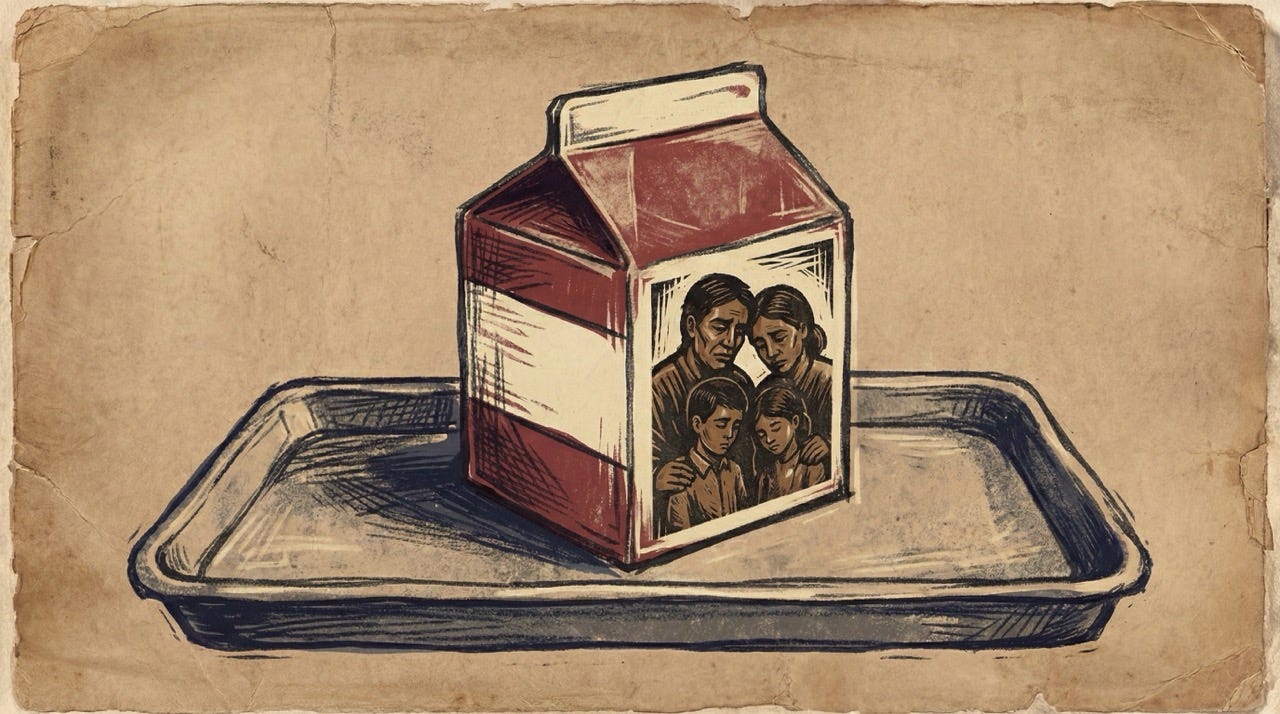
On January 7, 2026, two things happened in America. The federal government released the most significant overhaul of dietary guidelines in a generation. And in Minneapolis, ICE agent Jonathan Ross shot and killed Renee Good, a 37-year-old American citizen with no criminal record, in her car.
The same administration produced both events on the same day, and the food industry has spent the past month talking almost exclusively about one of them.
I’ve been watching the expert takes on the new dietary guidelines closely. The anti-ultra-processed-food stance is welcome, the protein targets are aggressive, the saturated fat math doesn’t add up, the conflicts of interest are troubling, and the alcohol guidance is suspiciously vague. That conversation has been thorough and largely correct, and I don’t need to run it back.
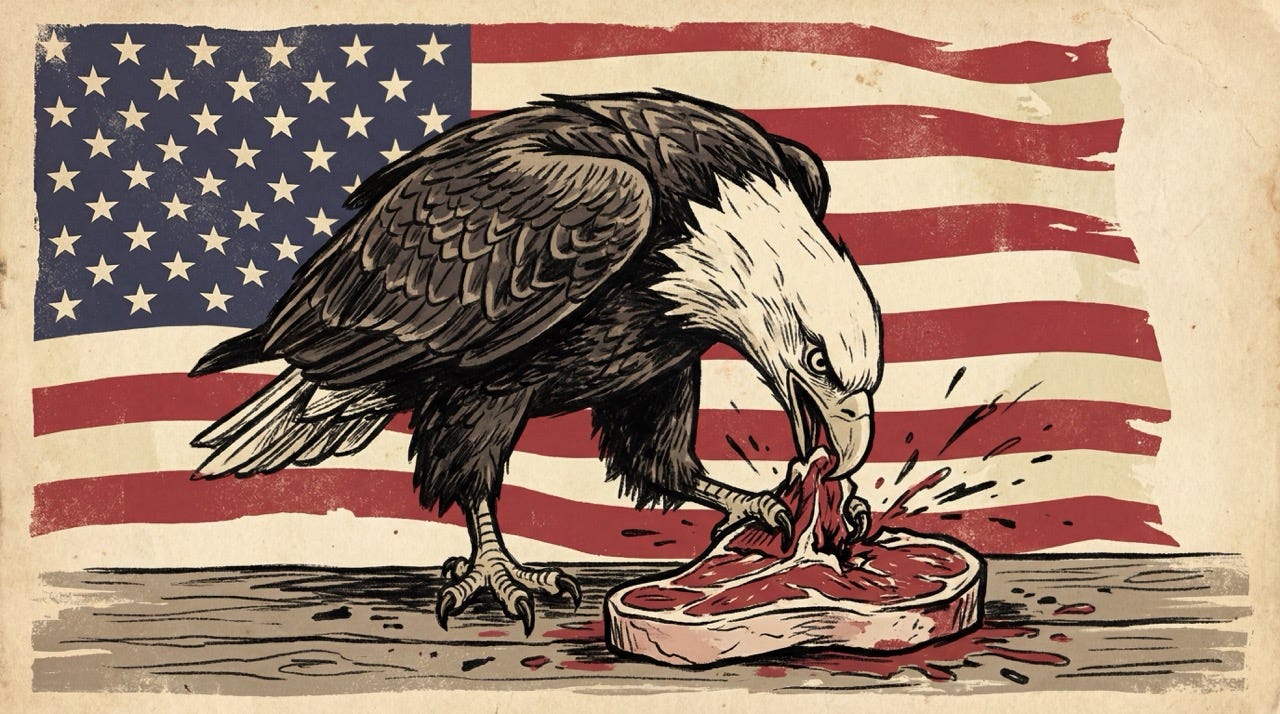
My work is about getting people to think more holistically about food systems—to see the externalities that come with the things we celebrate. We talk about the hidden costs of cheap beef. We talk about what monoculture does to soil. We should apply the same thinking here. These dietary guidelines, whatever their merits, did not arrive on their own. They came with MAGA. And just as we should account for the environmental cost of a dollar menu cheeseburger, we need to account for what came bundled with MAHA.
What too few people seem willing to say is simpler and harder: are the new dietary guidelines—however improved—worth the immigration raids, the environmental rollbacks, the gutted agencies, and everything else this administration has done?
What the Guidelines Actually Do
Before weighing that question, it helps to be honest about what the guidelines actually change. They matter enormously in a few specific domains and barely at all everywhere else.
Where they carry real force: federal feeding programs. The National School Lunch Program serves 30 million kids a day. SNAP and WIC shape the purchasing options for tens of millions of low-income families. Military meal planning, VA hospitals, federal prisons—anywhere the government buys and serves food, these guidelines become the operating manual.
Where they carry less influence: your kitchen. Mine either. Most Americans won’t read these guidelines and won’t change what they cook for dinner on a Tuesday. Economics, convenience, culture, and flavor have always been more powerful forces than a government PDF. That said, the guidelines may give validation to people already eating meat-heavy, paleo, or keto diets. For the subset of Americans who do follow federal nutrition advice, this is a meaningful shift. But for everyday folks who don’t track this stuff, life goes on.
People don’t make food decisions by consulting a pyramid. They make them tired, at 6 p.m., with kids screaming, choosing between what’s fast and what’s familiar. A serious dietary framework would start with the humans—their schedules, their kitchens, their skills, their budgets, their cultures—and work backward to the science. These guidelines start with the science and assume compliance will follow. It rarely does.
RFK’s contribution, if he made one, was cultural rather than regulatory. His rhetoric—Beef is BACK, Butter is BACK—gave social permission to people who already wanted to eat more of those things. Kennedy didn’t invent the anti-seed-oil movement or the ancestral health community. He gave them a government seal.
The honest assessment: the guidelines will meaningfully affect school lunches and federal food programs. They will modestly influence clinical nutrition conversations. They will barely register in how most Americans eat day to day.
And if anyone thinks the big food companies are going to absorb the push against ultra-processed foods quietly, PepsiCo offers a useful counterpoint. Frito-Lay launched a dye-free NKD line of Doritos and Cheetos — a token gesture toward the new dye-free mood, but one that sits alongside the conventional versions, not in place of them. The real strategy was on PepsiCo’s most recent earnings call, where CEO Ramon Laguarta announced double-digit shelf space gains for Frito-Lay in upcoming store resets. NKD is just a PR strategy. Expanding the ultra-processed footprint is the business plan.
The Bargain
Many people in the food industry understand that food is political. The best ones have always known it—that immigration policy is food policy, that farm bills shape what we eat more than any dietary advice, that the labor conditions in a processing plant are as much a food issue as what comes out of it.
But understanding food as political and being willing to confront the politics head-on are different things. And when MAHA arrived speaking the industry’s language—reduce ultra-processed foods, eliminate artificial dyes, challenge captured science—it made confrontation feel unnecessary. The food goals and the political vehicle could be separated, or so the thinking went. They can’t.
On the MAHA side: stronger language against ultra-processed foods. A push to remove artificial dyes, with the FDA hinting at mandatory action by 2027. Higher protein targets. Full-fat dairy guidance that aligns with where the evidence has been trending. Fermented foods in the guidelines for the first time.
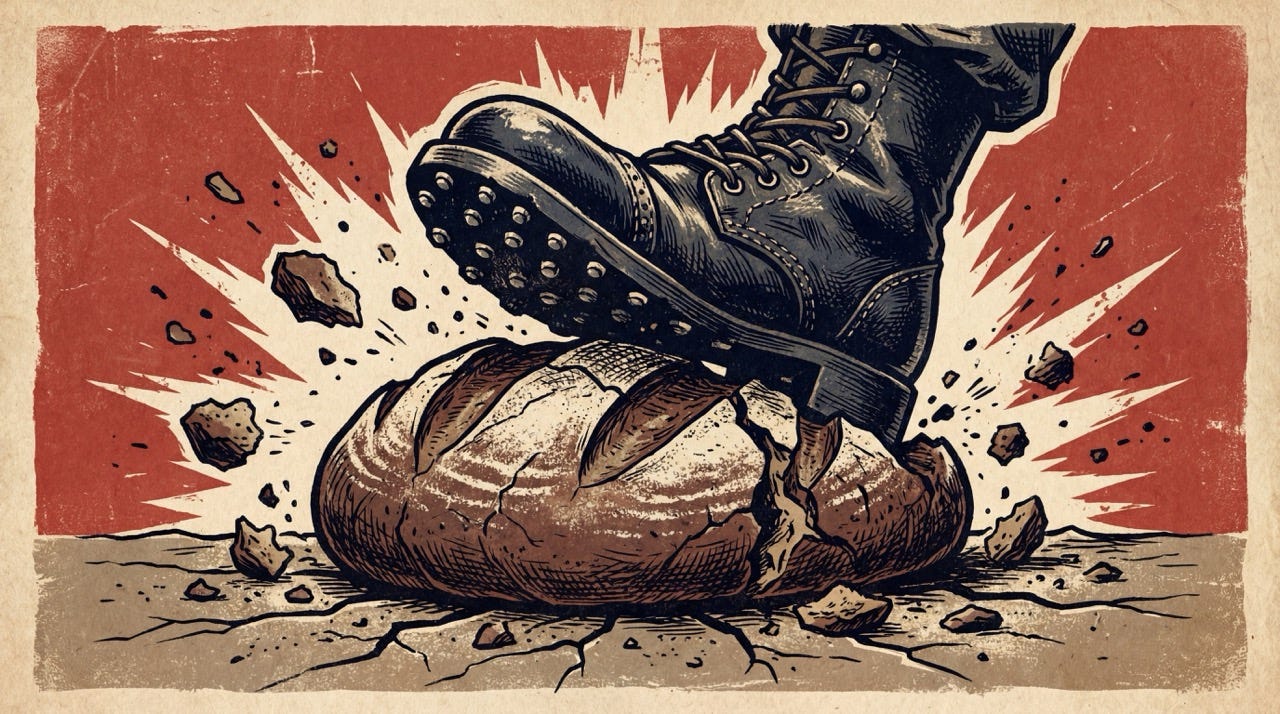
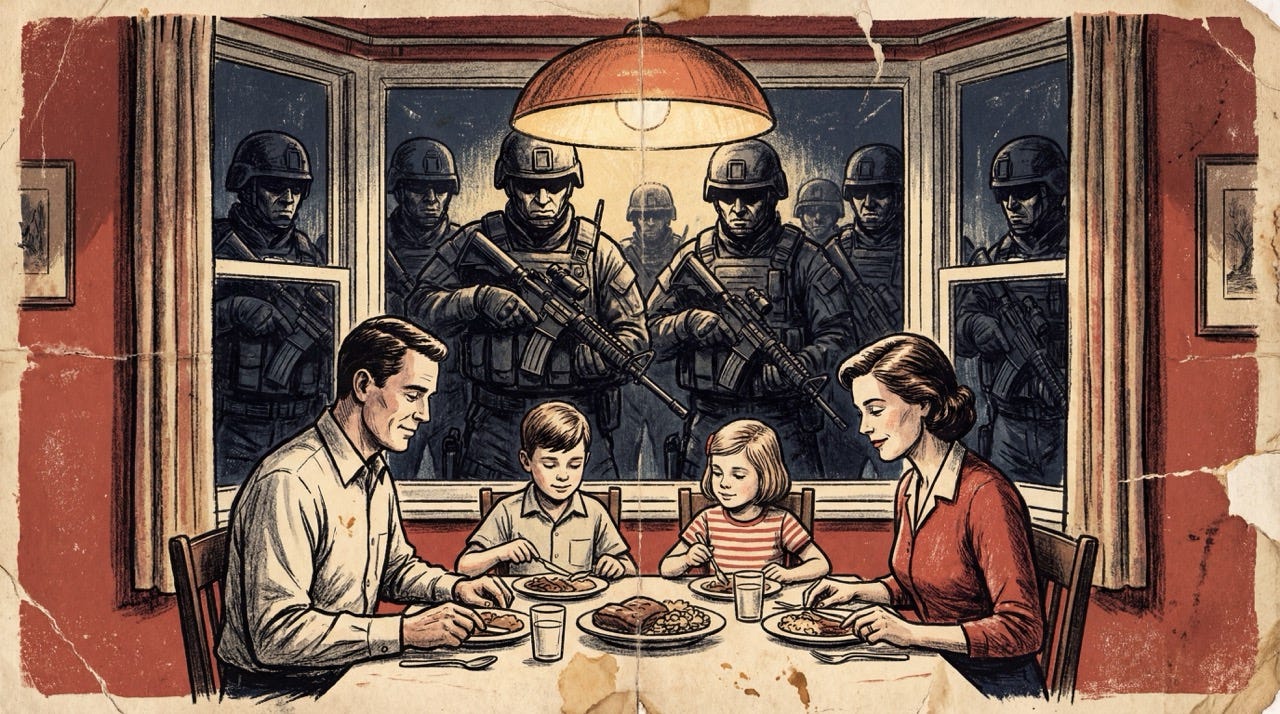
On the MAGA side: the elimination of SNAP-Ed, which provided nutrition education to the communities most affected by diet-related disease. An immigration enforcement campaign that has turned restaurants into surveillance sites and left Latino student attendance in Minneapolis-area schools cut in half—kids too scared to make the drive to the building where they’re supposed to eat the improved school lunch.
The administration released the Epstein files, then redacted the names of suspected co-conspirators while leaving victims’ identities exposed. The EPA repealed the scientific finding that greenhouse gases endanger human health, eliminating federal authority to regulate climate pollution. The same EPA re-approved dicamba, a herbicide federal courts had twice struck down, with a former soybean-industry lobbyist running the pesticide office. Even prominent MAHA activists—Kennedy’s own allies—called it a favor to the chemical industry.
Relationships with historical allies in Europe have frayed under tariff threats and diplomatic hostility. The affordability of life’s basic necessities—groceries, housing, childcare—has not improved. The administration promised to make life cheaper; for most Americans, it hasn’t.
Was getting dye-free food labels and higher protein targets worth all of this? Worth gutting the EPA’s authority to fight climate pollution? Worth re-approving pesticides that federal courts rejected? Worth terrorizing immigrant communities out of the food programs these guidelines claim to improve? Worth the shootings, the raids, the children too frightened to go to school? Each person will answer that differently. But if you care about health—as MAHA claims to—you have to account for the full ledger, not just the line items you like.
Did We Need MAHA to Get Better Food Policy?
No.
The anti-UPF movement was building momentum long before RFK entered government. Carlos Monteiro coined the term in 2009. By 2024, the scientific literature linking UPF consumption to chronic disease had reached critical mass. California banned Red No. 3 from public schools in 2023 without any help from MAHA. The science on full-fat dairy had been shifting for years. Higher protein targets for aging populations were already being discussed in sports nutrition and geriatric medicine.
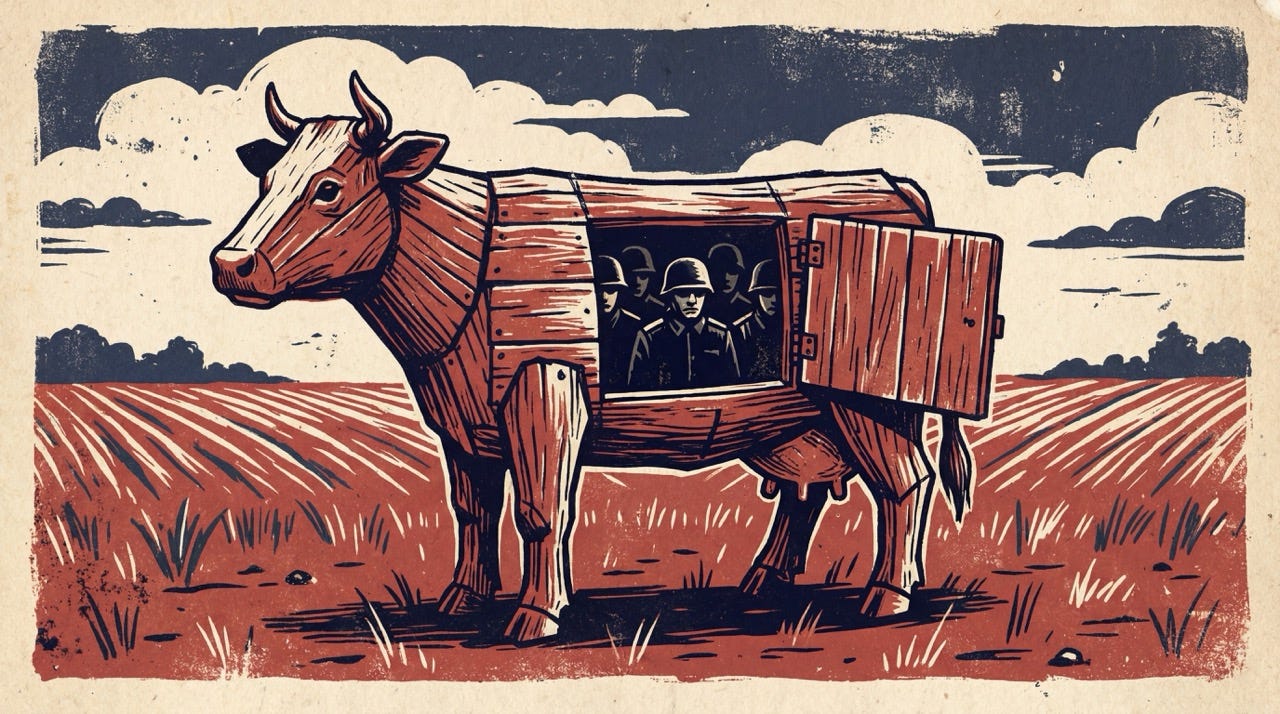
None of this required a political movement or Robert F. Kennedy Jr. Many people who support MAHA care genuinely about these issues, and they’re right to. But MAHA didn’t create that trajectory. It accelerated certain elements of it, contaminated the process with the industry capture it claimed to be fighting, and packaged the results inside a political movement causing tangible harm to millions of people.
The contradictions run deeper than food labels. MAHA tells Americans to eat real food, limit processed ingredients, and take personal responsibility for their health. Meanwhile, the same administration has gutted the EPA’s ability to regulate the air those Americans breathe and the water they drink. It has ordered the agency to stop calculating the human cost of pollution. It has re-approved a potent herbicide that drifts onto neighboring farms and that federal courts have blocked twice.
If your health movement can’t keep pesticides out of the fields or particulate matter out of the lungs, it’s not a health movement. It’s a nutrition pamphlet stapled to an environmental rollback. The marginal benefit of new dietary guidelines—guidelines that most Americans will never read—does not outweigh losing the federal government’s authority to regulate greenhouse gas emissions, hold polluters accountable, and keep potent chemicals off our food supply.
What It Would Actually Take
The underlying impulse behind MAHA—that the American food supply is contributing to a chronic disease crisis and that federal policy has been complicit—is correct. It was correct before RFK said it and it will be correct after he’s gone. So what would a serious version of this look like, untethered from an administration that also deports the people who work in our food supply chain?
It would start by treating dietary guidelines as the beginning of a conversation, not the end of one. The document tells Americans to eat more protein, more whole grains, more fruits and vegetables. It says almost nothing about how a family on SNAP benefits affords the grass-fed beef the guidelines implicitly endorse, or how a school cafeteria serving 800 lunches a day transitions from reheating frozen entrees to cooking from whole ingredients without additional staff, equipment, or training.
You can’t wish ultra-processed food out of people’s diets. If someone doesn’t know how to make dinner from whole ingredients—and doesn’t have the time, money, or energy to learn—they’re going to keep reaching for what’s fast and familiar. A serious food health movement would invest in the knowledge and capability that make healthier eating possible: cooking education within cultural food traditions, practical meal planning for people with real constraints, community-level programs that meet families where they are rather than lecturing them from a government PDF.
That also means investing in the infrastructure side. Increase SNAP benefit levels alongside any restrictions on what can be purchased, so families aren’t choosing between fewer calories and worse calories. Give school nutrition programs the staffing and equipment budgets required to actually cook real food at scale. Build supply chains that get nutrient-dense food into the communities where diet-related disease hits hardest, at prices that compete with ultra-processed alternatives.
It means decoupling dietary science from agricultural economics. The USDA simultaneously writes the dietary guidelines and promotes commodity agriculture—a structural conflict of interest that predates this administration by decades. The grain lobby warped the guidelines in the ’90s, the dairy lobby in the 2000s, the beef lobby now. A future administration should separate these functions entirely: let an independent public health body write the dietary guidelines and let the USDA do agriculture policy.
It means building a food culture where the healthy choice wins on its own terms. Not through mandates or guilt, but through flavor, price, and convenience. Fund plant breeding that optimizes for taste and nutrition rather than just yield and shelf stability. That last part is impossible without restructuring the Farm Bill—ultra-processed food is cheap because the commodity crops behind it are subsidized and shelf-stable, not because anyone chose it over fresh produce on a level playing field.
Support the chefs and food scientists working to prove that minimally processed food can be more craveable than the engineered stuff. This is what I’ve called hedonistic sustainability: the principle that healthy food has to win on selfish terms, on pleasure and desire, or it won’t achieve the scale we need. Altruism gets you early adopters. Pleasure gets you the mainstream.
All of this is achievable under a competent, humane administration of either party.
Where This Leaves Us
The spirit of MAHA—the parts that are right about processed food, about chronic disease, about the failure of previous dietary guidance—will outlive this administration. These ideas have been building for two decades and they don’t belong to any political party.
What we need to do is rescue them from the movement that has contaminated them and build them into something that serves everyone. Not just the people who shop at Erewhon. Not just the people who can afford grass-fed beef. Not just the people who are safe enough to leave their homes in the morning.
The food industry bears particular responsibility here. Too many companies and leaders embraced MAHA because it spoke their language on ultra-processed food and clean labels—while ignoring or minimizing everything else the administration was doing. That silence was a choice. Going forward, the industry needs to advocate for better food policy without providing cover for a political movement that terrorizes the workers who make the food system run. You don’t get to celebrate cleaner ingredient lists while staying quiet about the raids in restaurant kitchens.
The path forward is not complicated, even if it’s difficult. Fight for dietary guidelines grounded in independent science. Fight for the funding and infrastructure to make those guidelines real in schools and communities. Fight for a food system that nourishes rather than sickens. And refuse to accept a bargain where any of that requires looking away from the human wreckage piling up alongside it.
MAHA is not worth MAGA. But the underlying project—building a food system that nourishes rather than sickens—is too important to abandon just because an administration that has caused this much damage claimed it first.
We need to take it back. We need to do it right. And we need to do it without anyone getting hurt, hunted, or erased in the process.
—
Mike Lee is a food futurist and innovation strategist, author of Mise: On the Future of Food, host of The Tomorrow Today Show podcast, creator of Mise Futures, and is on Instagram at The Book of Mise.
Thank you for calling out the discrepancies between MAHA ideals and MAGA actions. I’ve been both annoyed and intrigued watching the rise - and now partial unraveling - of the MAHA following. It does seem like more people are beginning to see how complex the food and agriculture system actually is, especially when the rhetoric of MAHA collides with the policy realities tied to MAGA.
You can’t have local, chemical-free, regeneratively raised beef if farmers can’t afford to pay workers, if workers are afraid to show up because of deportation threats, if imported beef undercuts local prices, if specialty crop growers lack financial safety nets, if NRCS conservation funding is cut, and if local food remains inaccessible due to infrastructure gaps and political barriers.
Sometimes I think MAHA’s growth has stemmed from a fundamental underestimation and understanding of how political, social, and cultural our food and agriculture systems truly are. The messaging is simple and emotionally resonant: red dye is bad, seed oils cause cancer. But it’s much harder and less marketable to explain that isolated restrictions or targeted ingredient bans don’t meaningfully restructure a food system, let alone an agricultural economy. Changing a label or removing an additive is not the same as transforming the underlying systems that shape how food is grown, processed, distributed, and priced.
Great piece. And amazing art. Who is the artist, please?