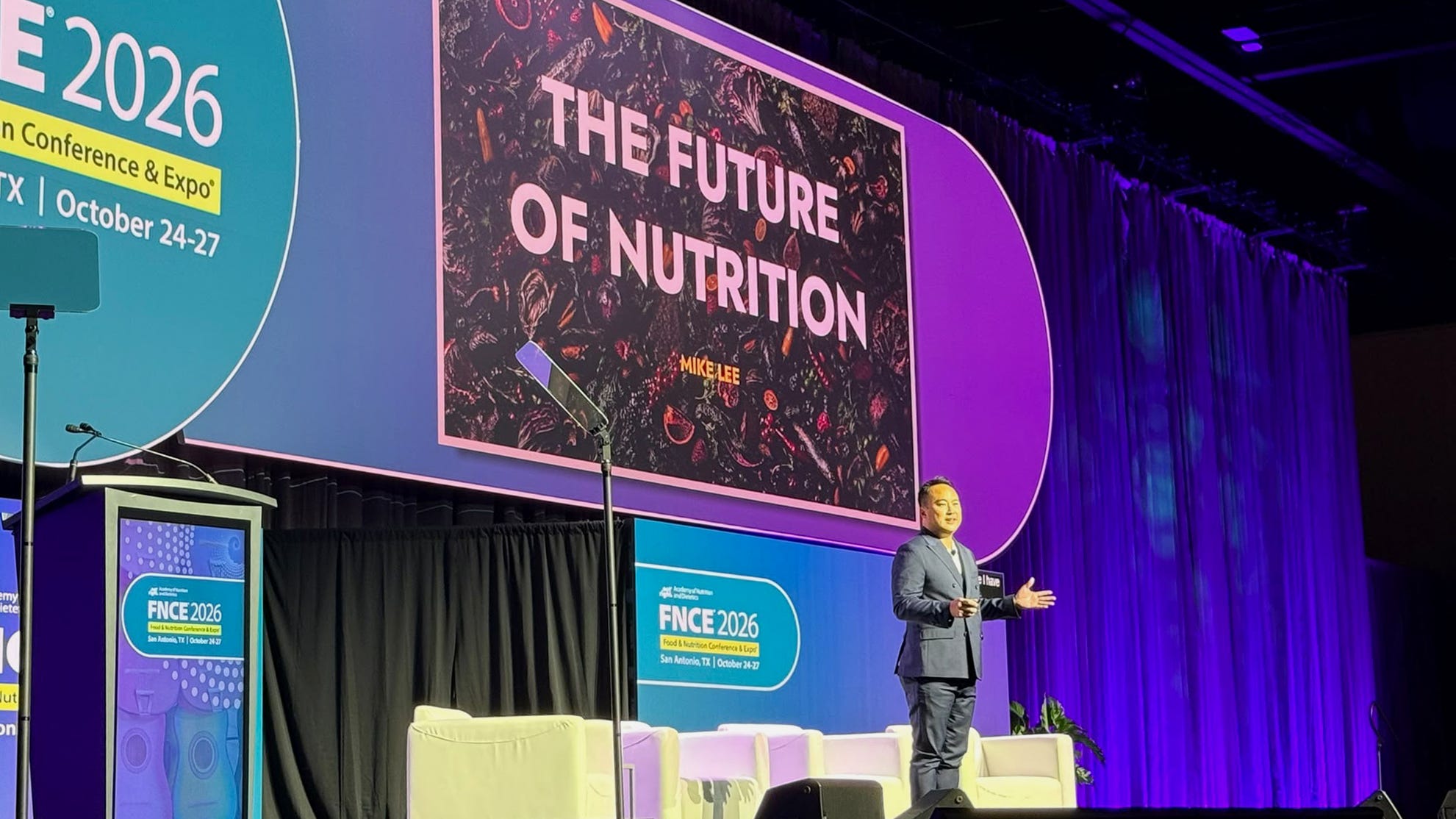
Yesterday I had the honor of delivering a keynote speech at the 2026 Food & Nutrition Conference & Expo (aka “FNCE”, pronounced “Fin-See”) on the Future of Nutrition. FNCE is like the Superbowl, World Cup, and Olympics all combined for the registered dietitian and nutrition community.
Today’s essay is a condensed version of my keynote.
Before I was a food futurist or a chef or an author, I was a restaurant kid.
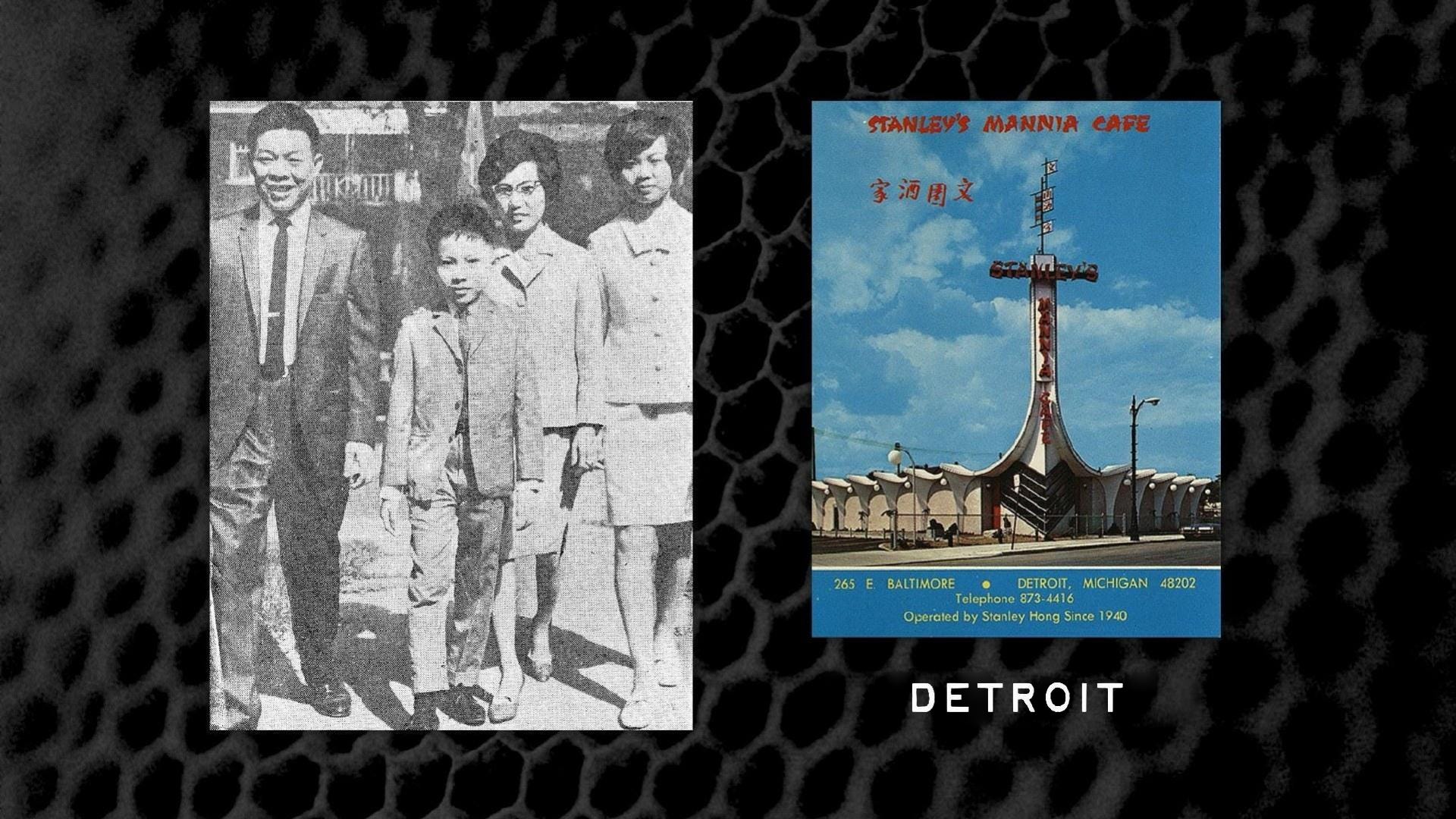
My grandfather and his three brothers moved from Hong Kong to Detroit in the 1940s and started a Chinese restaurant that lasted from until the late 90s.
Cantonese speaking people like my family don’t ask “how are you?” when we see each other. We ask, “have you eaten yet?” We’re the kind of family that talks about dinner over lunch, and about the next morning’s breakfast over dinner. There was always food on the table, and we were never very verbal about expressing love. It was all on the table, quite literally.
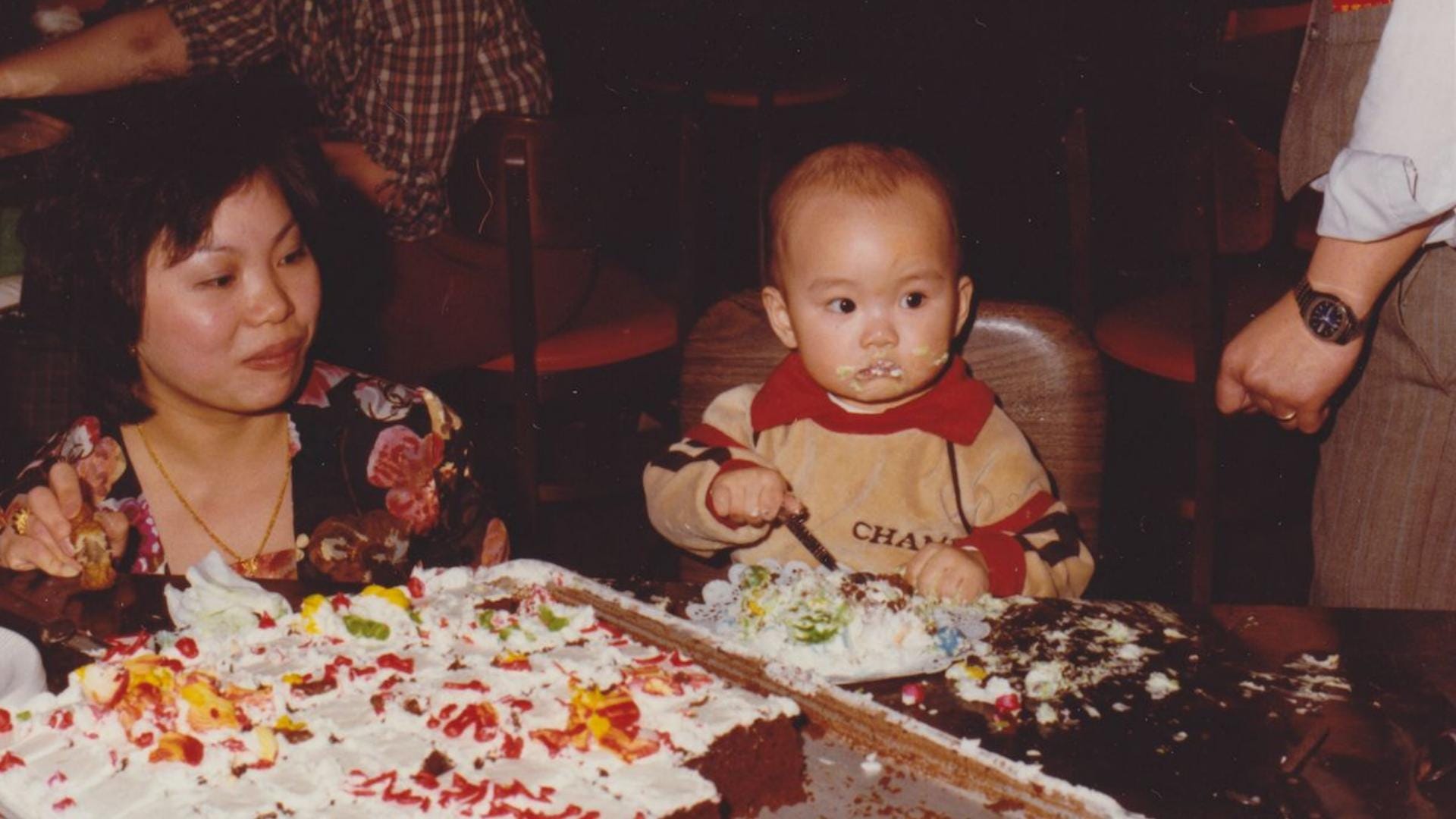
There’s a photo of me on my first birthday, in 1981, in my parents’ restaurant. The little cake is sitting on a sheet tray that twelve hours earlier held egg rolls, and my grandmother baked it in the same ovens that cooked all the Chinese food. Our family has always been about bringing people to the table and bringing the food to the table.
Fast forward to December 2015. I was home for Christmas break and went out to lunch with my parents. Afterward my mom complained of a stomach ache. We ended up at urgent care, and eight or nine hours later we found out she had stage three ovarian cancer.
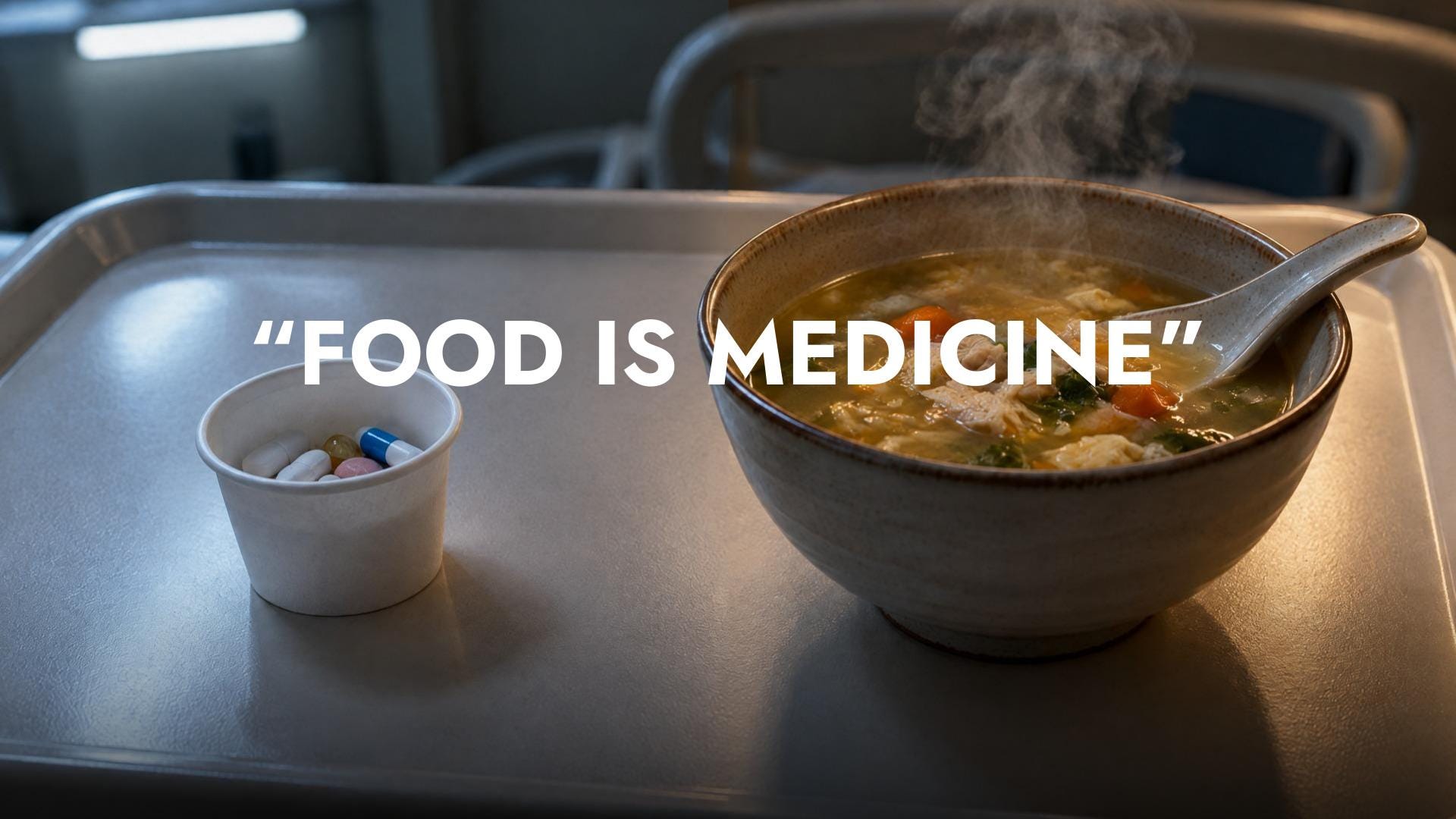
Thankfully, she’s fine. She survived and is in tip-top shape today. She got the surgery, she got the chemo, and the medicine was spot on. The food was not.
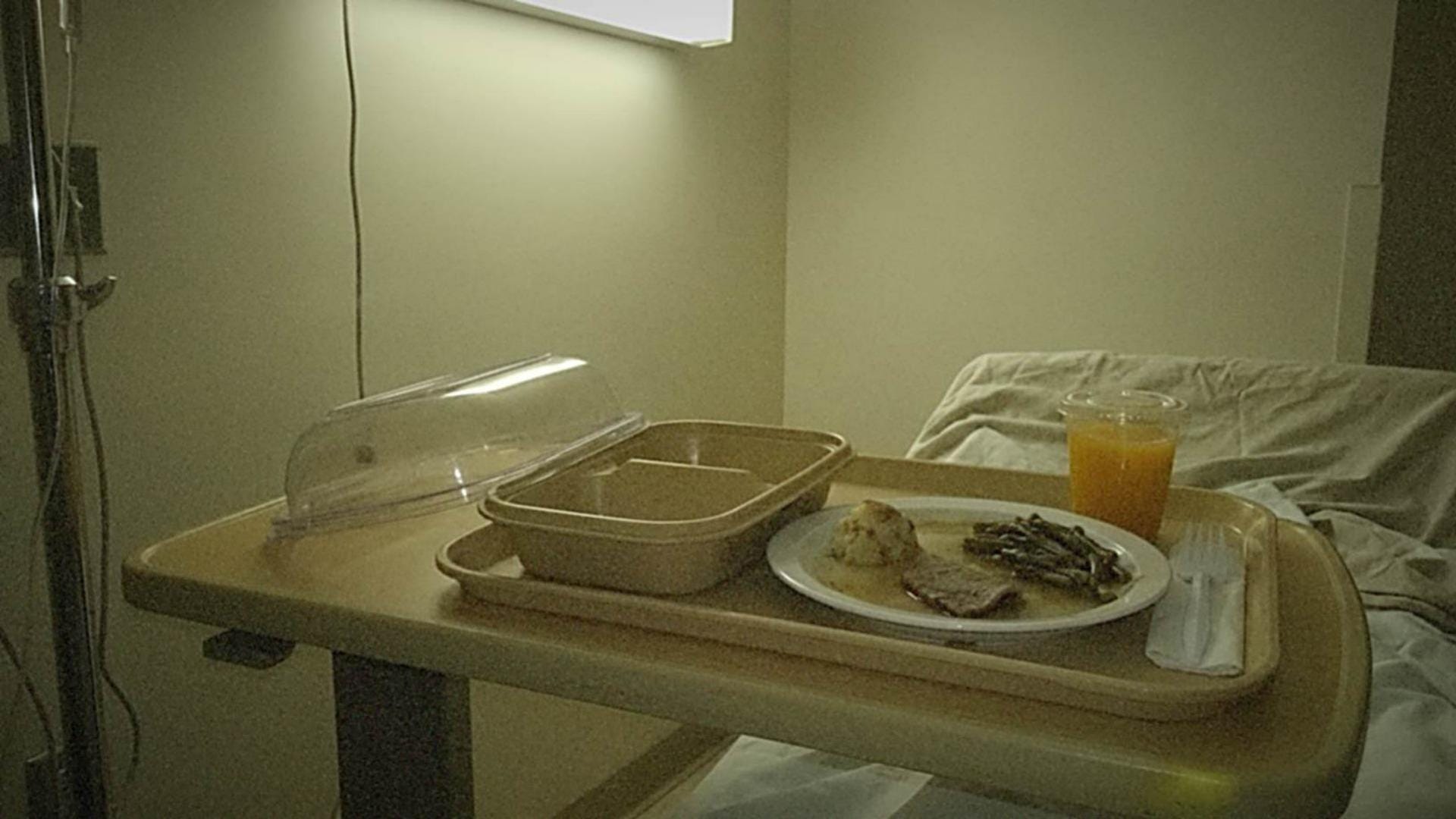
Three times a day a tray came up to her room. In theory it was optimized for her condition. And three times a day she’d open the lid, look at it, put the lid back down, and it would sit there getting cold until someone took it away. I know hospital food is hard to do, and a lot of logic goes into planning meals like that. But it struck me that all of that logic was for naught, because the last six inches of the experience weren’t right for her.
I know it’s hard to cook for people who are sick at scale in a hospital. But my mom didn’t see any of that. She didn’t see the budget or the logistics or the approvals and sign-offs, the lack of funding, the short staffing. She was just cut open, and she needed something to make her feel good.
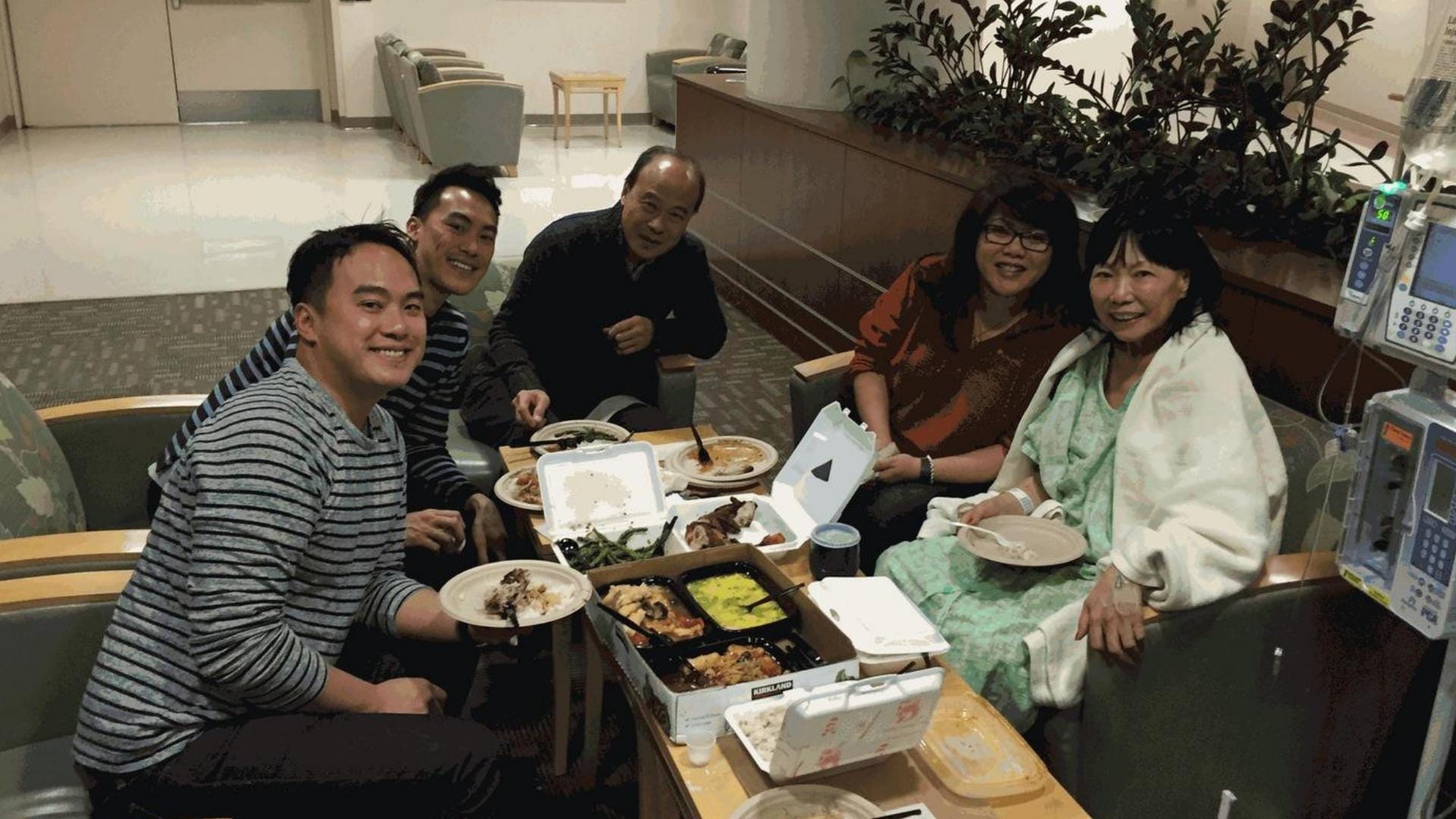
So we did what any restaurant family would do. On Christmas Day 2015 we snuck takeout from one of our favorite Chinese restaurants past the nurses’ station and set up an impromptu Christmas dinner in the lobby of her floor: my mom hooked up to her machines, her sister, my brother, my dad. The food wasn’t going to win any Michelin stars, but that didn’t matter. Was it nutritionally optimized for her condition? Absolutely not. But she had history with all of it, and it was the first time I saw her smile the whole time she was there.
I kept wondering why we have to choose between something perfectly optimized for the body and something that resonates with the soul. I don’t have any data on the value of a smile, but I have to believe it’s worth something as my mom healed from her recent surgery and regained her strength for the chemo regimen that awaited her after hospital discharge.
The oncologist has a hard job, but in a sense it’s a clear one: kill the tumor. The food side has to figure out what she should eat, and it has a second job on top of that: figuring out whether she’ll actually want it. An oncologist never has to think about the cultural relevance of chemo. The medicine just goes in. Food is harder, because it’s as much social science as natural science, as much emotion as logic.
Can Medicine Be Food?
Food is medicine is a phrase we’ve all heard plenty of times over the last few decades, and I’m all for it. I want to see food paid for like medicine. But I have one pedantic gripe with it. The phrase implies that food aspires to be medicine, like it isn’t right now, and that if food can get its act together it can one day be medicine.
But why do we never flip it? Can medicine be food? Can medicine do what food does?
Nobody craves their grandmother’s chemotherapy. Nobody misses their mom’s Lipitor. Yes, food is medicine. Let’s keep doing that. This is not an or. This is an and. But can medicine live up to what food is?
Flipping the script makes the job harder. Food is messy, and for Type A people rooted in science, who are used to having the answers, that can be really frustrating. Your best logically laid plans can be undone because somebody just doesn’t like strawberries. I see that as a feature of food, not a bug.
In food we are constantly caught in the tension between logic and emotion. The people who treat and heal with food need to fire on both cylinders: put the logical hat on, then take it off for a minute and put on the emotional one. Ice cream has no logical reason to exist, and we have it anyway, because it’s awesome.
The Concept Car
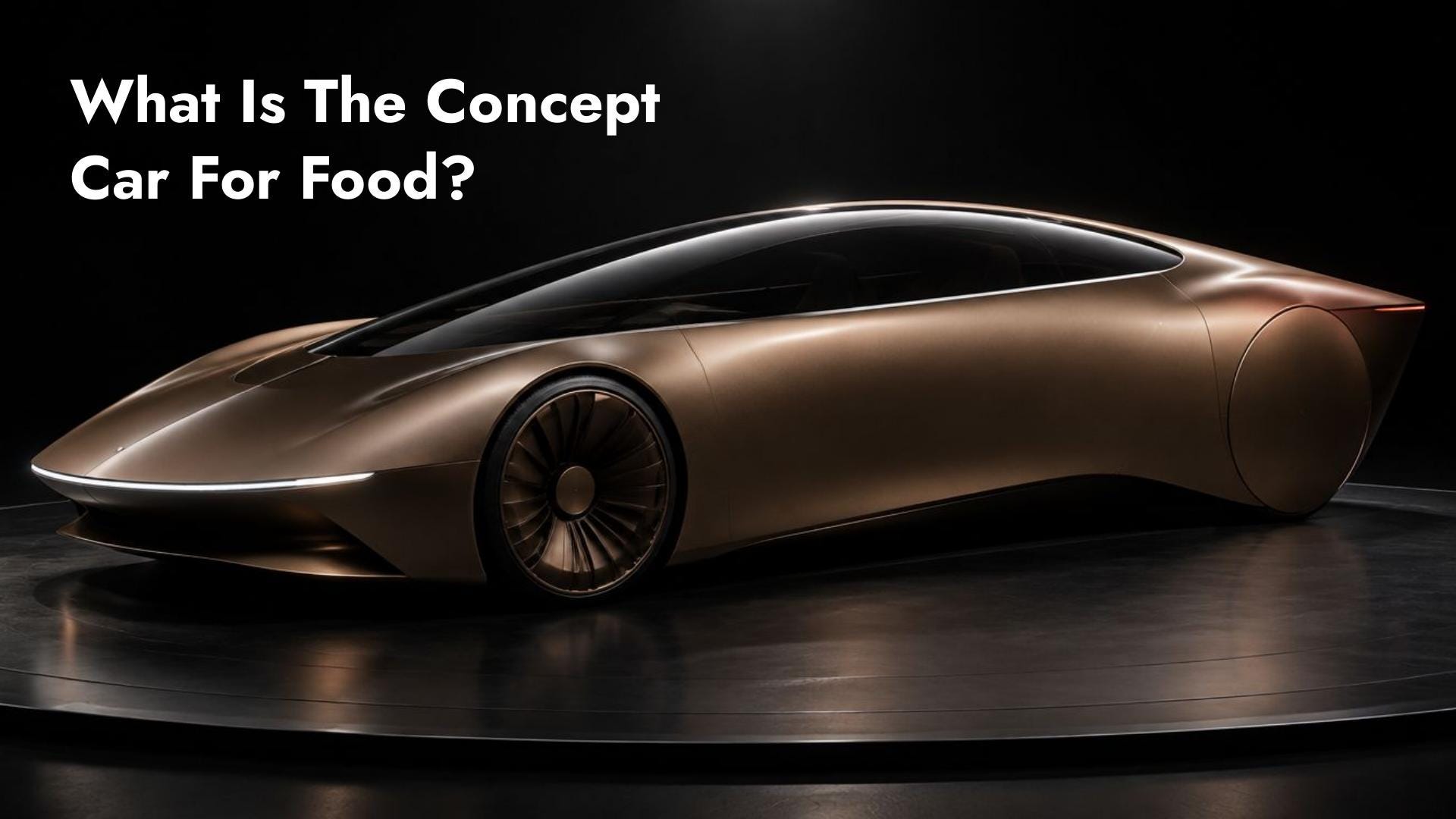
One of the things you do growing up in Detroit is go to the auto show. I was never interested in whatever that year’s new sedan was. I was interested in the concept cars. It astonishes me that an industry as large as the auto industry dedicates hours of time, energy, and talent, almost every single year, to building a thing that is not for sale. All that effort goes into something that shows up at a show and shows you the future.
My first day job in food was doing innovation and product development at Chobani, and they sent me to one of my first trade shows. I was in concept car mode. What I saw was a lot of kale chips and a lot of bone broth. It gave me the question I’ve been working on for the last fifteen years: what is the concept car for food? Nobody really has a ten-year plan. But if the vision is ambitious enough, it changes how you act today.
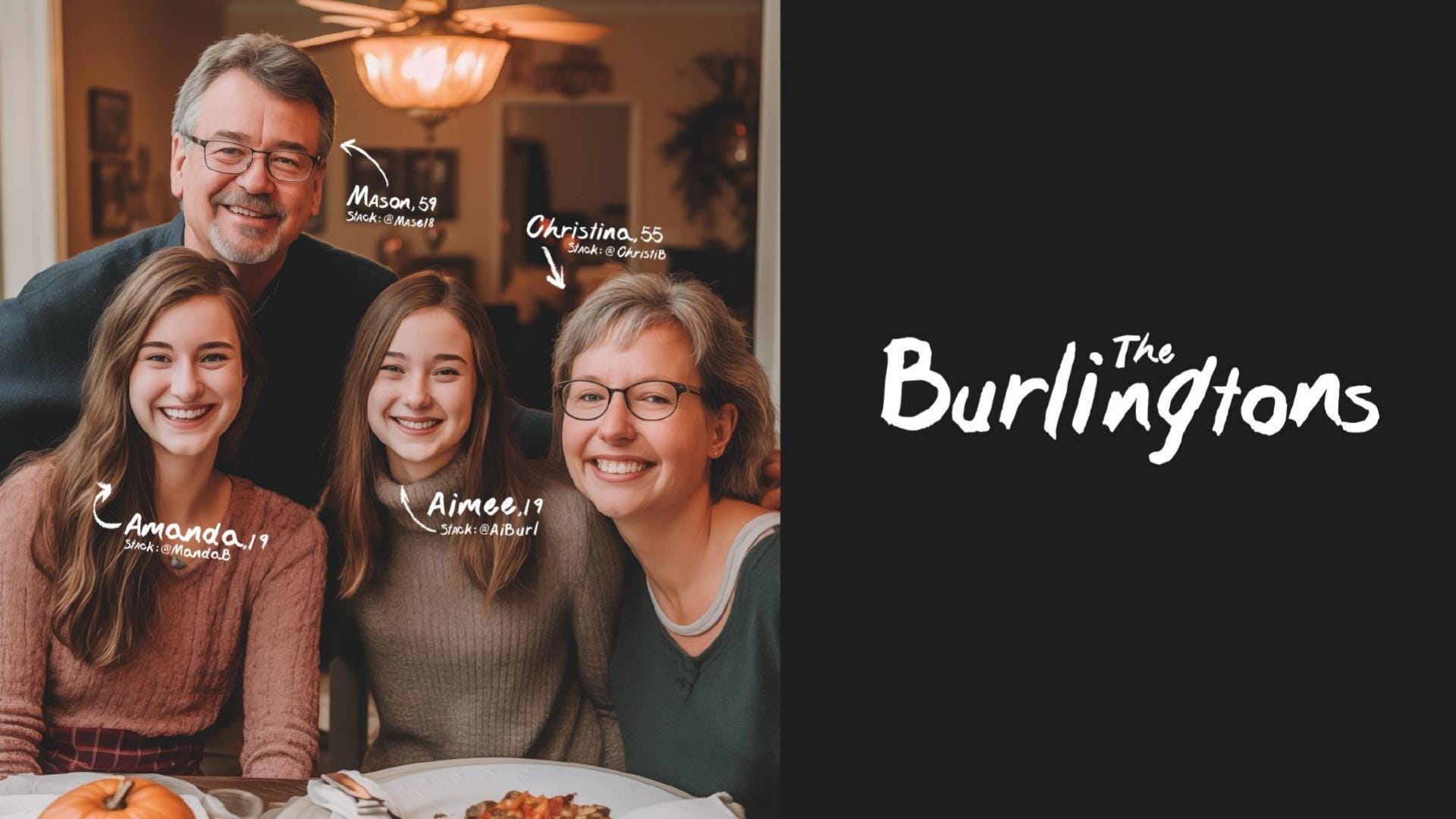
I write books about the future of food in a category called speculative fiction. Here’s a summary of one from my book Mise: On the Future of Food, about a family in Connecticut in the year 2052 called The Burlingtons. Mason is the father, Christina the mother, and Aimee and Amanda are their twin daughters, and we meet them at Thanksgiving.
Thanksgiving, 2052
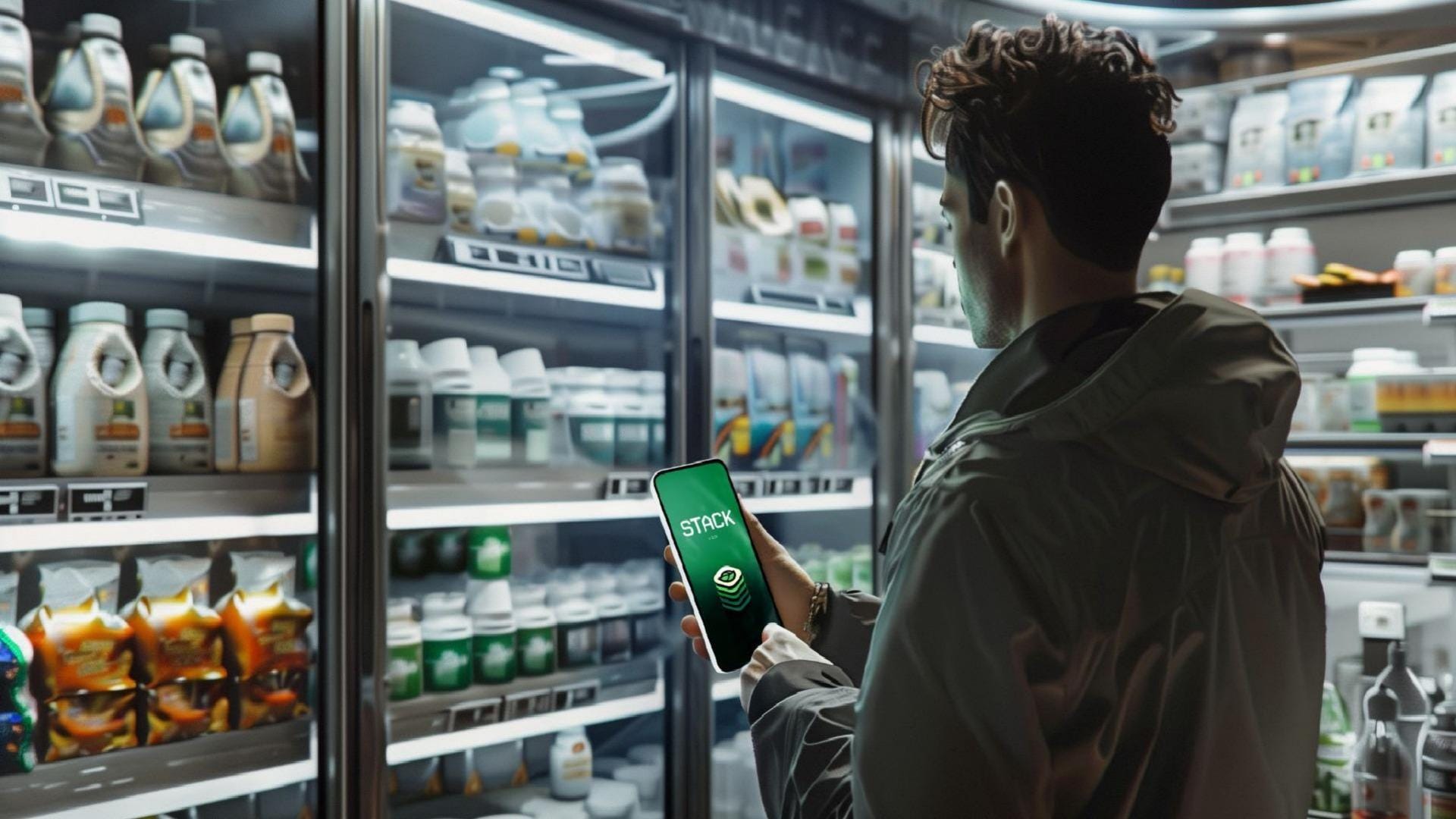
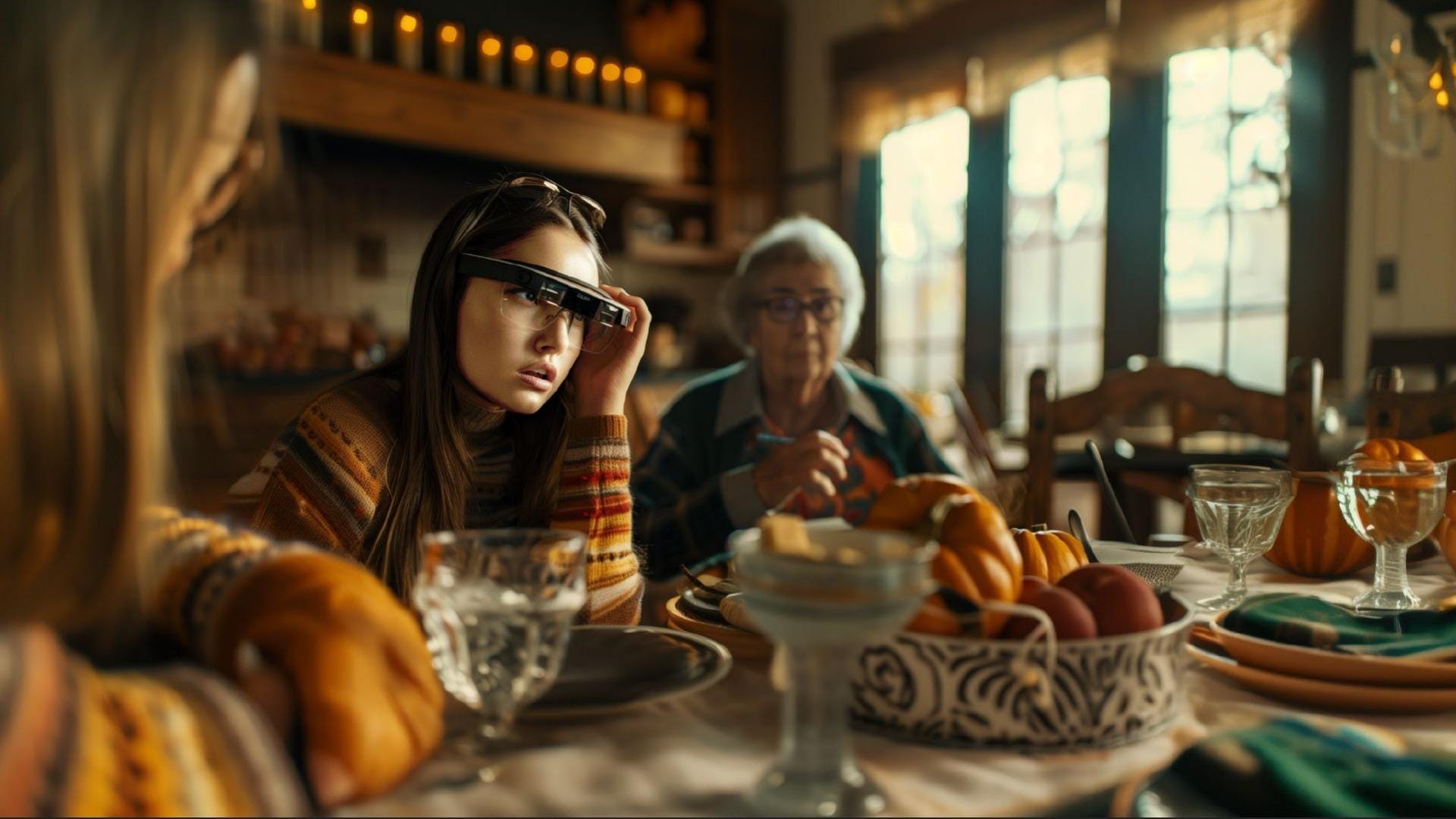
The Burlingtons are all on a precision nutrition technology called Stack, the catch-all for all the nutrition intelligence people have been working on for the last forty or fifty years, baked into one app. It gives you the exact meal you need at that moment for whatever your goals are. Every promise anyone has made about personalized nutrition has come to life in Stack, so you could argue that in this future we’ve solved the precision nutrition problem. Pair it with smart glasses and an average dinner comes with a heads-up display of macronutrients and calories.
It’s Thanksgiving, and Grandma is trying to ask Aimee how college is going, but Aimee hit a firmware update and can’t eat until her glasses finish updating, because heaven forbid she eats something that doesn’t get tracked. We think devices at the table are intrusive today. Wait until Stack.
The Burlingtons don’t even do turkey anymore. Mason’s Stack told him to go on a carnivore diet, so he’s having quail stuffed with sausage. The rest of the family, the ones who aren’t on Stack, just have a chicken, because there aren’t enough people who want to share a turkey anymore. And Grandma keeps making the pumpkin pie she has made since the girls were babies. This year every slice went untouched, ice cream slowly melting into the crust, because nobody’s Stack allowed them a slice of pie.
For as much as we aspire to solve all of nutrition’s problems with technology, is this the way we want to do it? For as much as we design machines, machines also design us. I can’t remember anyone’s phone number because I’ve had a phone to do that. But is it okay to forget how to feed yourself?
Doubling Down on Your Humanity
The more the machine can do, the more human we need to be. For the nutrition community to keep thriving, I think you almost have to assume that AI will do the job one day. But every dietitian should sit with the question: if AI can do most of the analytical things I’m used to doing, how do I still fit in? How do I double down on my humanity? If I hand the AI all of my inhuman tasks, does it paradoxically make me more human?
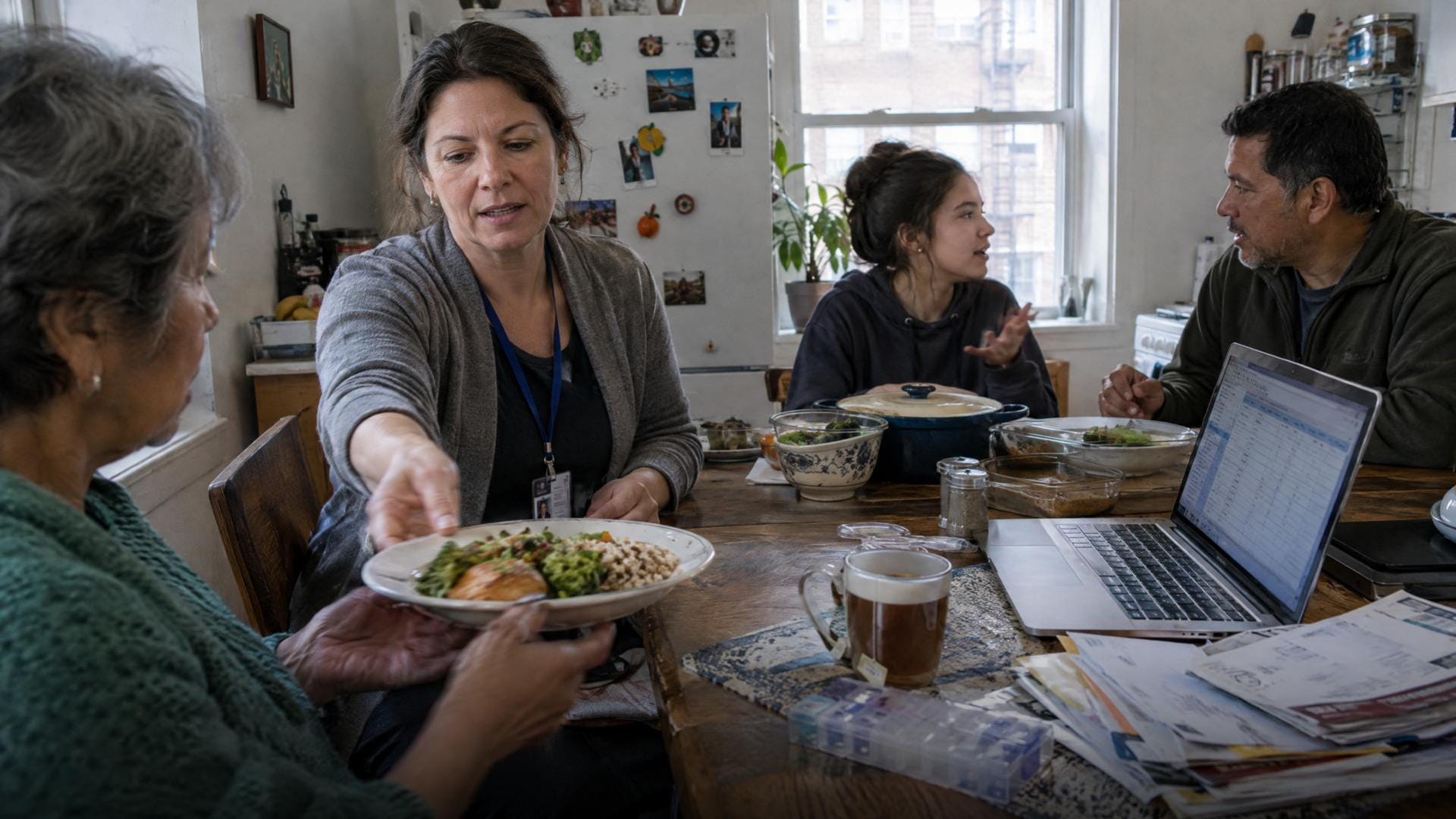
Writing somebody a nutrition script is not the same as making sure they have the wherewithal to follow it. The people with the most money, the most time, and the most education have trouble staying on diets. Let alone people without those resources. If it were as easy as telling everybody to eat whole foods in moderation, we would have solved the problem by now and most of us would be out of a job. Do they have the ability to cook a scratch meal? If they’re working two jobs, how do whole foods and vegetables even get into the house? Those are the social sciences that ring around the natural sciences.
Chefs are probably the only job in food that, over the last twenty or thirty years, crept out from behind the kitchen and into mainstream hearts and minds. Now people want to talk to the chef, and a tour with the chef is a big deal.
So why can’t dietitians be the next ones to take the microphone? They have the science. They have the training. That was never the problem. The profession needs to work as hard on winning hearts and minds as it does on the science, because a perfectly engineered meal that goes uneaten is as good as chemo where the IV fell out. When the IV falls out, we do something about it to make sure it goes in. Why don’t we do the same for food?
A dietitian may have to expand the aperture of what she pays attention to: part social worker, part counselor, part chef, part influencer, part celebrity. But whether we like it or not, the world is shifting, and we need to figure out how to shift with it.
Rewriting the Future
I think back all the time to December 2015 and how the food worked out for my mom, and I can’t rewrite that for her. But maybe I can rewrite the story for the future moms and dads and brothers who end up in hospitals facing the same thing.
In the style of the speculative fiction I wrote about the future of food in my books, Mise: On the Future of Food, here’s how I’d rewrite the experience my mom had in the hospital for someone else’s loved one in the future…
It’s 2045. There’s a woman in her bed on a cancer floor. She’s a mother. A wife. A sister. A daughter.
She had surgery last week and has chemo next. Her health plan is paying for specialized nutrition services the same way it pays for her chemo. Somewhere in the past 20 years, insurers ran the numbers and determined that paying for good food was cheaper than paying for expensive medicine.
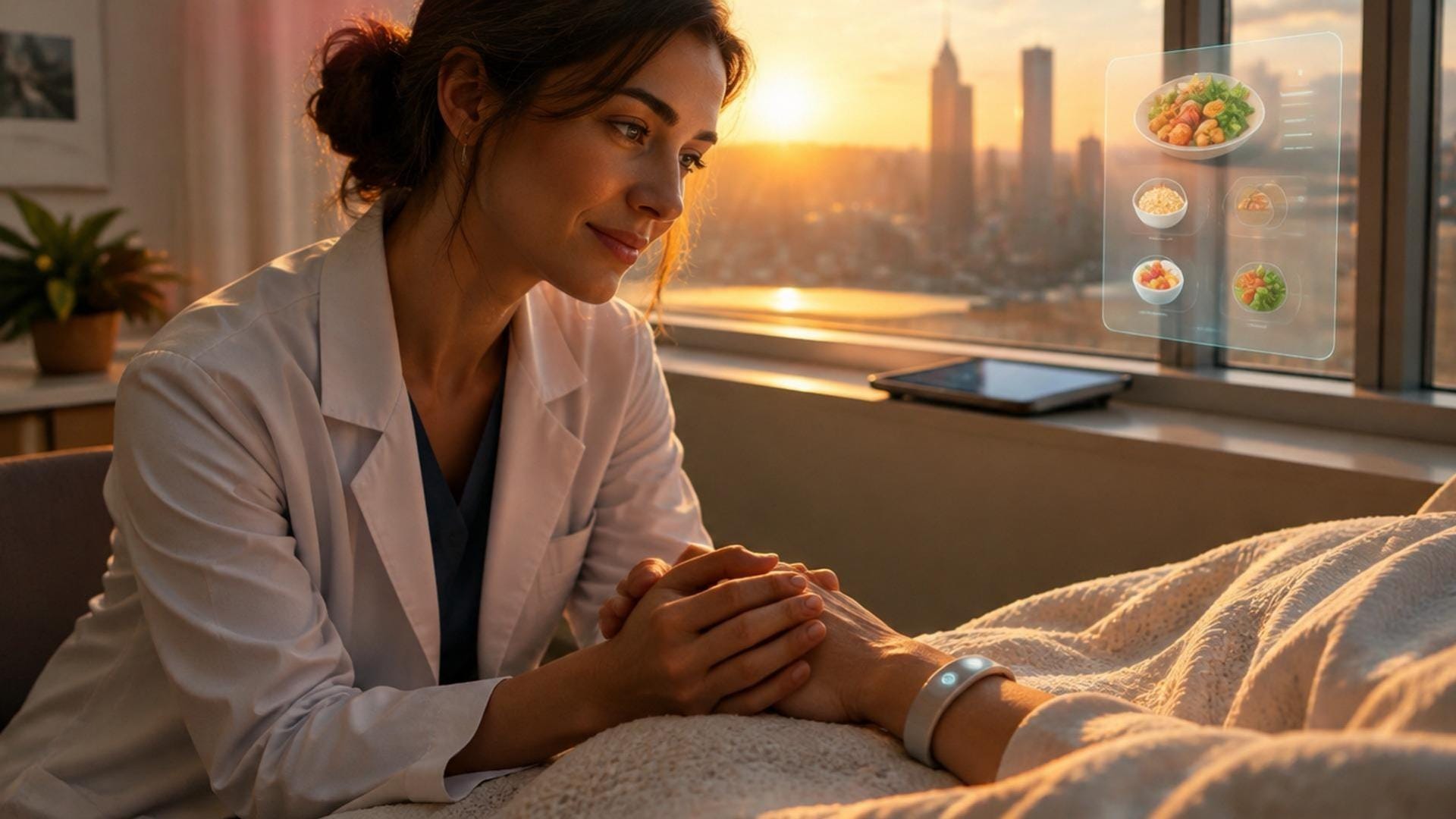
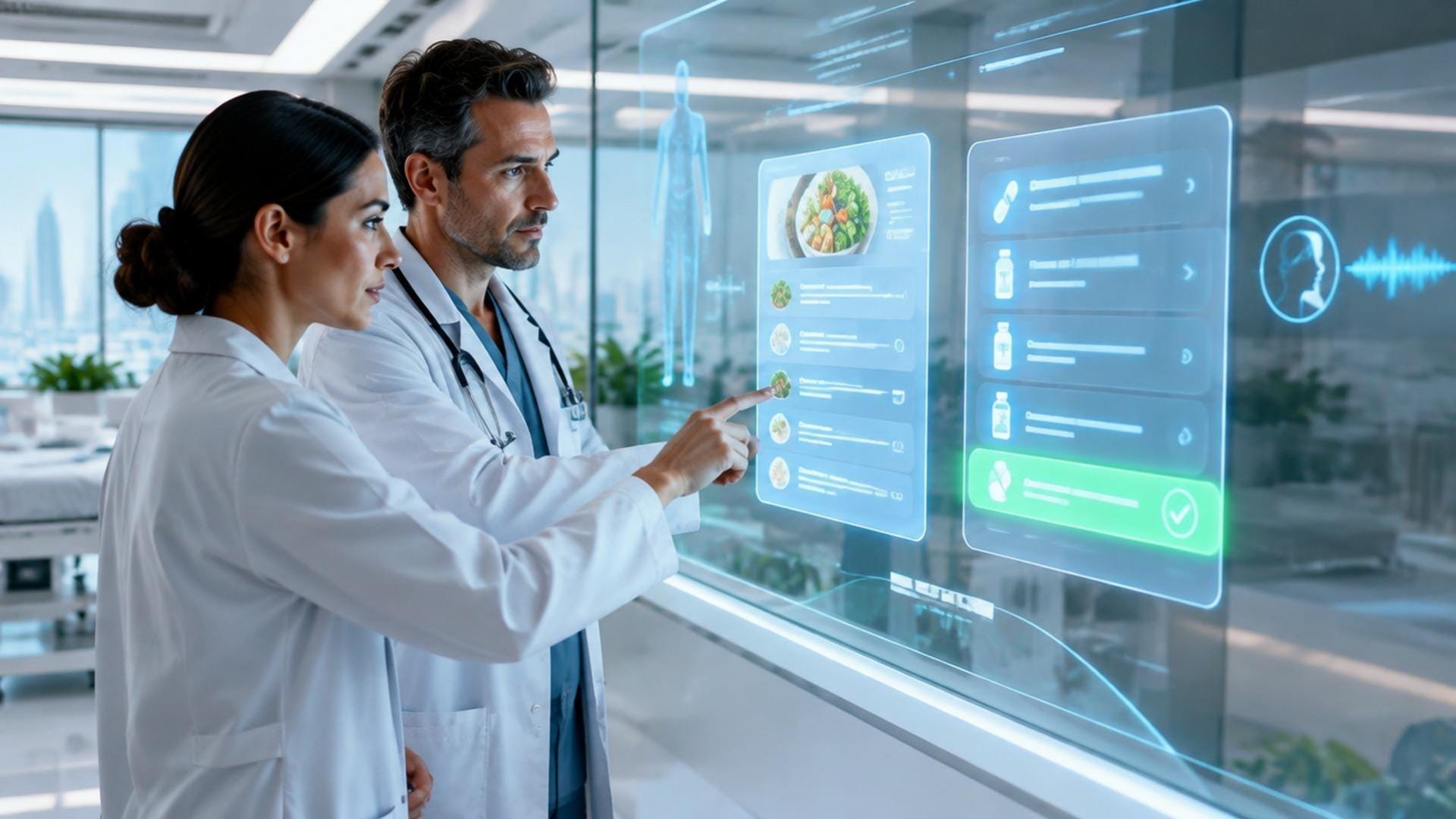
By the time a dietitian pulls up a chair at her bedside, the machines have already done most of the grunt work. The hospital’s custom AI model has read her chart, her labs, and her treatment plan. It’s worked out what the ideal plate looks like for this woman’s body in seconds.
But then, the dietitian does the thing that the AI can’t do, which is the entire reason she’s here in the room. She places her tablet down, squeezes the patient’s hand and asks a simple question: what do you love to eat? We’ve always taken medical histories, but now we take food histories. And the dietitian really listens, because the answer to that question is always long. As it should be.
Now back to the logical part. The dietitian takes the meal the machine came up with, along with the answer the woman gave her, and builds a plan from both. The plan goes into her chart, right next to where her meds are listed. Now the oncologist, the insurer, and the kitchen can all see it. For the first time, all three are looking at the same data.
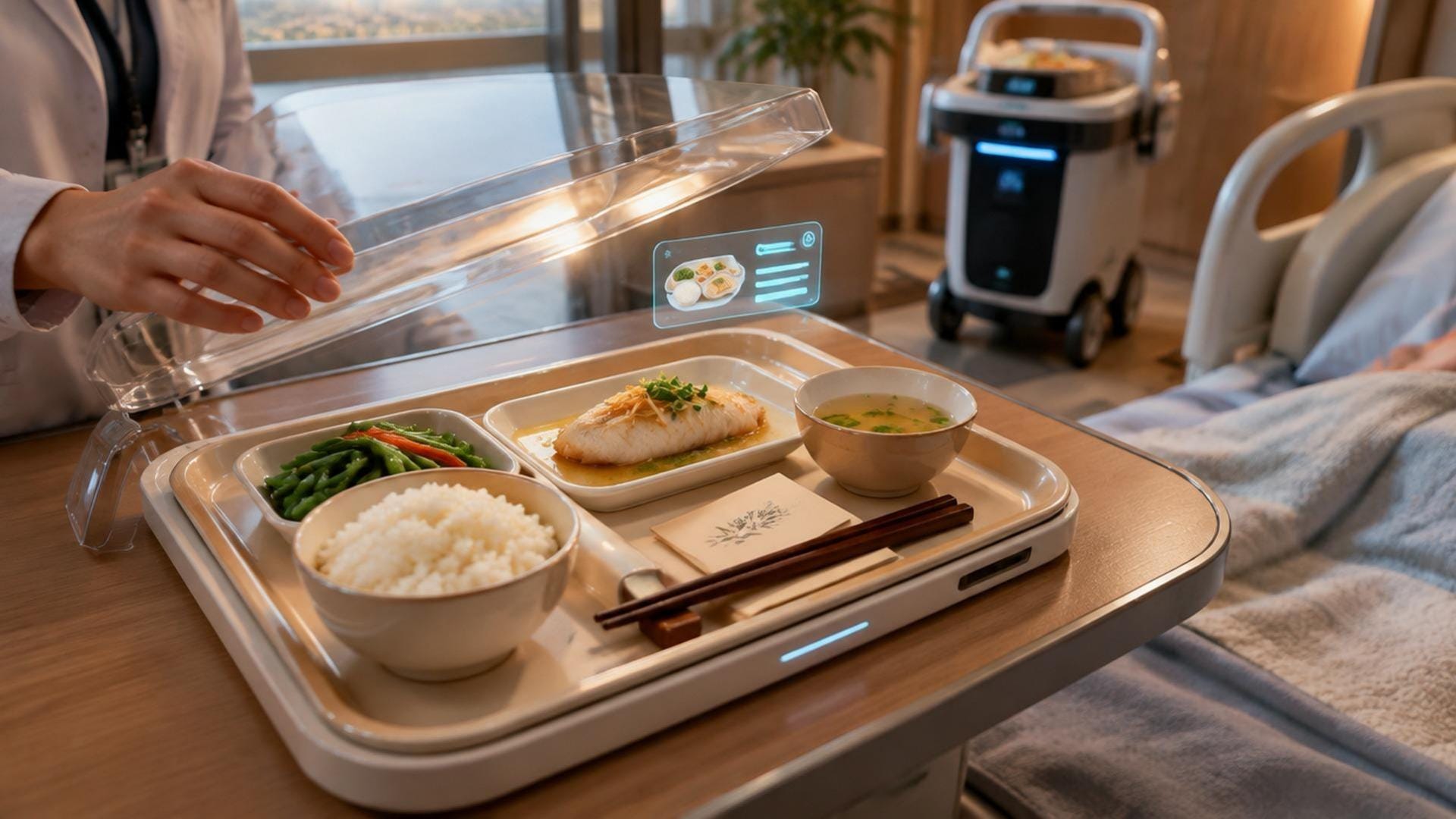
Then comes the tray. When the woman lifts up that lid, there’s food under that means something to her. It has the flavors she raised her own children on. Gently adjusted to suit someone who just had surgery and who is about to start chemo. But it’s legible to the woman and makes her smile. It’s a meal optimized for her body and soul.
The sensor on the woman’s wrist will log each bite automatically to her digital record. But the dietitian stops in to check on her anyway, because she really wants to see the woman’s face when she eats the meal. That’s the metric that’s hardest to track, but easiest for a human to see.
And the woman is eating it. Not because her doctor or dietitian told her to. Not because the macros in the meal are right. But because she wants to. She even asks the dietitian for the recipe.
Nothing goes in the garbage. The nutrition that her oncologist needs her body to have actually gets into her body, which is the whole point of that food tray in the first place. The machine got the numbers right, and the dietitian used her training to make sure the patient craved it. Logic and emotion. All on the same tray, for one woman in the hospital.
That’s what a concept car for the future of nutrition can look like.
I’ll leave it with one story from a guy who has nothing to do with food. Martin Cooper ran R&D at Motorola in the 1970s, and he and his team created the first cell phone. In an interview years later, he was asked where he got the idea for a phone without a cord, and he answered without pausing: Captain Kirk. When you put a vision that is ambitious in front of a person who can do something about it, magic can happen.
If you’re a dietitian reading this, you are the Martin Coopers and the Maria Coopers of the future of nutrition, and you don’t have to wait for Star Trek. You can write your own concept car for what your profession should look like. The future of nutrition is not a spectator sport. You are in the driver’s seat, not me. It’s up to you to sculpt the future of nutrition with care, with responsibility, with logic, and with emotion.