


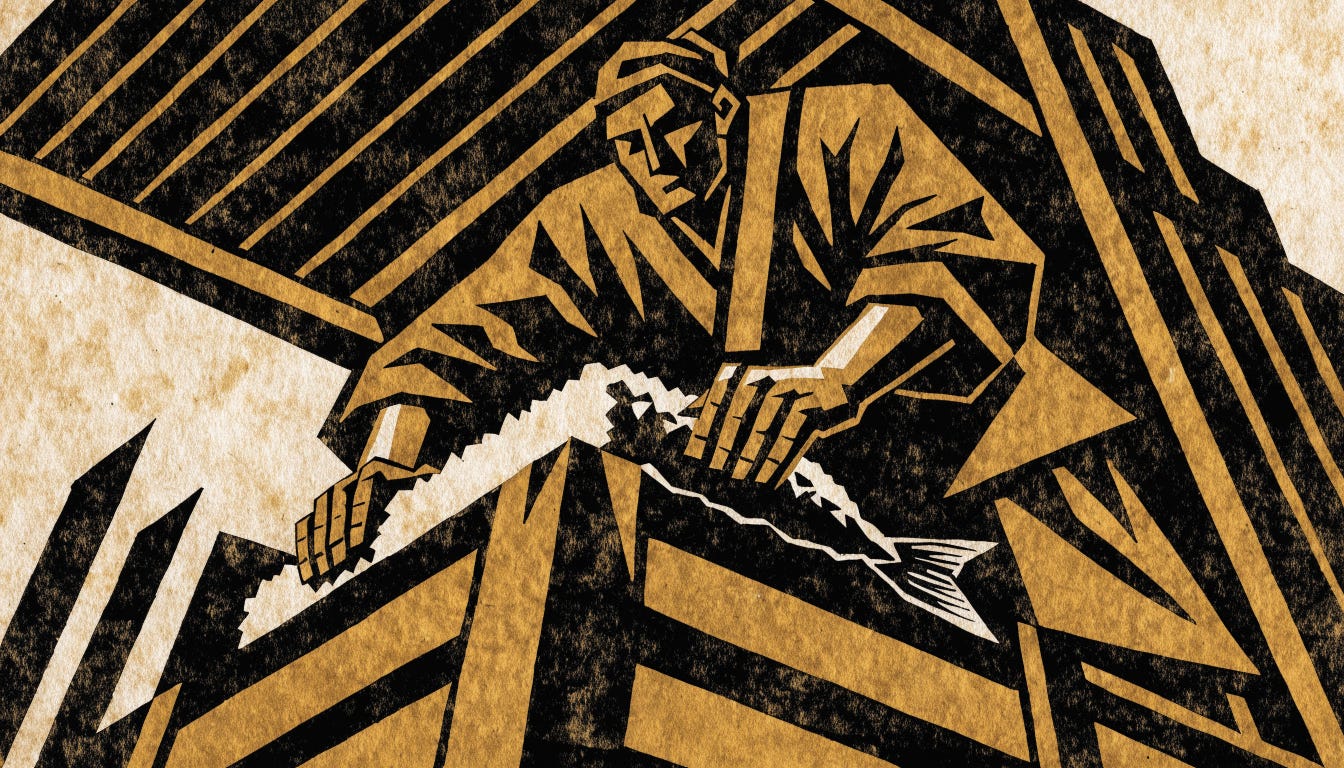
Salmon sushi feels like it’s been on sushi menus forever, but it hasn’t. It’s only been around for about forty years. And it got there not because of some flash of inspiration from a maverick sushi chef, but because Norway simply had too much of it.
In the mid-1980s, Norway’s farms were producing more salmon than they could eat in their home market. The surplus was crowding freezers and becoming a problem. So in 1986, the Norwegian government launched an initiative called Prosjekt Japan and sent a man named Bjørn Eirik Olsen to Tokyo in search of a buyer.
His goal was simple: move the salmon surplus, and he had two ways to do it. The easy way was to sell it cheap to those in Japan who would cook it. Or, he could go the harder route and sell it to the raw sushi market, where the same fish could command a much higher price. Olsen went for the raw market, which in hindsight was the right choice, but far riskier at the time, as there was no guarantee of success. But along the way he had to demonstrate to a well-established and opinionated food culture how to eat something raw it had refused for a century.
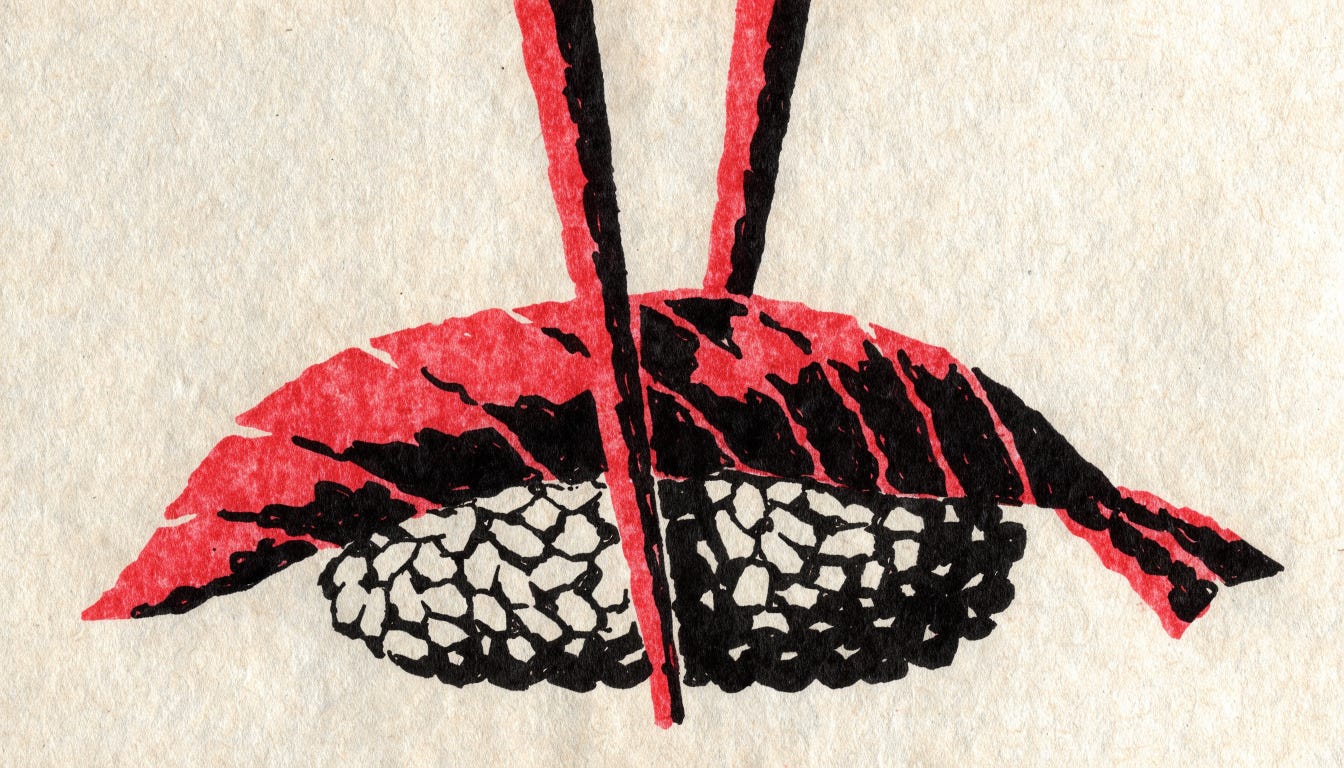
When one country’s food gains traction in another, we often picture some chef who singlehandedly ignited a new trend. That’s the romantic view that sometimes happens. But that push usually starts in a far less aspirational way: someone has product to move.
Got Surplus?
Historically, Japanese cooks grilled salmon and sushi chefs viewed it unfit for raw consumption. Japanese buyers would complain to Olsen about the color, smell, texture, and even the shape of the salmon head. They weren’t having it. Yet, the Norwegian Embassy in Tokyo had been serving raw salmon to Japanese guests who ate and loved it for years. So as it turns out, taste wasn’t the biggest problem, it was food safety.
Wild salmon from the Pacific, the kind Japan knew, harbored parasites that would make you sick if eaten raw. Hence, why Japanese only ate it cooked. And by the mid-80s when Olsen and his delegation arrived, all anyone thought about was parasites.
Norway’s farmed Atlantic salmon had little parasite risk, and it was fattier to boot, which made it even more enticing as a bite of sushi. But Olsen couldn’t just clear away decades of fear of parasites just by promising “it has no parasites.” He stopped trying to dispel the fear head-on and steered around it.
He played up its provenance: clean, cold Norwegian waters. And he renamed it. The Japanese word for salmon is sake (which has nothing to do with the alcohol) and was ingrained in people’s minds as the fish you don’t eat raw. So he pivoted and called it “sāmon,” which is a katakana word, or the script that Japan reserves for foreign words. And like Philip Morris rebranding to Altria, sāmon no longer carried the baggage of parasite-laden raw salmon.
To get it onto sushi counters, Olsen went to humble sushi shops and cheap conveyor-belt places that had less reputation to protect than a well-known sushi chef did. He’d sell a big batch to a single distributor at an introductory discount to help push it into those stores. Rebranded, the salmon drew diners in, and after a while the higher-end places joined in. By then, the approval of well-known sushi chefs didn’t matter, as it had already won approval on a grassroots level.
Within a decade, Olsen knew he’d won when he started seeing little plastic salmon nigiri in Tokyo shop windows. Forgetting that something is new and weird is the hallmark of a marketing campaign that works.
What We Call Sushi
On the other side of the Pacific in North America, it happened again. Sushi arrived in America in the 60s as a curiosity for adventurous and worldly foodies. And it stayed in that niche until sushi chefs in America started playing with it. Because mainstream American eaters balked at the same things the Japanese did a long time ago: raw fish, a black sheet of seaweed, sour rice.
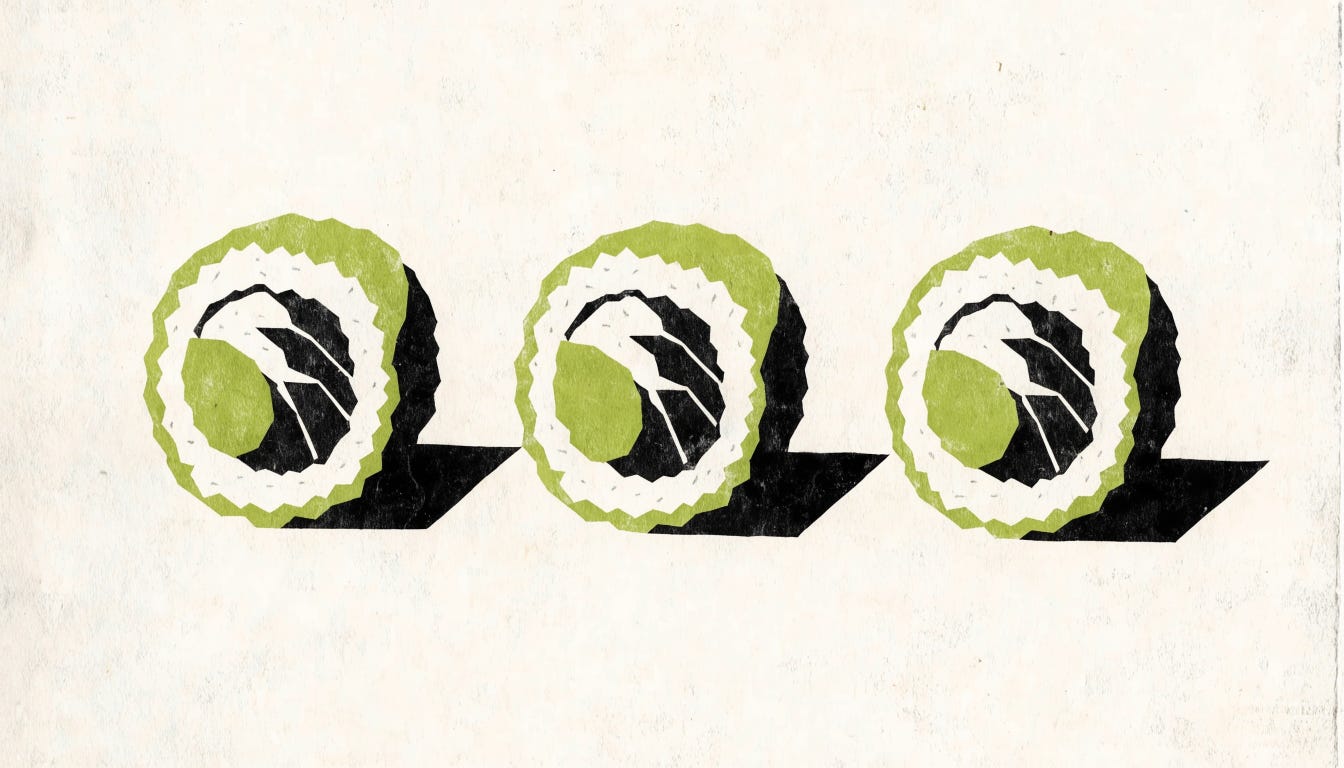
Enter the California roll, created by a cook in Los Angeles who avoided raw fish altogether and replaced it with cooked crab and a bit of fatty avocado, with the rice on the outside of the seaweed to gently hide it. It worked so well that the California roll eventually made it back across the Pacific as a quasi-ironic remix of sushi that sat on convenience store shelves in Tokyo.
The idea of a sushi roll didn’t stop at the California roll. It kept bending in new and perverted ways. Chefs added cream cheese to make the Philadelphia roll, then drowned others in spicy mayo with crunchy tempura shrimp inside. They stacked dragon rolls and volcano rolls with cloyingly sweet eel sauce and even more spicy mayo. By now, the raw fish was an afterthought, completely overpowered by all the shit on top.
A sushi purist from Tokyo would not call this sushi. But to many Americans, this is the exact definition of sushi. And even though I’m in the former sushi camp, neither group is wrong to call both these things sushi.
I don’t even think Americanized sushi would offend the originators of “real” sushi way back in the day. Because they were improvising too. The nigiri that a sushi purist today stands by is something invented in the 1800s as street food: sliced fish pressed onto vinegared rice, sold from a stall to blue-collar workers needing a quick lunch. What we celebrate today as pure and original was just a made-up convenience food.
You can see the same pattern across the world in other cuisines. Tempura was born from Portuguese missionaries who battered and fried fish and vegetables in the 1500s in Japan. Al pastor tacos came from Lebanese shawarma that Mexican cooks moved to pork on a spit. Bánh mì is a French baguette that the Vietnamese filled with pâté and pickled daikon. Butter Chicken was probably invented in Great Britain, not India. And more recently, Roy Choi’s addition of Kalbi and Kimchi to a taco has been going nearly 20 years strong as a new standard staple remix on menus everywhere. Every one of them feels native now, though none of them began that way.
The question of which version of sushi, Japanese or American, is more “authentic” is the wrong question. Because while we can each have our own preferences, neither is objectively better than the other. They bring joy to different eaters and that’s ok. It takes nothing away from the experience a sushi purist has eating a perfectly seasoned and formed piece of nigiri in a Tokyo sushi bar, knowing that someone in suburban Reno is eating a cream cheese and tuna roll out of a plastic container on their coffee table in front of the TV.
Nobody asked for salmon nigiri. Nobody asked for nigiri in general. And nobody asked for the rainbow roll. Someone had fish to move, or a nervous customer to feed. The craving followed the supply, not the other way around, which is the sly turn inside ‘give the people what they want.’
The sushi purist who dismisses the Dragon Roll today rhymes with the traditionalist in the 1800s scoffing at the first versions of street-stall sushi. But add fifty or so years to it and people start to forget where that new, strange food came from. And that’s how the Dragon Roll and its ilk become canon, the same way tuna nigiri did before it. Feed people something for a generation and they learn to crave it. Because today’s food traditions are just improvisations that outlived the memory of them being new.
—
I explore this theme, and others like it, in stories such as “Robokase” from Mise 02: The Restaurant Issue. Out now.
Mike Lee is a food futurist and innovation strategist, author of Mise: On the Future of Food, host of The Tomorrow Today Show podcast, creator of Mise Futures, and is on Instagram at The Book of Mise.
Ah. This hits so close to home that memories are bubbling over one another. We had sushi bars and seafood restaurants at fishing wharves across the coastline of British Columbia when salmon farming began then exploded. Sadly, this occurred when hatcheries were pumping salmon with identical genetics into salmon rivers in the millions-billions.
Wild salmon plummeted, out-competed by hatchery salmon and infected by the sea lice and diseases of farmed salmon. The hatchery salmon was the industry's way of evening out salmon returns each year, which naturally vary on a cycle. All 5 of Alaska's salmon species were fully replaced with hatchery salmon by the mid-2000s.
The secrecy and corruption of the farmed salmon industry and canners simultaneously meant that wild salmon were hammered every year even after their productivity went into free fall, as the government spotted early on. Yes, we had to blast freeze wild salmon for 2 days as was custom, but there was no way to remove the lice.
Yes, farmed salmon started appearing on sushi menus (cheaper then and consistent in size, texture and availability) but in the land of if you know you know, it was gross. It's still gross: loaded with chemicals and a rubbery greasy mouthfeel. It also needs blast freezing for 2 days but nobody does it. That and the texture are why I request 'no' when ordering. If it's unavoidably on my nigiri plate, I feel sad, defeated. (I was among the first to blast freeze wild salmon to supply Vancouver restaurants in Winter).
Wild salmon like tuna are among the ocean's most majestic and magnificent species and they are being transformed like chicken.
A great article. Thank you.
in menu reviews, a new dish can sit next to a Caesar salad for a month, sell less, and disappear because "the guests have spoken."
the Caesar has had years to become an easy choice.
salmon nigiri had to be strange for a while before people started asking for it.
how fair it is to ask a new dish to beat something people have known for years before deciding they do not want it.