


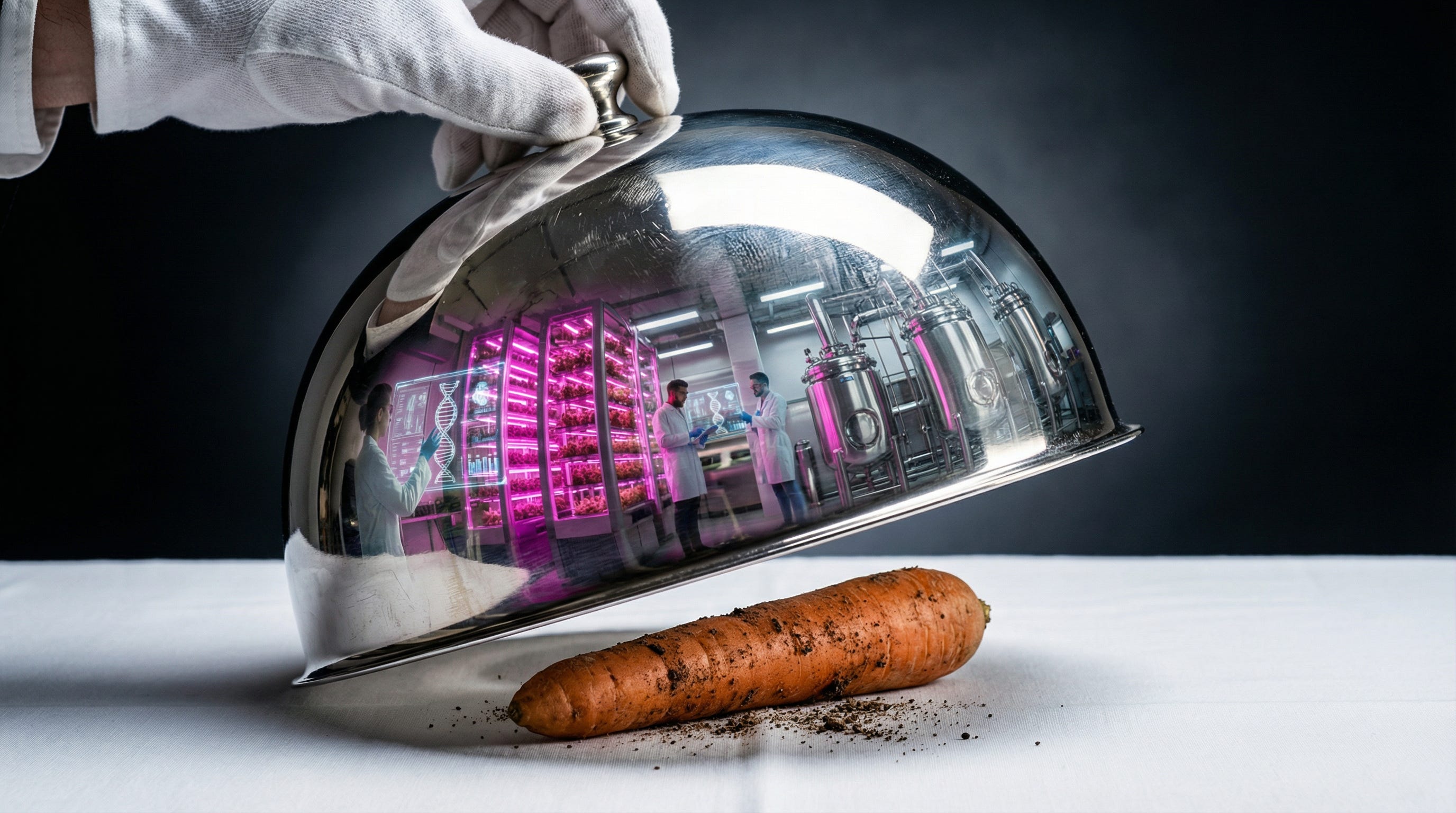
It was a narrative written in pitch decks and press releases, promising that technology was about to decouple food production from the constraints of nature. Vertical farms would turn agriculture into manufacturing. Bioreactors would make the slaughterhouse obsolete. Apps would optimize our nutrition like a software update. Billions of dollars were invested on the premise that the food system was ready for the same rapid, scalable disruption that defined the internet era.
The venture capital that poured into food tech wasn’t just optimistic—it was historically unprecedented. Founders who had never farmed, processed food at scale, or run a restaurant were suddenly raising massive funding rounds. The assumption was simple: if you could disrupt taxis and hotels, surely you could disrupt dinner.
But food isn’t code. It’s biology, chemistry, logistics, and culture all colliding at once. And unlike a software platform where you can iterate daily, food products face regulatory hurdles, supply chain complexity, and the deeply personal relationship people have with what they eat. The gap between demo day and dinner table turned out to be wider than anyone expected.
I’ve been genuinely excited by some of these technologies. But I’ve also watched the gap between what gets promised in a San Francisco conference room and what actually lands on a dinner table in Sydney, Chicago, or London.
The average eater hasn’t replaced their steak with cell-cultured beef. They’re likely still buying field-grown lettuce, not vertical-farmed greens. They might have tried a plant-based burger in 2019, but today they’re just as likely to be ordering a conventional one.
As we stand in 2025, the sector is leaner and more pragmatic. That’s not necessarily a bad thing. It gives us a chance to assess exactly where these innovations stand—not in the pitch deck, but in the marketplace.
Read the full essay at evokeAG →
In the complete piece, I map six major food tech categories—vertical farming, cultivated meat, ghost kitchens, plant-based protein, precision fermentation, and personalized nutrition—tracking which are finding commercial traction, which remain stuck burning capital, and which are being quietly abandoned. The pattern that emerges tells us something important about what actually works when technology meets the dinner table.
evokeAG is an agrifood innovation platform run by AgriFutures Australia, bringing together researchers, investors, and food system practitioners to address the future of agriculture and food.
—
My Book - Mise: On the Future of Food
My Podcast - The Tomorrow Today Show
My Instagram - The Book of Mise
My Consultancy - Mise Futures