


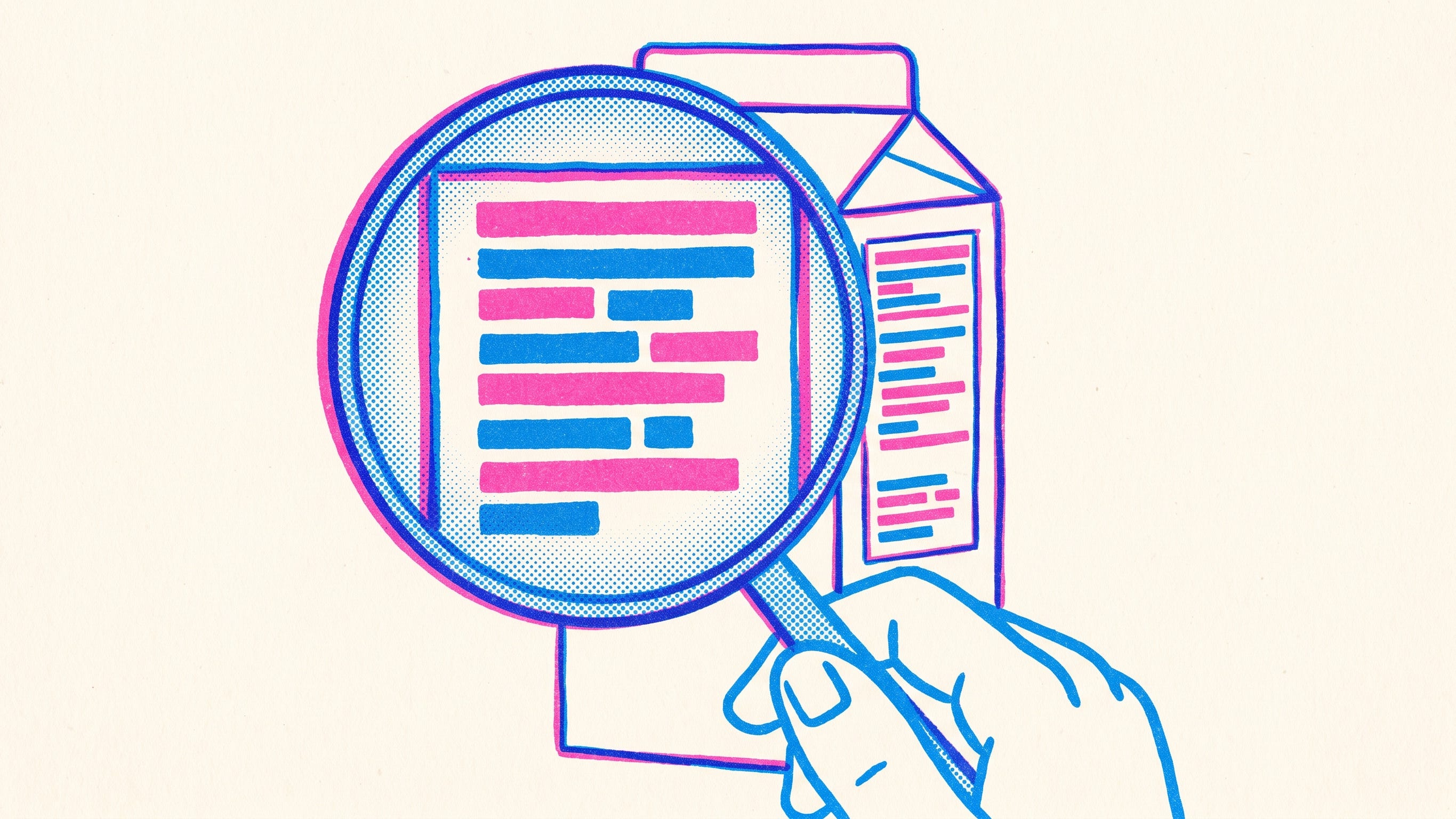
The food advice that bothers me most also sounds the most sensible: eat only ingredients you can pronounce. I get what it’s trying to say. Eat whole foods, skip the processed stuff.
But the saying rests on a bad assumption, that how hard a word is to say tells you whether the ingredient is safe. It doesn’t. I can pronounce trans fat, olestra, and arsenic, but I don’t want them near my food. I stumble over tocopherol and cyanocobalamin, which are just vitamins E and B12. The rule launders lazy nutrition science into common sense, training you to flinch at unfamiliar words that tell you almost nothing.
Almost every loud food claim works this way. Natural is safe. Processed is poison. Local is green. Organic is clean. Each one takes a hard question and hands back a bumper sticker, which is why it spreads. The honest answer is harder to sell: it depends. Some additives are harmful, some harmless, and the dose, the molecule, the body, and the use decide which.
You can’t say any of this without getting branded a shill for Big Food, the guy out to make everyone love the chemicals in their dinner. I’m not that guy. I want whole, minimally processed food at the center of most plates, and I’m against the flood of cheap junk. That puts me at odds with both sides: the wellness internet selling fear, the food industry selling reassurance.
One side reads a natural label as proof a food is safe and a long chemical name as proof it isn’t. The other trusts the label on sight, sure the FDA already weighed everything worth weighing. Both skip the same step: reading the label well enough to ask what an ingredient does at the dose you’d actually eat, and how strong the evidence is.
Fear of the Unknown
The fear side starts from one idea: natural is safe, anything made in a lab is suspect. It’s a bad guide in both directions. Raw milk can make you sick precisely because it skips the pasteurization its drinkers want to avoid. Meanwhile the vitamin C in your supplement is built in a factory, molecule for molecule the same as what an orange makes, and it’s safe. So is the insulin that keeps a diabetic alive. Where a molecule comes from tells you almost nothing about what it does inside you, which is the only thing worth knowing.
A name is mostly a feeling we’ve agreed to have about a molecule, and that feeling can be aimed. In 1997 a fourteen-year-old named Nathan Zohner ran a science fair project to prove it. He wrote a report on a chemical called dihydrogen monoxide. Every fact in it was true: it corrodes metal, turns up in the tissue of every cancer patient, and kills thousands a year by inhalation. Then he asked his classmates whether it should be banned, and forty-three of fifty said yes. Dihydrogen monoxide is water. Whether a safe thing sounds clean or dangerous comes down to how you describe it, not to chemistry.
The same move is running on seed oils right now, and we’ve watched it before with MSG. In 1968 a letter to the New England Journal of Medicine described a doctor feeling unwell after Chinese food. No controlled study reproduced the reaction at the doses people actually eat, yet MSG wore a poison label for fifty years.
Seed oils have their own narrow truth: canola and soybean oil break down into compounds you don’t want in your body when they’re held above about 350°F for hours and reused over days, which describes a restaurant fryer, not the pan on your counter. Almost no one cooking at home holds oil that hot for that long or reuses it for days, so the dose you’d actually eat barely registers. From there the internet built a much bigger claim, that omega-6 in everyday cooking oil is inflaming you, and it hasn’t held up in controlled human trials.
The script is always the same. A scary-sounding name outruns the evidence and sticks for years, and by the time the careful correction arrives, the fear has already moved product. MSG ran that route. Seed oils are running it now, and something most of us can’t pronounce is lined up next.
Safe ≠ Good for You
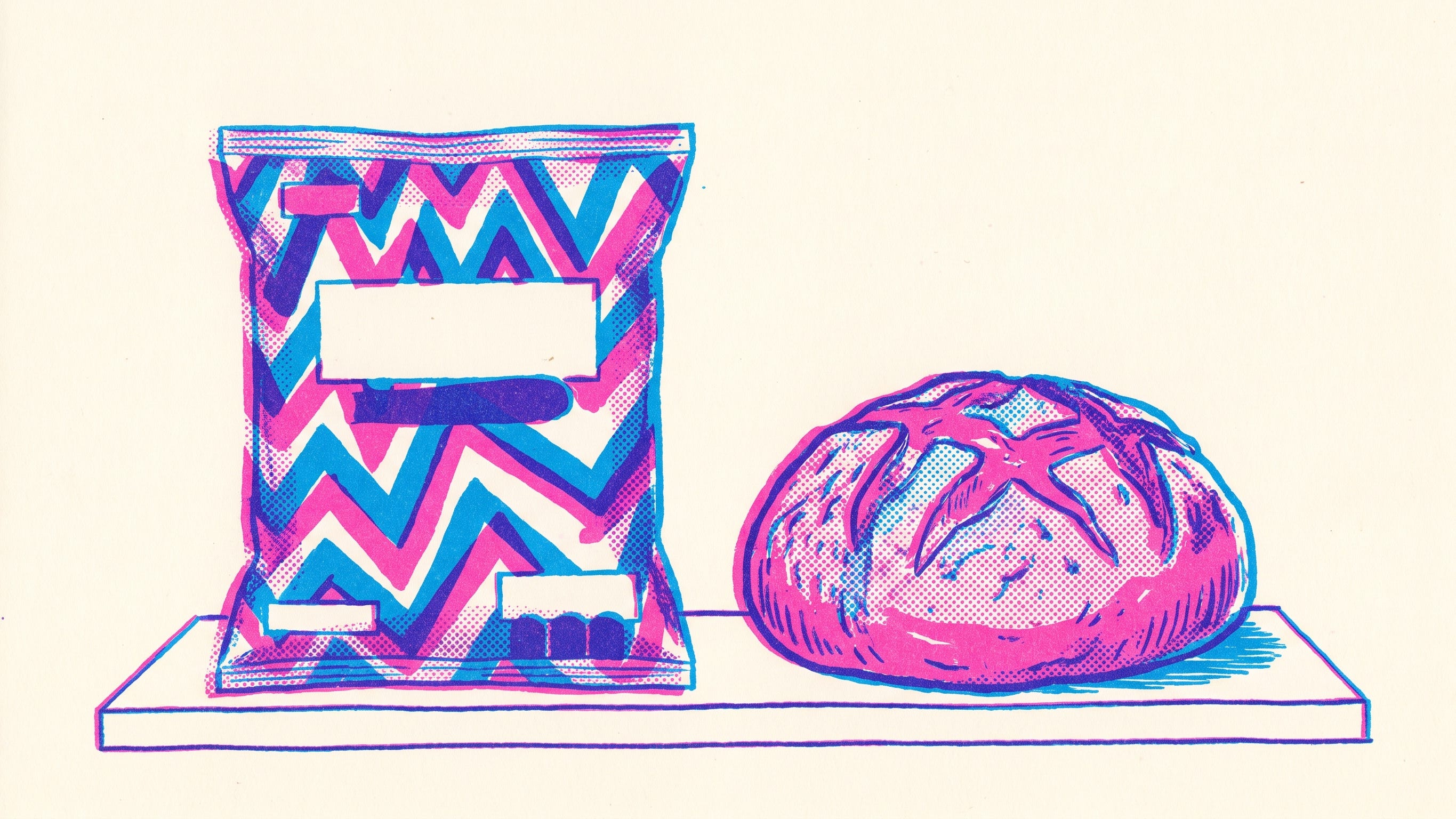
If the wellness internet sells fear, the food industry sells reassurance. Bring up ultra-processed food at an industry table and someone will remind you that bread is processed, cheese is processed, and processing is why most of what we eat is safe. Which is true, but incomplete. I’ve sat in rooms where people from big food companies drop the “ultra” from “ultra-processed,” so a bag of Blue Takis and a loaf of sourdough land in the same bucket, a snack built to slip past your fullness signal filed next to flour, water, salt, and time.
The deeper reassurance is the word “safe,” and what it certifies is narrower than it sounds. Most additives clear a bar called GRAS, generally recognized as safe: qualified experts review the evidence and agree it won’t harm you at the amounts used in food. That’s a real standard, and a useful one. But “safe” is a food-safety verdict, a ruling on harm and nothing else.
Whether a food is “good for you” is a nutritional judgment, a separate call the safety review never makes. Every ingredient in a snack can be GRAS and the snack can still be junk. When the industry says “safe,” it counts on you hearing “good for you.”
Almost everything the industry sells is safe, so “is it safe?” is a question that is true by default. The question many players in the industry would rather avoid is whether the food is good for you, since so much of what fills the middle aisles is built to be cheap and easy to overeat.
Big Food execs squirm out of the question with some version of “this snack is meant to be part of a well-rounded diet,” and “we believe in giving consumers choices,” which are excuses that always sounded to me like that friend who swears he only smokes when he drinks.
Fear and reassurance are the same product sold to two different crowds, a way to skip the hard question and feel sure anyway. That question is yours to answer, and anyone who offers to settle it for you is selling something.

How It’s Grown
Every fight over GMOs focuses on the plate, but the food itself isn’t the problem. The wellness internet treats food engineering as inherently dangerous, but the evidence disagrees: in 2016, the National Academies reviewed 900 studies and found engineered crops as safe to eat as conventional ones. But absolving the food doesn’t absolve the system that produced the food. The real controversies of GMOs split into two distinct failures: biological fallout and corporate control.
Biologically, most engineered acres share one trait: herbicide tolerance. Crops designed to survive glyphosate created a devastating chemical treadmill. When weeds inevitably adapted, farms were overrun by resistant Palmer amaranth. The fix has been returning to destructive soil tillage and harsher chemicals like dicamba, grinding down the very soil the system once protected.
Then there is the problem of corporate control. The Rainbow papaya, engineered to resist a deadly virus, saved Hawaii’s commercial fruit industry. But for locals, it arrived alongside agrochemical monopolies turning the islands into toxic pesticide test sites. When the University of Hawaii later attempted to genetically engineer and patent sacred kalo (taro)—viewed as a genealogical ancestor—it wasn’t celebrated as science; it was protested as spiritual desecration and commodification.
Yet, when decoupled from chemical sales and monopolies, some solutions show promise. The Arctic Apple isn’t built to survive weedkiller; it simply uses the fruit’s own DNA to silence the gene that causes browning. It doesn’t bind farmers to a corporate chemical loop—it just stops millions of pounds of bruised fruit from rotting in landfills.
The honest position on GMOs depends on who holds the patent and what they build. Dismissing the entire category out of valid frustration with the agricultural industry risks throwing away biological tools we might need to stabilize our food supply and reduce waste. But just waving the technology through without scrutiny ignores that the version dominating American farmland was built to sell agrochemicals. Ultimately, the question isn’t whether we should engineer our food, but whose interests that engineering is built to serve.
Doing Your Own Research
This reflex—deciding for yourself what to fear and who to trust—runs well past the grocery store. COVID hardened it. Public health agencies changed their stories enough times that some distrust was earned, and “do your own research” became a battle cry. But once you decide the establishment is always lying, every correction looks like a cover-up, leaving the door wide open for anyone selling what the system supposedly suppresses.
Today, that market runs on peptides. Compounds like BPC-157 sell for hundreds of dollars a vial, stamped “not for human consumption” so sellers can dodge FDA oversight. They’re pitched as anti-aging miracles based on rat studies that experts say prove nothing in humans. The irony? The people buying them are the exact same people afraid of their food.
The MAHA movement spent years warning that seed oils and unpronounceable additives are poisoning us. Now, figures like Robert F. Kennedy Jr. and biohacker Gary Brecka are championing these synthetic, unapproved peptides to the very audiences they taught to fear a standard ingredient list.
It was never just about the chemistry. A long chemical name on a food label feels forced on you by the system, so it reads as a threat. But that same long name on an unapproved vial feels like a secret kept from you. The warning label—”do not put this in your body”—is exactly what closes the sale. It drives me crazy, but I get the appeal. We are wired to distrust the herd. The seller is offering membership in the small, smart minority—the exact same membership the seed-oil crusade and the raw-milk revival are selling.
None of this means looking into things yourself is a bad idea. “Do your own research” only fails when we set our own arbitrary bar for proof. With no one to answer to, we grade our own work and pass whatever we already believed. We find data to fit our pre-existing biases. The influencer misreading rat studies has nothing checking his bias, and the industry scientist waving a snack through the bare-minimum safety bar has nothing checking hers, either.
Both are “doing their own research.” But honest research means trying to find the truth instead of trying to win an argument, and being willing to land on an answer that doesn’t fit your worldview.
The long word was never the danger. What we lack is the scientific literacy to tell a strong study from a weak one, and the willingness to argue in good faith. The fix is actually pretty small: ask what an ingredient does at the dose you’d actually consume, check the quality of the evidence, and ask who profits from your belief.
Then, stay with the question instead of grabbing the first answer that flatters your worldview. “It depends” is not a shrug. It’s the one answer neither the charlatan nor the corporation can sell past. Once you get comfortable with it, the bullshit on all sides gets much easier to spot.
—
Mike Lee is a food futurist and innovation strategist, author of Mise: On the Future of Food, host of The Tomorrow Today Show podcast, creator of Mise Futures, and is on Instagram at The Book of Mise.
—
Mise 2: The Restaurant Issue is now open for pre-orders! Ships 8/11/26. Over 200 pages of future scenarios exploring the future of restaurants.
This parallels ‘chemicals are bad for you’. It’s a good thing chemicals exist or we wouldn’t exist.
Case in point: what happened to Apeel in produce