


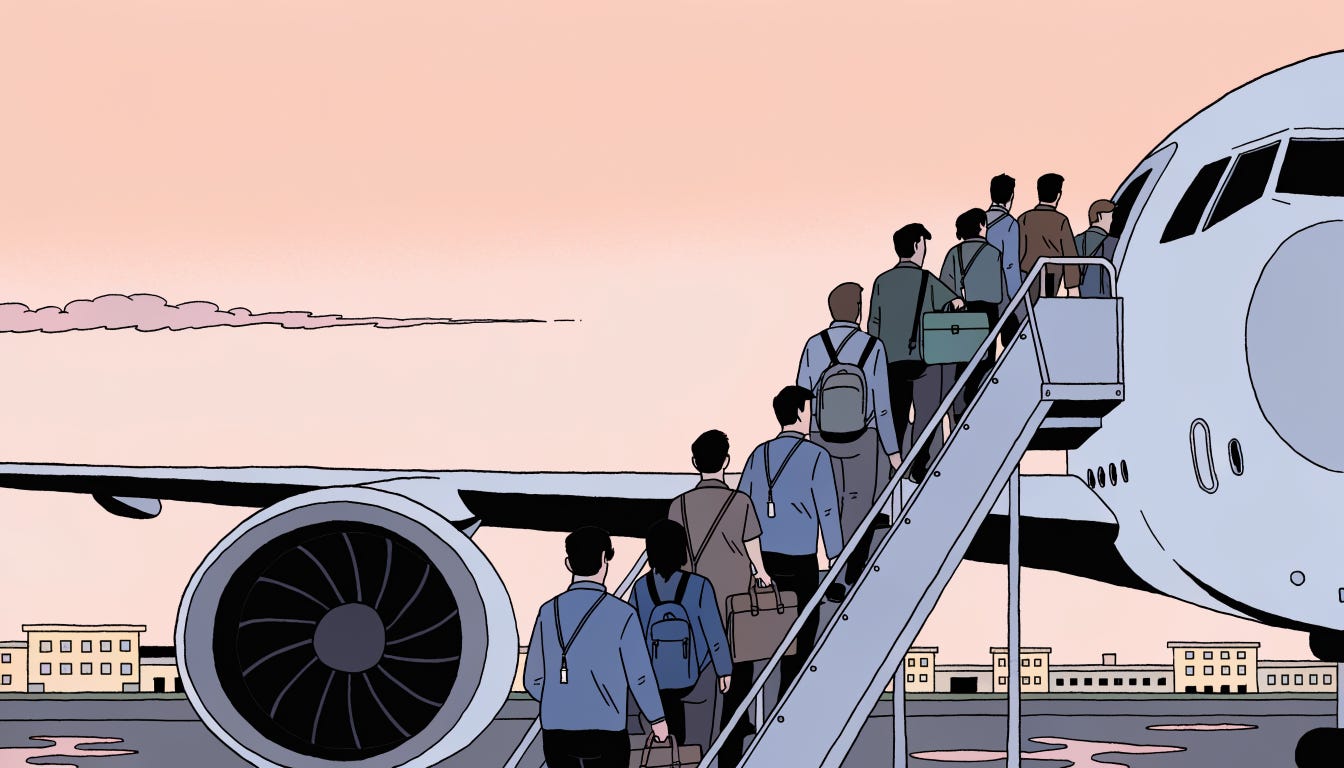
We need change in the food system, but we also depend on it every day. We want food to be affordable, but we also want farmers to make a decent living. We want to protect the planet, but we need to keep planting and harvesting from it. We fight to curb climate change, but we need to fly halfway around the world on a jet to participate in a climate conference.
It is, in fact, Climate Week in New York, and the climate conversation is full of contradictions like these, which makes it a good week to talk about crisis and cognitive dissonance.
These are the contradictions we live in, and there’s nothing unreasonable about all of those things being true at once in our minds. But things get harder when we are forced to make decisions, as the tension must give way to clear, tangible choices. Because improving one part of the food system or one element of climate change policy or one aspect of health and wellness can make another part worse.
As a whole, our modern society needs to get better at holding opposing ideas in our heads without going crazy. F. Scott Fitzgerald once said that being able to do so, and still function, is a telltale sign of first-rate intelligence. This is hard, because we’ve been groomed by today’s pop culture to believe that anyone who disagrees with us is a threat to our identity and well-being. Taking their point of view seriously would compromise our position.
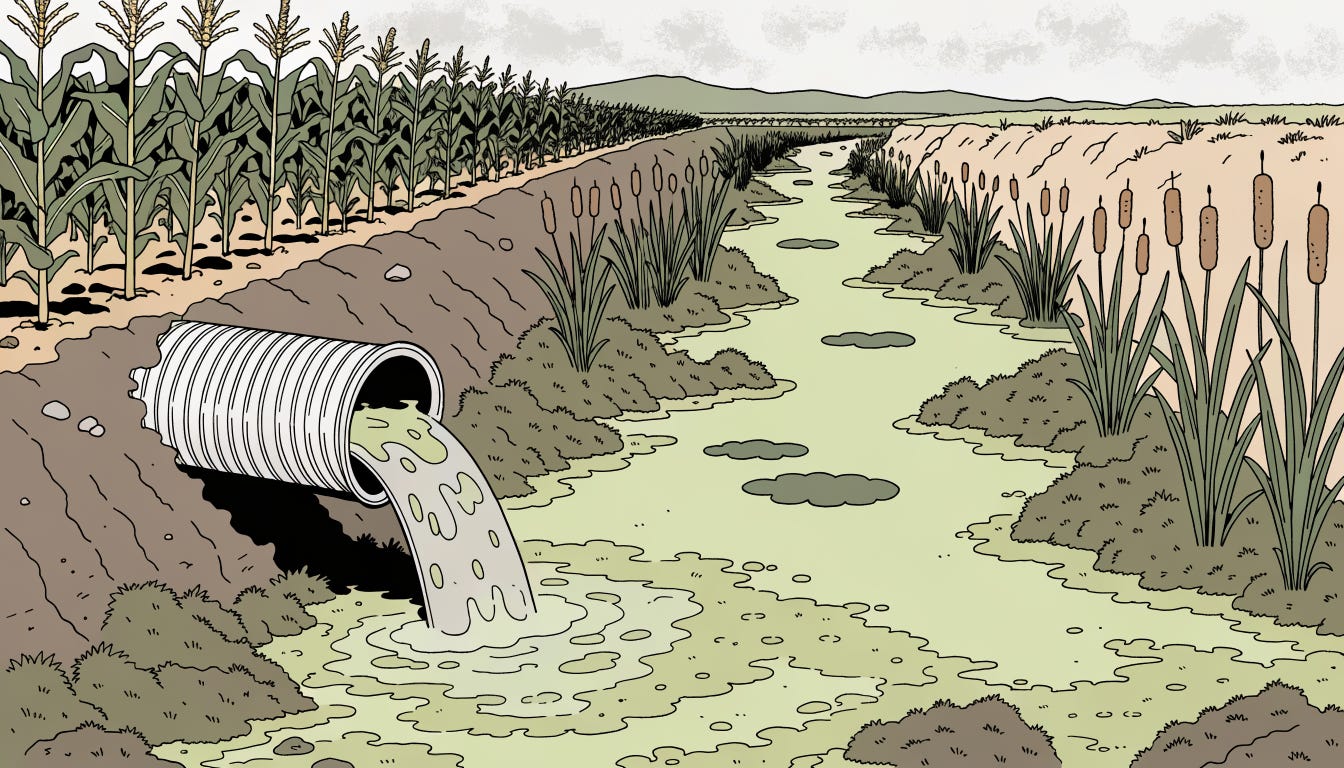
An advocate for regenerative agriculture might not readily admit that farm yields can drop in the early years of a transition from conventional farming. Conversely, someone defending conventional farming might not be entirely forthright about fertilizer runoff into local waterways. Each side ends up in a defensive position, because any admission that their paradigm of farming has flaws feels like conceding weakness.
Cognitive dissonance is the pain of having two ideas in our minds that don’t fit together. And we tend to treat that as a bug, not a feature. It’s tempting to reach for comfort by canceling out the other side’s argument and writing it off as wrong. Moral certainty is a security blanket, especially in a real or perceived crisis, where definitive action is prized over navel gazing and nuance.
But it’s in those crises that nuance is needed more than ever.
Crisis Clouds Judgment
The worst time to teach someone to swim is when they’re drowning. People who are scared need answers, not nuance. To them, someone who sounds certain is comforting. The person saying, “Well, it depends…” sounds weak, even if they’re objectively right.
Sometimes the urgency of a real crisis helps. It cuts out the analysis paralysis and forces action, even if it leads to a solution that isn’t ideal in the long run but is a lot better than drowning in the short run. But making decisions under fire, with huge stakes, doesn’t always mean we’re thinking clearly.
This is especially hard when you consider everyone can have a slightly different definition of what a crisis is. And crises are frequently manufactured or exaggerated to make the case for a set of actions that would be unpalatable in the absence of a crisis.
In 2008, during the subprime mortgage crisis, Barack Obama’s incoming chief of staff, Rahm Emanuel, spoke to a room of executives and said, “You never want a serious crisis to go to waste,” because it enables you to do things you could not easily do before. We’ve seen this tactic weaponized in a multitude of ways, from beef tallow companies stoking seed oil fears to move more units, to fabricated claims that immigrants were eating people’s pets helping to drum up support for ICE funding.
The timing and size of a crisis also affect our appetite for cognitive dissonance. The Green Revolution took off the way it did because there was rampant famine that needed solving for millions of people. What’s more urgent than people starving right now? While it’s easier to look back and judge why the forefathers of that movement didn’t try to employ more holistic, less extractive forms of farming that might have made those regions more fertile and stable in the long run, few of us were there to stare into the eyes of a malnourished child, days from death. There’s a lot less patience for proselytizing about the merits of regenerative organic agriculture in that situation, so you just plant the high-yield seeds and solve the problem.
And the seeds worked. India’s wheat harvest grew by more than half in five years, starting in 1965. What got left aside was the fact that the ongoing fertilizer and irrigation required by these new seeds would erode the soil and deplete water in the long run. The food problem was largely fixed by 1970, but the bill came a generation later with Punjab’s falling water table and all the runoff that occurred, well after the famine had ended. We threw them a life vest, but we didn’t teach them to swim.
Doing the Best We Can
Climate change is a crisis that can move at two speeds. Some days it’s really fast, like when a flood or wildfire decimates a city. But most days it’s really slow, barely perceptible to the average person going about their day. And those small actions on the slow days add up to cause the fast days. This happens in such a diffuse manner that we all have plausible deniability. No one really thinks of their vacation flight to Hawaii as the direct cause of the recent catastrophic floods in Nepal.
Right now in New York City, while the UN General Assembly is happening, thousands of people working publicly or privately in the climate space have burnt fossil fuel to come talk about how we can burn less fossil fuel. I’m one of those people, about to board my flight to LaGuardia Airport. I often wonder aloud if Climate Week should just be a giant Zoom meeting and lead by example on how to reduce emissions.
So these kinds of gatherings around climate change are cognitive dissonance personified. Being there in person is still worth it, as a well-timed run-in with a big food CEO at happy hour could eventually lead to an initiative that turns millions of acres of farmland into a huge carbon sink. For as much as we work virtually today, face-to-face relationships still matter when trying to make things happen.
Many food companies will announce on panels and in keynotes how they are pledging to cut emissions in half by 2030. Not all of them will actually do it. But I still think it matters to say it out loud, as we need to start somewhere, and it’s probably better than them not even showing up at all.
Showing up and saying your climate pledge out loud is the first step, but also where the discomfort starts. The harder part is coming back to update everyone honestly on how you did, including how hard you worked (or didn’t) on it. No one does this perfectly. But a company that admits it failed at meeting its target this year hopefully has a better chance to meet it next time. And that company is surely better than the one that just stops talking about the promise altogether.
Fitzgerald’s test had two parts: hold two opposing ideas at once, and still function. With climate change, we’re already in the water, and most of what we do there will be imperfect. So we get on the plane, make the pledge, plant the seed. We just have to keep the other idea in our heads while we do it, and come back for it once the water goes down.
—
Mike Lee is a food futurist and innovation strategist, author of Mise: On the Future of Food, host of The Tomorrow Today Show podcast, creator of Mise Futures, and is on Instagram at The Book of Mise.
"The Crack-Up" was first published by New Directions in 1945 and is now being rediscovered by a new generation of readers. Compiled and edited by Edmund Wilson shortly after Fitzgerald's death, "The Crack-Up" tells the story of Fitzgerald's sudden descent at age thirty-nine from a life of success and glamor to one of emptiness and despair, and his determined recovery. This vigorous and revealing collection of essays and letters renders the tale of a man whose personality still charms us all and whose reckless gaiety and genious made him a living symbol and the Jazz Age. For those who grew up with "The Great Gatsby" or "Tender is the Night," this extraordinary autobiographical collection provides a unique personal blend of the romance and reality embodied by Fitzgerald's literature and his life."
“Before I go on with this short history, let me make a general observation– the test of a first-rate intelligence is the ability to hold two opposed ideas in the mind at the same time, and still retain the ability to function. One should, for example, be able to see that things are hopeless and yet be determined to make them otherwise. This philosophy fitted on to my early adult life, when I saw the improbable, the implausible, often the "impossible," come true.”
― F. Scott Fitzgerald, The Crack-Up
The rest of the quote has a ring to it.
"Hemingway" analyzing Wolfe & Fitzgerald.
https://www.youtube.com/results?search_query=genius+f+scott+fitzgerald+scene
Later, in Idaho, perhaps in those last minutes, Ernest might have allowed that the future's never been what it used to be.