


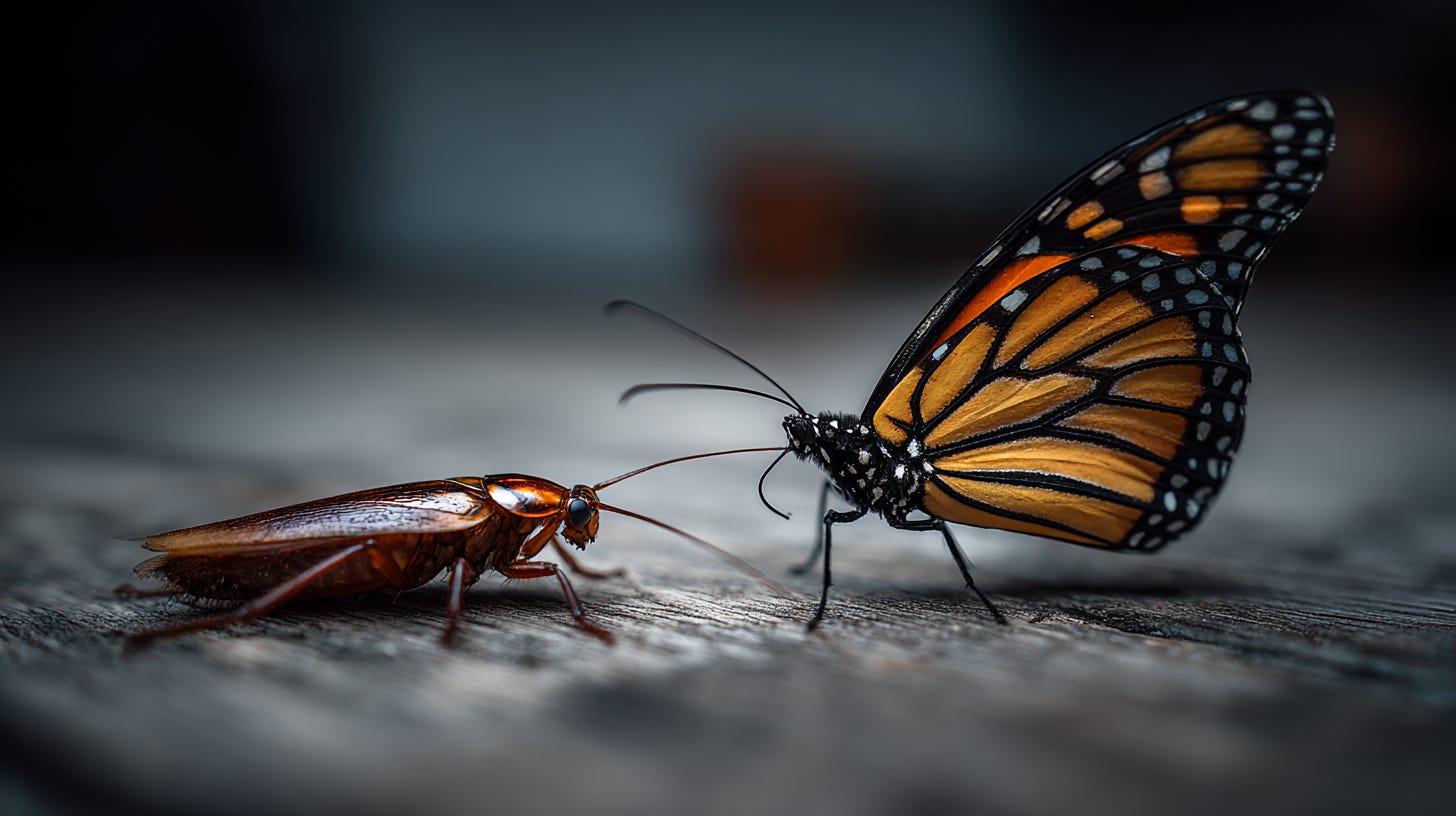
Kill a cockroach and you're a hero. Kill a butterfly and you're a monster.
Both are insects. Both feel their way through the world. The only difference? One looks like something from a fairy tale, the other like nightmare fuel. This beauty bias doesn't stop at pest control—it runs through our entire food system, silently determining what we grow, what we discard, and what we're willing to put in our mouths.
The visual evidence sits on every supermarket shelf. Those pristine tomatoes were bred to be beautiful first, delicious second. Plant scientists spend years developing varieties that maintain their Instagram-perfect red skin for weeks, sacrificing flavor genes along with any blemishes. The result tastes like wet cardboard, but photographs beautifully.
Arbitrary Disgust and Double Standards
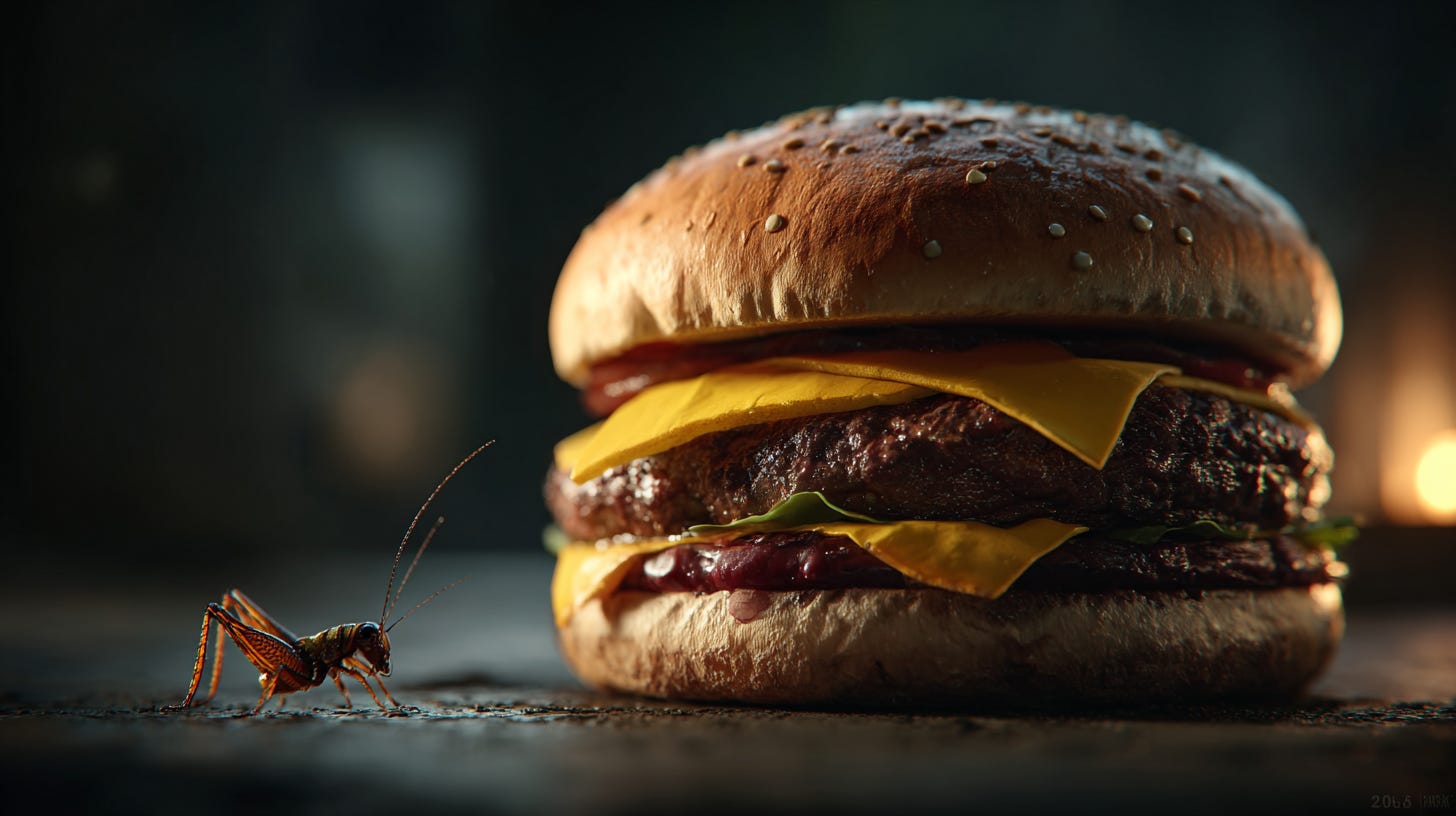
Americans consume billions of animals annually while recoiling at the thought of eating insects. Crickets require vastly less water than cattle to produce equivalent protein. Billions of people worldwide eat bugs regularly without incident or moral crisis.
Yet convincing Western populations to embrace insect protein remains nearly impossible—and I'll admit, despite knowing the logic, I have zero desire for a cricket burger or insect protein bar myself. Cultural conditioning runs deep. When you haven't grown up eating something, overcoming that visual disgust becomes monumentally difficult, regardless of environmental benefits.
This same aesthetic logic extends throughout our protein choices. We discard fish heads packed with omega-3s because seeing eyes reminds us we're eating animals. We happily buy boneless skinless chicken breasts rather than whole birds, avoiding the most economical approach to meat consumption. The moral calculus shifts entirely based on how we've categorized creatures aesthetically—kill an ant colony and you're managing pests, kill an animal shelter and you're guilty of a crime.
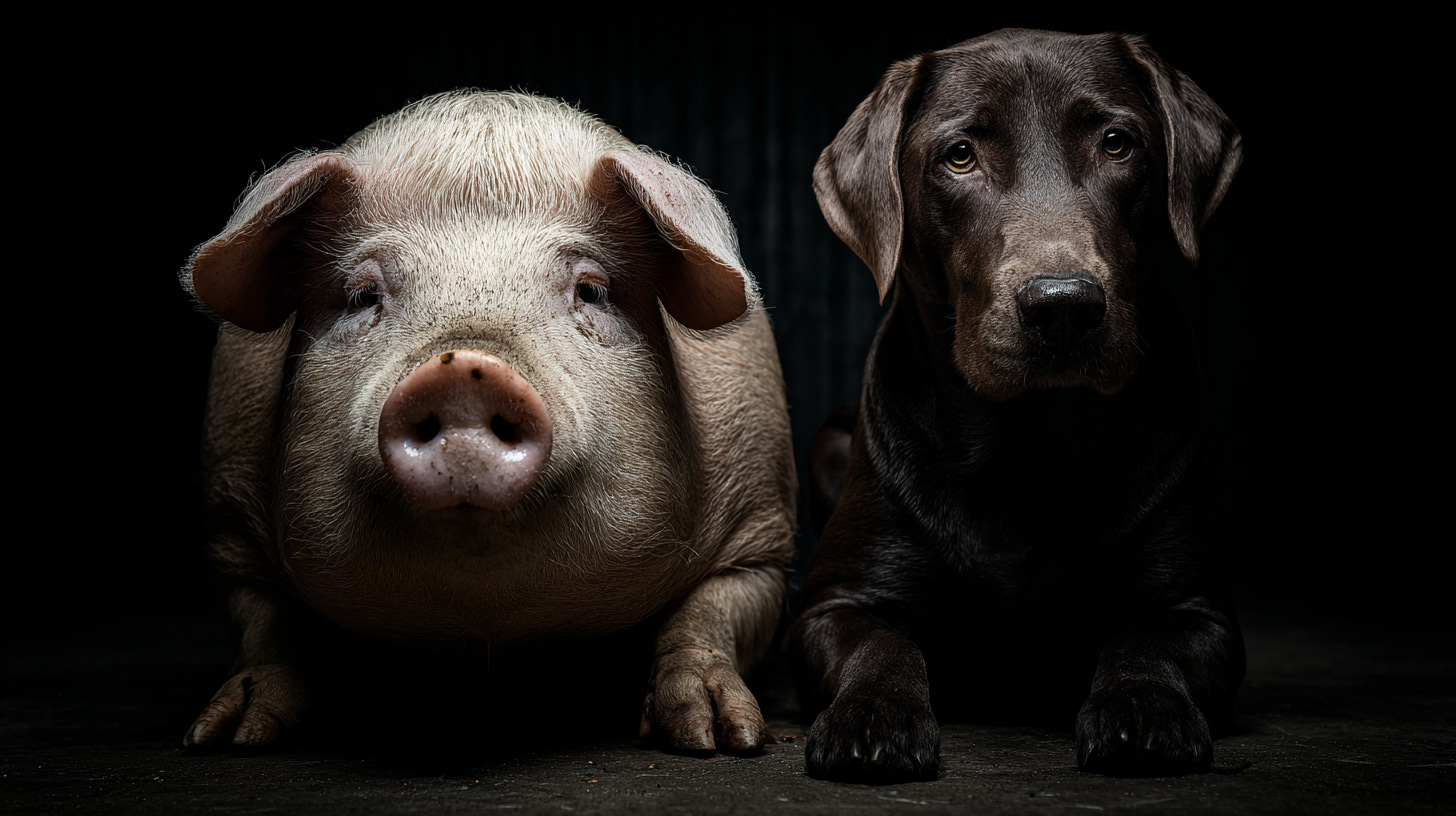
Consider the arbitrary lines we draw. A pig becomes bacon without controversy despite being intelligent enough to learn complex tasks and form emotional bonds. Yet the mere suggestion of eating dog meat triggers revulsion in Western cultures, even though dogs and pigs possess comparable intelligence. I'm not advocating for dog consumption—the idea appalls me as much as anyone. But the moral distinction reveals how relationship and familiarity, not inherent characteristics, determine what we consider food versus companion. Historically, far more people have kept dogs as pets than pigs, despite both species' capacity for companionship. And because of that, our dining choices follow our emotional attachments, not logical assessments of animal welfare or intelligence.
Like, why do many people think it's acceptable to boil a lobster or crab alive, but would never consider doing the same to a chicken or fish? The suffering capacity may be debatable, but the willingness to inflict it correlates perfectly with how much the animal resembles us—and how far removed it feels from our daily emotional experience.
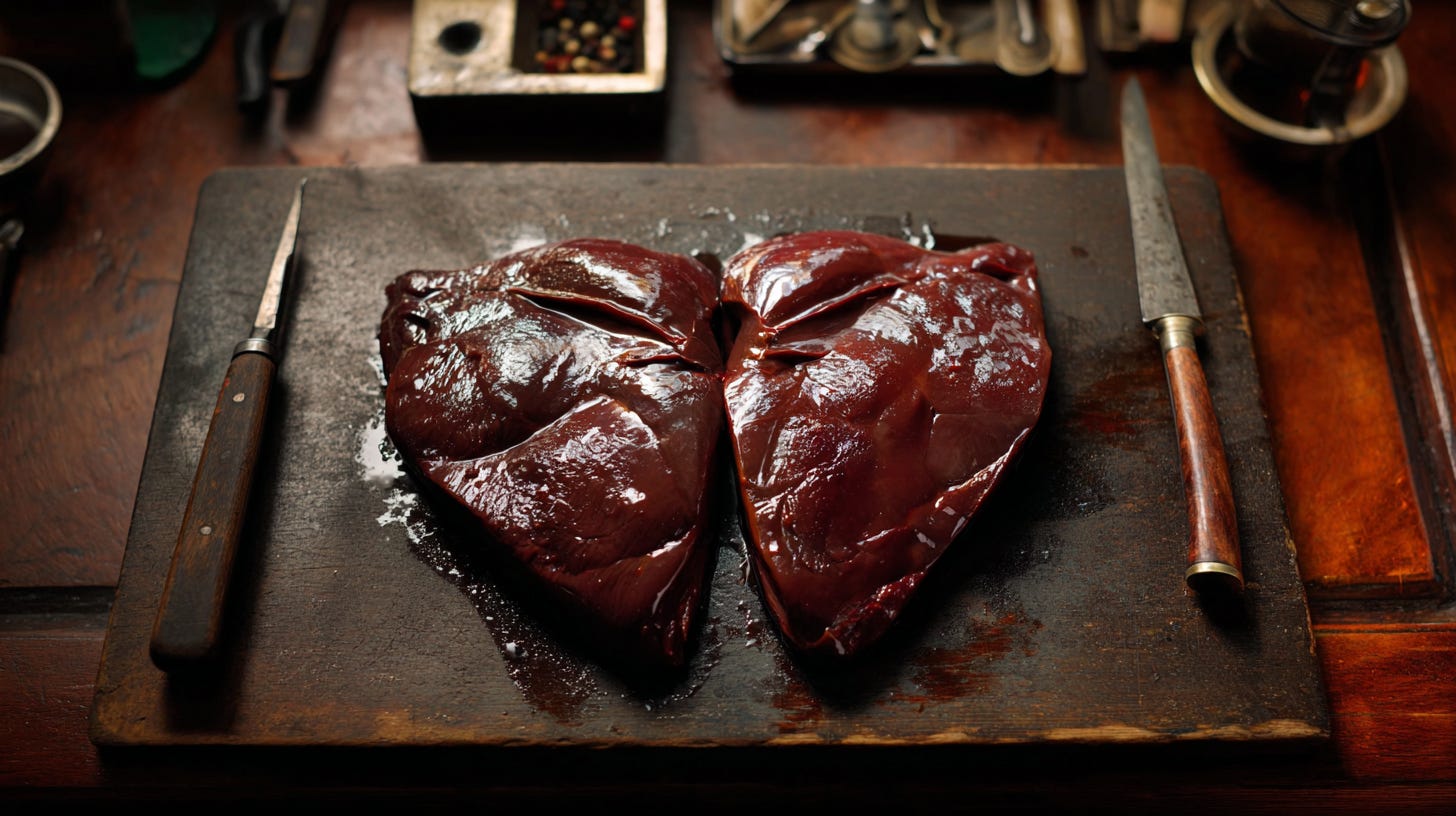
This filtering operates even with familiar proteins. Organ meats pack more vitamins than muscle meat, yet liver has vanished from restaurant menus because it looks too much like what it actually is. The meat from an animal's head delivers complex flavors, but confronts diners with uncomfortable realities about their food sources.
Our aesthetic tyranny governs plants just as ruthlessly. We reject misshapen carrots and bruised apples despite identical nutrition. We spray dandelions with RoundUp that contain more nutrients than lettuce, simply because we've labeled one a weed and the other a vegetable.
Words shape reality here. "Heirloom tomatoes" sound like something worth protecting and paying extra for. "Ugly produce" sounds damaged, shameful, destined for the dumpster. Yet heirloom varieties—prized by chefs for their superior flavor—remain largely absent from industrial agriculture precisely because their irregular shapes and varied colors don't fit supply chain standards or average buyer expectations. We've created a system where the most delicious tomatoes are too ugly for mass production.
The Aesthetics of Choice
The same aesthetic logic governs our relationship with soil itself. Most people see dirt when they look at the foundation of all terrestrial food systems. Rich, living soil teeming with microorganisms gets dismissed as something to wash off our hands, not something to celebrate as the source of flavor and nutrition. When you see dirt instead of an ecosystem of soil, microbes, fungi, and organic matter, disposal becomes easy.
Notice where your eyes gravitate in any grocery store. The bulk food section offers cheaper, more sustainable options with minimal packaging, yet most shoppers head straight for aisles lined with beautifully designed packages. Colors, fonts, and imagery create desire more effectively than the actual food inside. We are almost always buying the package more than its contents.
This extends to foods that could revolutionize nutrition if we could get past their aesthetics. Spirulina packs extraordinary protein per ounce, but its algae-green color keeps it hidden in smoothies rather than embraced as a superfood. That, and the fact that it tastes like stagnate pond water. Flavor itself becomes another aesthetic barrier—one that keeps us from accessing incredibly nutritious options.
Not everything requires fighting human nature. Some solutions work within our visual biases rather than against them. Apps deliver ugly produce directly to doorsteps, bypassing grocery store beauty standards entirely. Food processors transform ugly tomatoes into sauce, where previous appearance becomes irrelevant.
Alternative models exist across cultures. Italian grandmothers seek out the ugliest tomatoes at markets because experience has taught them these taste best. Mexican cuisine celebrates every possible shape, color, and heat level of chile pepper, finding beauty in diversity rather than uniformity.
There might be practical origins to some aesthetic preferences. Neatly planted corn rows look orderly and harvest efficiently, while permaculture systems that benefit soil health often appear messy and unkempt. Perhaps industrial agriculture's visual appeal helped sell us on a system that prioritized efficiency over ecological sustainability.
Aesthetic bias keeps us from embracing solutions hiding in plain sight. Invasive Asian carp could become sustainable protein, but nobody wants to eat a "pest" fish. Free, nutrient-dense wild foods grow everywhere, yet urban foraging looks primitive to most people. Composting transforms waste into soil gold, but gets avoided because decomposing organic matter resembles controlled rotting.
Beauty in Resilience
Return to our opening metaphor. The butterfly lives briefly, requires specific host plants, and dies if environmental conditions shift. The cockroach survives radiation, eats anything organic, and has thrived for hundreds of millions of years. One embodies beauty as we typically understand it; the other embodies sustainability.
We've constructed our entire food system around the butterfly model—prioritizing immediate visual appeal over long-term resilience. The question isn't whether we should care about how food looks. Beautiful food creates genuine joy and cultural meaning. The problem arises when we discard nutrition because it's not photogenic enough, when we choose familiar beauty over ecological sanity. These choices undermine our own survival.
The cockroach will outlive us all. Maybe we should start seeing beauty in what actually works, not just what looks good on camera.
—
Here’s More!
My Book - Mise: On the Future of Food
My Podcast - The Tomorrow Today Show
My Instagram - The Book of Mise
My Consultancy - Mise Futures
This desire to be coddled at the market is stripping away nutrients - good to hear a voice calling this out