


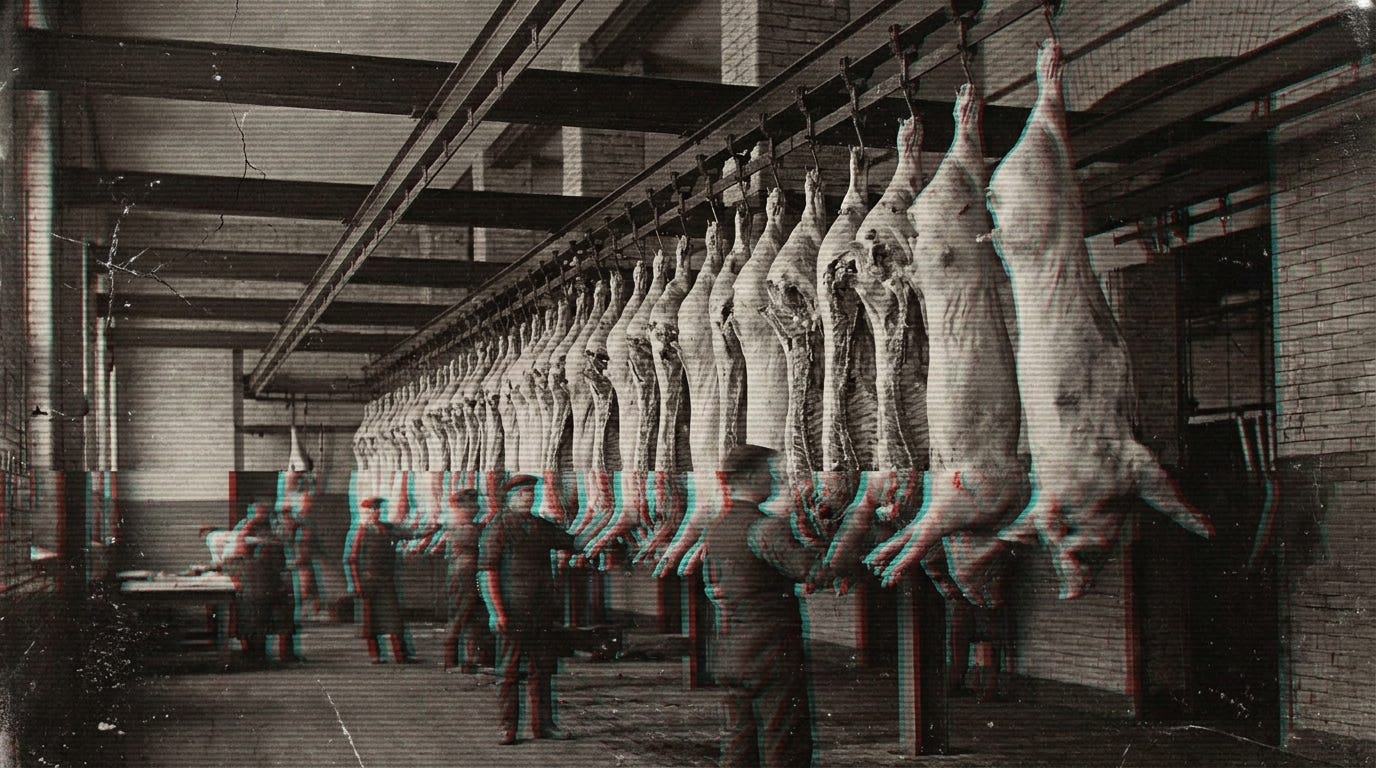
Upton Sinclair spent seven weeks in Chicago’s Packingtown in the winter of 1904. He was twenty-six, a socialist, sent to cover a strike that had just collapsed. He found twelve-hour days, thumbs worn to lumps, no pay for a lost hand, men who fell into the rendering vats and left the plant as lard. He put it in a novel called The Jungle and expected the country to rise up for the workers.
It rose up about lunch. Readers finished the book terrified of what was in their own sausage, and within months Roosevelt signed the Federal Meat Inspection Act and the Pure Food and Drug Act. “I aimed at the public’s heart,” Sinclair wrote later, “and by accident I hit it in the stomach.”
We fixed the food and left the job alone. This February the Agriculture Department proposed letting poultry plants run 175 birds a minute instead of 140, letting pork plants set their own speeds, and dropping the yearly worker-injury report. Asked why it was not protecting the people on the line, the agency said it is not allowed to.
The agency that inspects every carcass in America says that looking after the person holding the knife would be an abuse of its power. Congress wrote it that way in 1906, and we have never rewritten it.
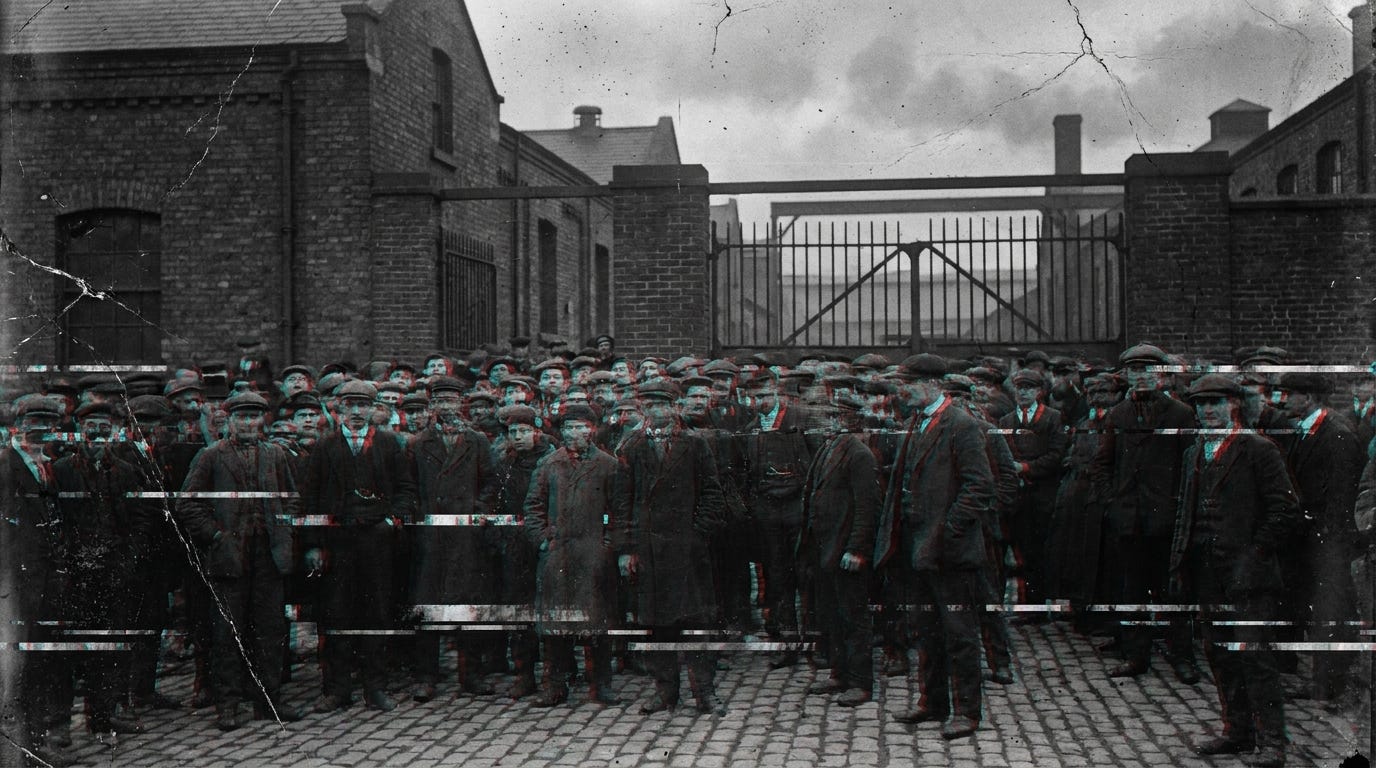
The Meat Got Safe. The Job Didn’t.
The food safety win was total. In 1906 the packers had a whole chemistry set for hiding spoilage. Formaldehyde, the compound undertakers used on the dead, kept old meat from smelling spoiled.
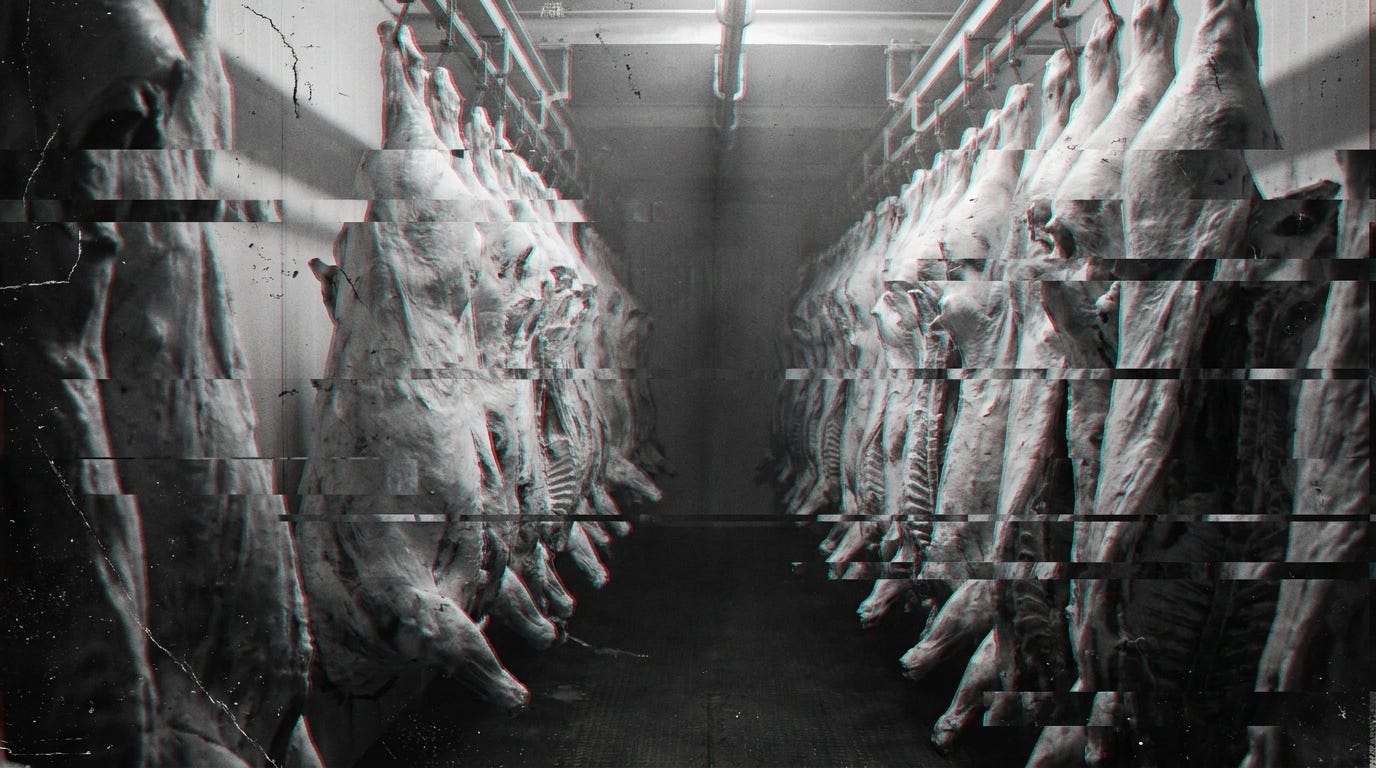
The new law put a government inspector on the kill floor with the power to condemn a carcass and stop the line, and the system has only tightened since. Nobody worries about embalmed beef, and the forgetting is the proof.
The workers got none of it. Upton Sinclair wanted readers to see them; they saw their own dinner instead and demanded it be made safe. The book meant to expose the killing floor became the reason the meat is clean, and did nothing for the people doing the killing.
One book made two countries. One trusts what it eats, guarded by inspectors and a federal seal. The other stands on the kill floor, under a law that examines the meat and ignores the person cutting it.
The Worker Was Never the Point
The big packers wanted a federal inspection law. A government seal would reopen the European markets that had banned American meat, and the cost of meeting it would fall hardest on small local packers. What they fought were two provisions, one making them pay for the inspection and one requiring a date on every can. Both were cut before Roosevelt signed. Nobody in that fight was there for the workers.
If the law never protected them, the union briefly did. By the 1960s meatpacking paid better than the average factory job in America. Organizing is the only thing in a hundred and twenty years that has lifted these workers.
So the packers moved where the union could not follow. They built cheap plants in the rural counties where the cattle already were, and hired immigrants and refugees the unions could not organize. The Bureau of Labor Statistics has slaughterhouse pay running about a third below the manufacturing average this year. It used to run above it.
Four companies kill 85 percent of America’s cattle, but the number that sets a worker’s pay is one: the single plant that runs the town. In Finney County, Kansas, the plant is not an employer. It is the employer. A dangerous job has to pay more to get filled, but only if a worker can bargain or leave, and in Finney County they can do neither. The plant is the only job for miles, and for many the right to stay in the country runs through the company.
The Worker Pays for Cheap Meat
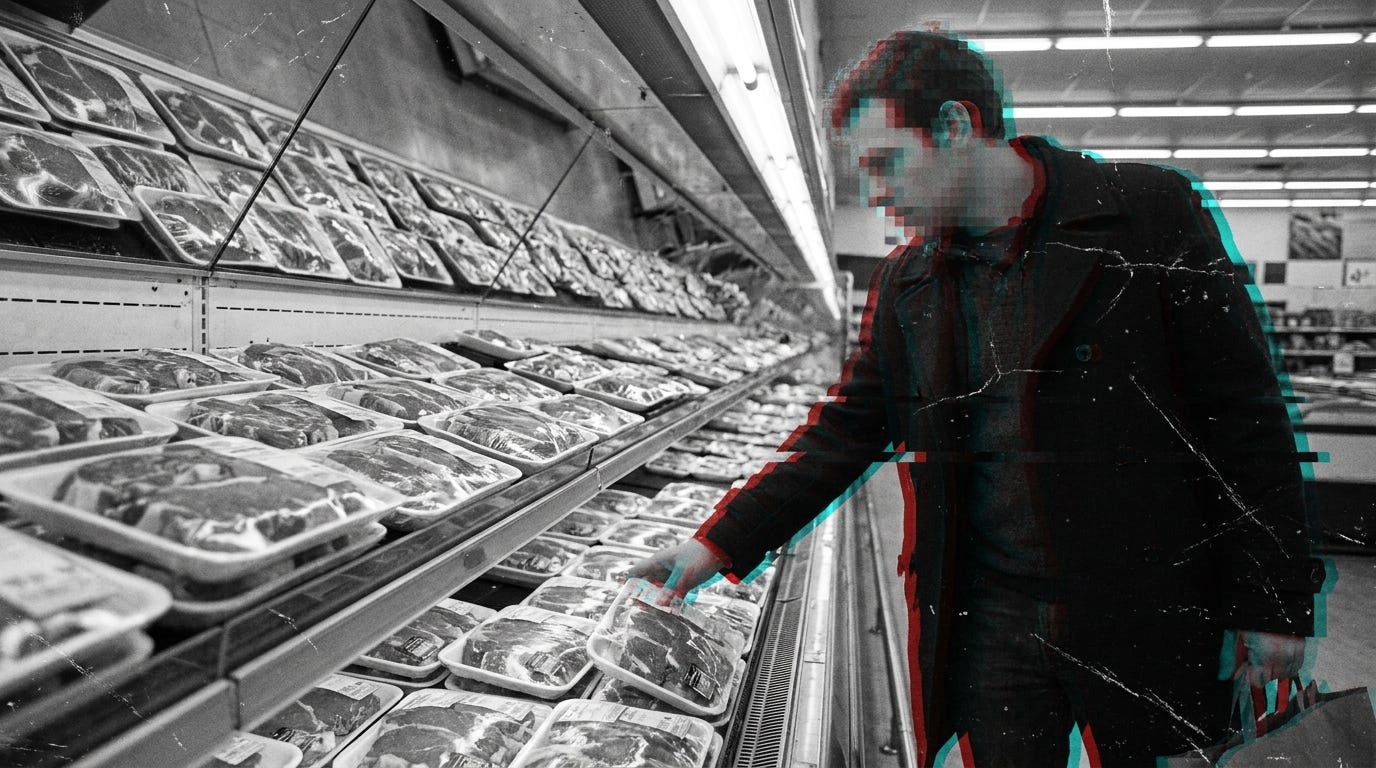
The deepest change since 1906 is the price. Upton Sinclair’s Packingtown fed a country where a working family bought meat with an eye on the budget, and often did without. Americans now spend a smaller share of their income on food than the people of any other rich country, and eat more meat per person than any generation before us. Cheap meat is the achievement nobody examines.
It got cheap for a stack of reasons, most of them engineering. Cattle got bigger. Feed got cheaper. Plants got enormous, the lines got faster, and beef went out in boxes instead of hanging carcasses. Every one of those is a real gain. Labor is the last item on the list, and labor is not a technology. It is a decision about what a pair of hands is worth, made again every year.
Meatpacking has spent a century near the top of every list of the most dangerous jobs in America. In February 2023 the Labor Department found 102 children, some of them thirteen, cleaning brisket saws and head splitters on overnight shifts. At a Perdue plant in Virginia a machine caught a boy’s arm and stripped it to the bone.
None of that danger really shows up in the price of the meat. It is absorbed by whoever is standing on the line, and the plants have never had trouble finding someone to stand there. Immigration enforcement is starting to change that, and the pressure it creates does not push toward a safer job or a better wage. It pushes toward running the people who are left a little faster, which is what this February’s proposal to speed up the lines would allow. Tyson expects to lose as much as half a billion dollars on beef this year, and a company losing that much does not hand raises to its cutters. It looks for a way to do the job without them.
Robots Save Hands and Erase Jobs
There is an obvious way to keep meat cheap without a body paying for it. Take the body off the line. Denmark started down that road decades ago, because it could never get labor cheap, and machines in its plants now plan the cuts and drive the saws. Danish Crown’s automation chief says the company has to keep going further.
The hard part is teaching a machine to handle meat, which is soft and never the same twice, and engineers are working on that now. We could always get labor cheap, so we never built any of it, and we have paid the difference in thumbs and arms.
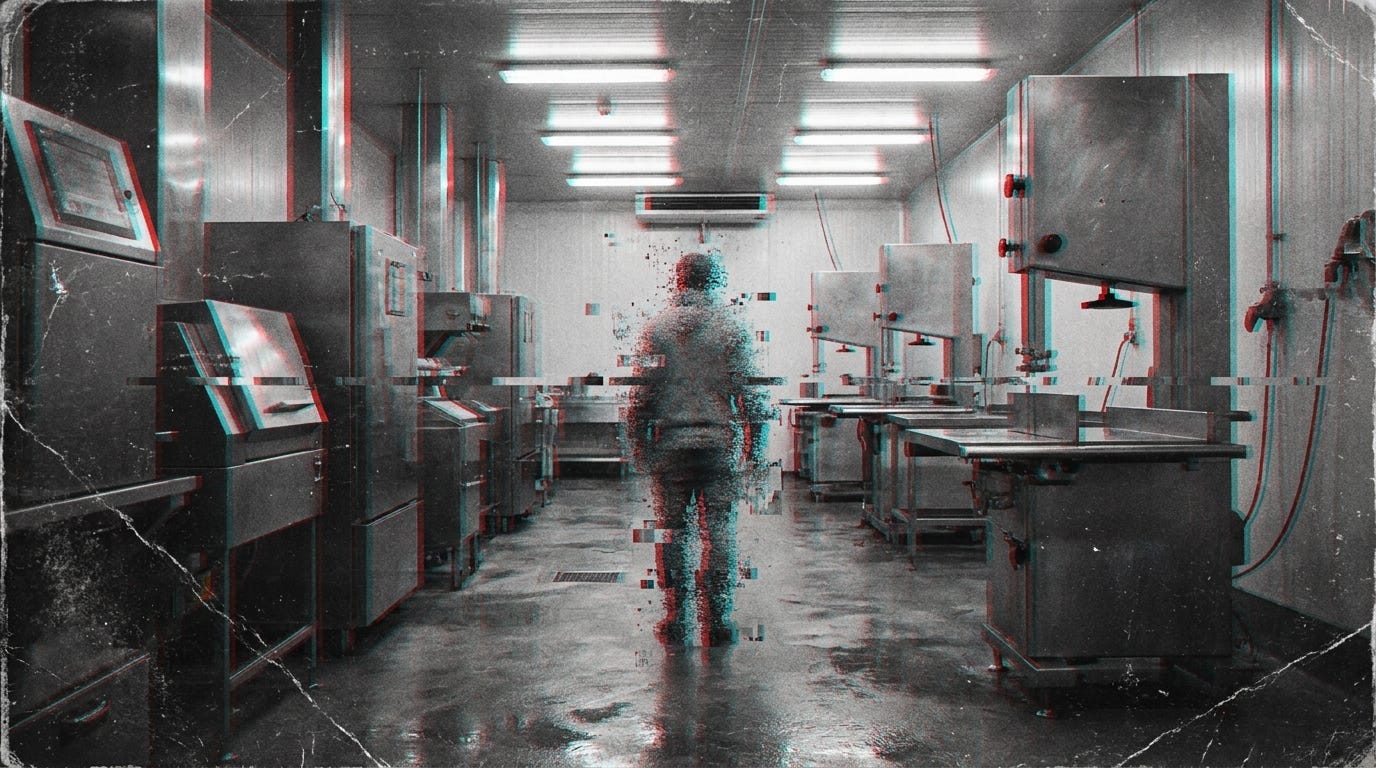
Say they solve it. The hardest jobs in the plant get done by machines, the meat stays cheap, and tens of thousands of cutters and packers lose the only work in their county. The danger leaves with the job. So does the paycheck.
The usual argument stops working here. When automation comes for screenwriters, illustrators, and coders, we know how to feel: those were good jobs and that’s a shame that a machine can do it now.
A meat deboning job at a high volume meat cutting facility is not that kind of job. It is skilled, and it has a long record of taking pieces of people. When we built robots to walk up to a bomb instead of a technician, nobody defended a person’s right to kneel beside the wire.
The kill floor is not a bomb and it is not a screenplay. It sits between them, and I am not sure where it lands. Automate it, and we finally do what a hundred and twenty years of law refused to do, take people out of the jungle, and we do it for money rather than mercy. Leave it alone, and we are saying that a job that eats hands should keep eating them, because the alternative is a town with nothing. Only one of those ends the maiming.
Upton Sinclair aimed for the heart and hit the stomach, and the stomach has decided virtually everything since. The meat got clean because eaters got scared. Scared for their own health, not scared for the workers. The robots will come the day they make meat cheaper, not the day they make the job safer. Sadly, not much in this business has ever changed because the people doing the dirty work deserved better.
—
Mike Lee is a food futurist and innovation strategist, author of Mise: On the Future of Food, host of The Tomorrow Today Show podcast, creator of Mise Futures, and is on Instagram at The Book of Mise.
—
Mise 2: The Restaurant Issue is now open for pre-orders! Ships 8/11/26. Over 200 pages of future scenarios exploring the future of restaurants.
Upton Sinclair…an eye opening read. And really, not much has changed.
"Upton Sinclair aimed for the heart and hit the stomach, and the stomach has decided virtually everything since."
Appetite disorders have always been the order of the day.
Pathocracy --primary sociopathy leading the throngs of secondary socios -- is not new & finds high expression in corporations who, according to the robes of justice, are people, too.
You are what you eat eats.
Vertically & horizontally integrated industrial meat --chickens, pork, beef, turkey-- does not eat, because it is not fed, clean.
Feeding that adulterated meat to people is an appetite disorder. People that eat that ostensible meat are appetite disordered.
And the "healthcare" cartel that feeds on the downstream symptoms cataract of all the processed "food"-eating is appetite disordered.
The Meat Racket is a good read of the more things change the more changelessness persists.
https://goodreads.com/book/show/18211204-the-meat-racket
This army has always run on its stomach. But for rule-proving exceptions, outliers, the enteric brain is the executive & the executioner.